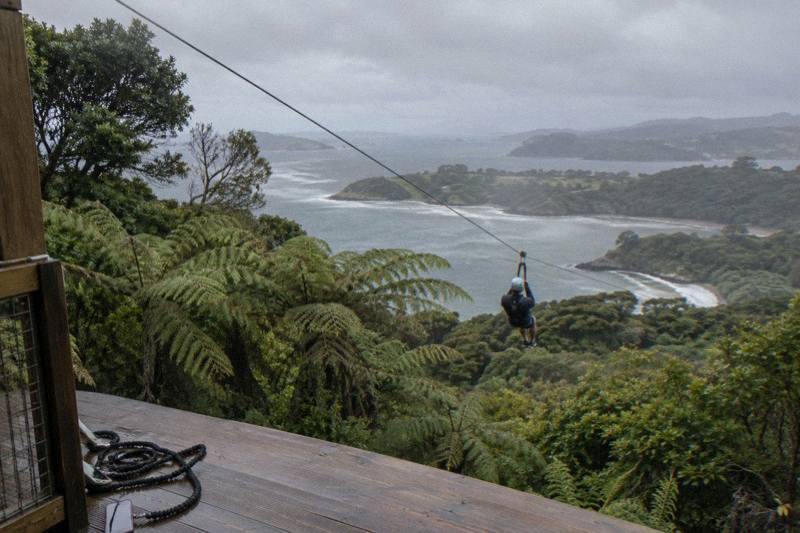
Waiheke Zipline For Nervous First-Timers And Fear Of Heights
Fear of heights does not automatically rule out a Waiheke zipline. Here is what the courses actually involve, what the safety systems do, and how to pick the gentlest first format.
Short answer
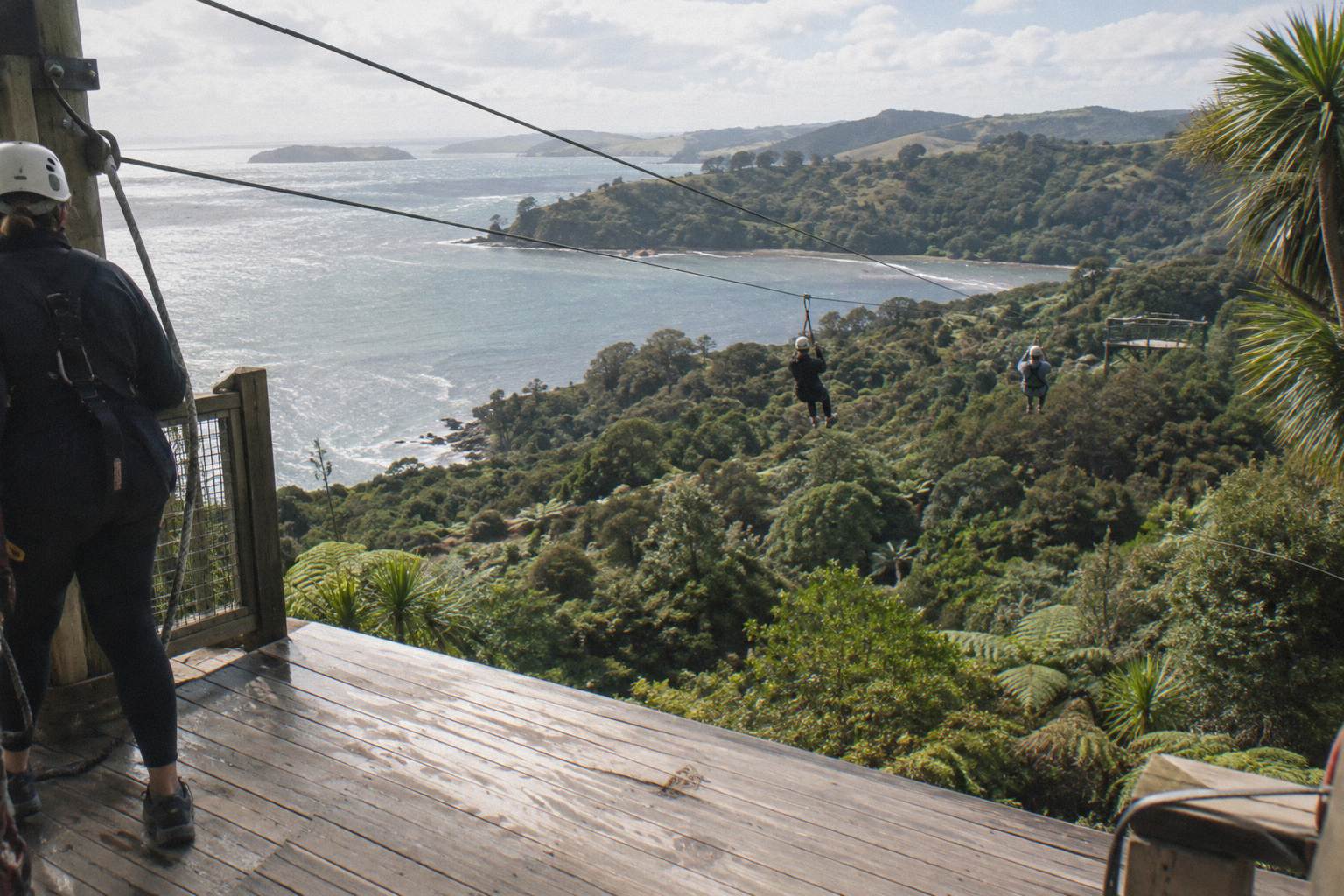
Yes, most nervous first-timers can zipline on Waiheke. EcoZip runs three dual-cable lines of about 200 m at speeds over 50 km/h, with up to 12 guests and 2 guides, a guided 1.4 km forest walk, and a 30-125 kg weight range. Man O' War offers a shorter 2-hour tandem format covering over 900 m of flying.
Roughly one in three adults reports some discomfort with heights, and zipline operators across New Zealand quietly build their whole format around that fact. Waiheke Island is one of the easier places in the country to test the feeling, because both of its courses use seated, harnessed, fully guided formats rather than self-braking adventures. This guide lays out what actually happens on the cables, which format is gentlest, and what to ask before you hand over any money.
Can You Zipline On Waiheke If You're Scared Of Heights?
Yes, in most cases you can. Waiheke's two courses are both guided, harnessed experiences with dual or tandem cables, trained guides beside you, and braking systems you do not operate yourself, which is the setup nervous flyers generally tolerate best. The limiting factors are medical rather than emotional: EcoZip requires riders between 30 and 125 kg, and lists conditions such as pregnancy, heart conditions, and back or neck injury as ones to disclose first.
The honest starting point is that fear of heights sits on a spectrum. Someone who feels uneasy on a glass-floored observation deck is a different case from someone who experiences panic on a stepladder. Operators generally advise that severe acrophobia is worth discussing with a doctor before booking, because a panicked participant halfway along a cable is a safety issue, not just an uncomfortable one. Mild to moderate nervousness, though, is the norm rather than the exception, and guides deal with it every single day.
What makes Waiheke workable for the nervous is the design of the experience. EcoZip's three lines each carry two cables side by side, so you fly next to your partner rather than alone, and the landing is handled by a ZipStop braking system with backup systems behind it, not by grabbing a cable or dragging your hand. Man O' War's Forest Flight uses tandem lines built for pairs, again removing the "alone in the air" feeling that bothers many first-timers. Neither course asks you to control your own speed.
Both operators also cap the experience with time on the ground: EcoZip follows its ziplines with a guided 1.4 km native forest walk, and Man O' War connects its lines with a 660 m elevated boardwalk through kauri forest. If you decide partway through that one line was enough, the walk is where you recover. Note the walk itself is compulsory on the EcoZip experience; the commentary is optional, the walk is not, so factor in that you cannot simply opt out of the forest section after flying.
If your nervousness comes from not knowing what to expect rather than heights themselves, the single best move is reading a full step-by-step walkthrough of the Waiheke zipline day before booking, so nothing on the day is a surprise.
Which Waiheke Zipline Format Suits A Nervous First-Timer Best?
Start with the shortest format that still delivers the flying feeling. Man O' War's Forest Flight is a 2-hour experience with three tandem ziplines over 900 m total; EcoZip's classic trip is about 3 hours from Matiatia with three dual lines of about 200 m each plus the forest walk. The 9-hour zipline-and-wine day tour is the wrong first move for anyone anxious.
The three-listing comparison below covers the formats first-timers actually choose between. Price and rating sit on each live listing rather than being printed here, because both move and a stale figure is worse than none.
| Format | Operator | Time on the island | Flying detail | Ground time |
|---|---|---|---|---|
| Zipline and Forest Walk | EcoZip Adventures | About 3 h door to door | 3 dual-cable lines, about 200 m each, Kurinui at 220 m, over 50 km/h | Guided 1.4 km native forest walk, 20-min highlights shuttle |
| Zipline and Native Forest Adventure Trip | EcoZip Adventures | About 3 h | Same three dual lines, adds a phone bungee | Guided forest walk, Waiheke mini-tour |
| Man O' War Forest Flight | Man O' War Vineyards | About 2 h | 3 tandem lines over 900 m total, reached by 660 m boardwalk | Scenic drive to a 210 m viewpoint, ends at a beachfront tasting room |
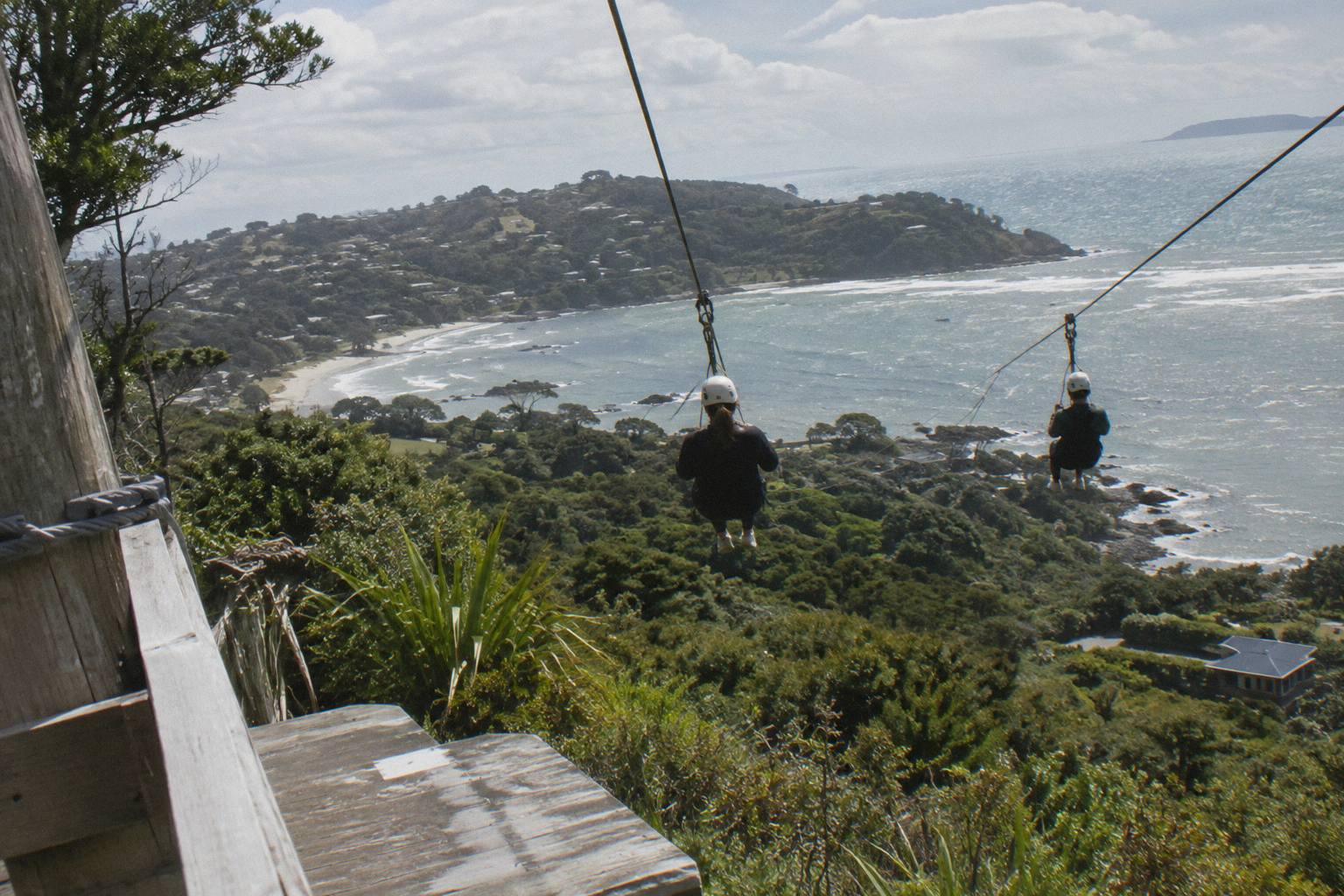
For a genuinely nervous person, the tandem design of the Man O' War course is a real consideration: flying as a pair, physically sharing the experience, is easier for many people than flying alone on a parallel cable. On the other hand EcoZip's format spends more total time with a guide talking you through the forest, and its pick-up points at Matiatia, Oneroa village, or Bus Stop 7 remove the "how do I even get there" stress, with free drop-offs afterwards at island vineyards and restaurants. Neither is the coward's option; they are different balances of flying and grounding.
Between the two EcoZip listings, the classic Waiheke Island: Zipline And Forest Walk is the one most often recommended for nervous first-timers, purely because the inclusions are simple: three flights, the walk, the shuttle, done. The Adventure Trip variant runs the identical course with a phone bungee thrown in, which matters if you want photos but adds nothing to the fear equation.
If your plan is to pair a first flight with a gentler island day and treat the zipline as one item among several, the practical logistics of combining the hop-on hop-off bus with a zipline trip are worth a look, since the Explorer bus interchange at Bus Stop 7 is one of EcoZip's pick-up points.
Man O' War's Forest Flight deserves its own paragraph for the nervous: the course was designed to end steps from a beachfront tasting room, so the arc of the morning is drive up, fly, walk the boardwalk, and land at a table with a view. Several nervous flyers find the promise of an immediate reward does a lot of work.
What Actually Happens On The Cables, Minute By Minute?
On the EcoZip experience you are picked up or meet at Matiatia, weighed discreetly at check-in, fitted with a harness and helmet, briefed on hand position and landing posture, flown one at a time down three lines with two guides managing each launch and landing, and then walked down through native forest, about 3 hours from pick-up to drop-off, or about 2 hours on site if you drive yourself to Trig Hill. The weighing matters and is not a judgement: the 30 to 125 kg range exists so the braking system works for your body, and being over or under it is not automatically refunded.
The sequence below is the one nervous first-timers ask about most, because the fear is usually of the unknown middle. Note the launch detail people fixate on: you never jump. You stand on a platform, the guide clips you to the cable, checks, and you step off into a seated harness position.
| Stage | What happens | What you do |
|---|---|---|
| Check-in | Discreet weigh-in, harness and helmet fit, free phone bungee issued | Say if anything feels wrong with the fit |
| Briefing | Hand positions, braking explanation, landing posture, no grabbing the cable | Ask questions now, not on the platform |
| Shuttle | 20-minute commentated drive to Trig Hill, about 15 minutes from the ferry | Watch the island, calm down |
| Line 1: Vineyard Cruise | Guide launches and catches you, ZipStop braking at the far end | Fly, breathe, look at the view not your feet |
| Lines 2 and 3 | City View, then Kurinui at 220 m and over 50 km/h | Repeat with slightly less terror |
| Forest walk | Guided 1.4-1.5 km descent, uneven with switchbacks and steady uphill stretches | Walk; commentary optional, the walk is not |
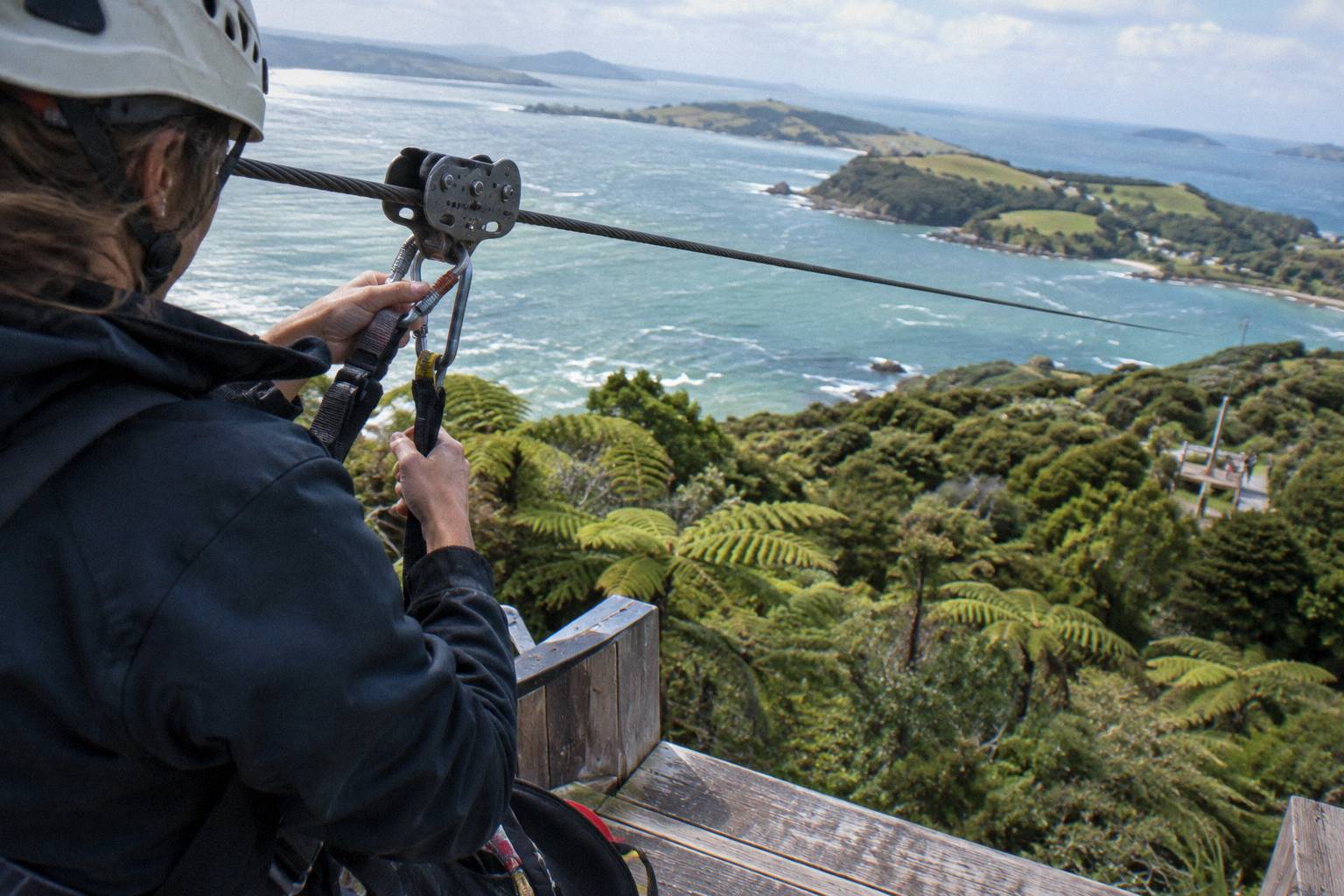
The group size is up to 12 people with 2 guides, which is the detail that surprises people most, in a good way. You are not herded: twelve guests to two guides means a steady rhythm on the platforms, someone watching you at all times, and a queue ahead of you at each launch so you can watch three or four people go first. Watching others fly is, anecdotally, the single most calming part of the experience for nervous participants.
The three flights are short. Each dual cable runs about 200 m, which translates to roughly 20 to 30 seconds of flying per line. Nervous first-timers consistently report the same thing: the dread of the launch platform is far bigger than the flight itself, and by line three most people want to go again. No one can promise you will feel that way, only that the structure, short flights, guided landings, is built for people who start out scared.
How Safe Is The Equipment, And Who Checks It?
EcoZip holds AdventureMark adventure-activity accreditation, has been registered since 2012, and inspects its hardware daily, weekly, and monthly; its lines use ZipStop braking with independent backup systems. In New Zealand, commercial zipline operators must pass a safety audit and register with WorkSafe NZ under the Adventure Activities Regulations 2016, so Waiheke's courses operate inside a regulated safety framework, not a voluntary one.
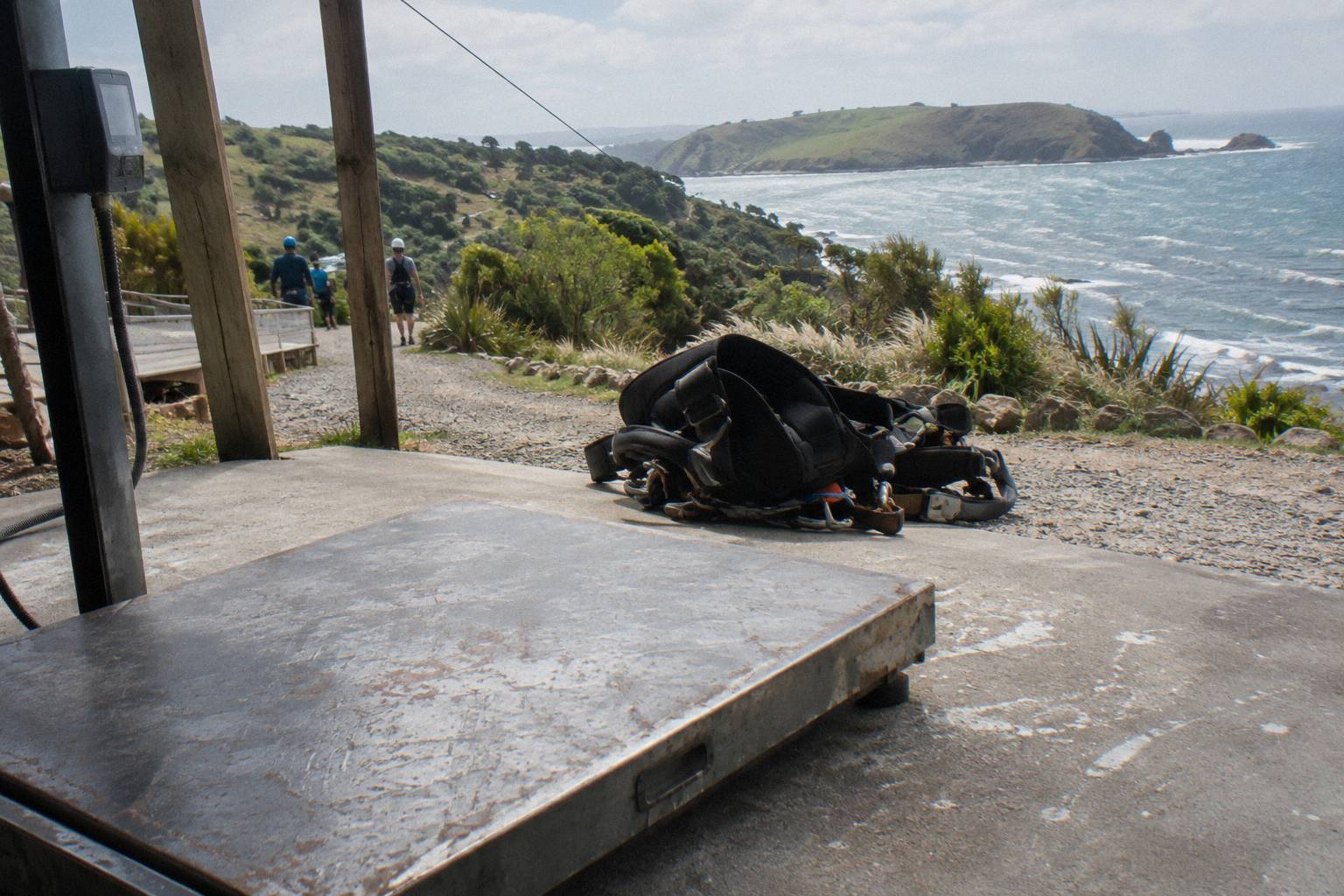
The regulatory layer matters for the nervous because it is not marketing. Under the Health and Safety at Work (Adventure Activities) Regulations 2016, operators like zipline companies must be audited against a WorkSafe safety standard and registered before they can legally take paying customers. WorkSafe's Safety Audit Standard version 2.0, effective 1 April 2024, sets out the safety management requirements auditors test against. EcoZip's own safety page details its AdventureMark accreditation and inspection cycle, and it is reasonable to read it before booking.
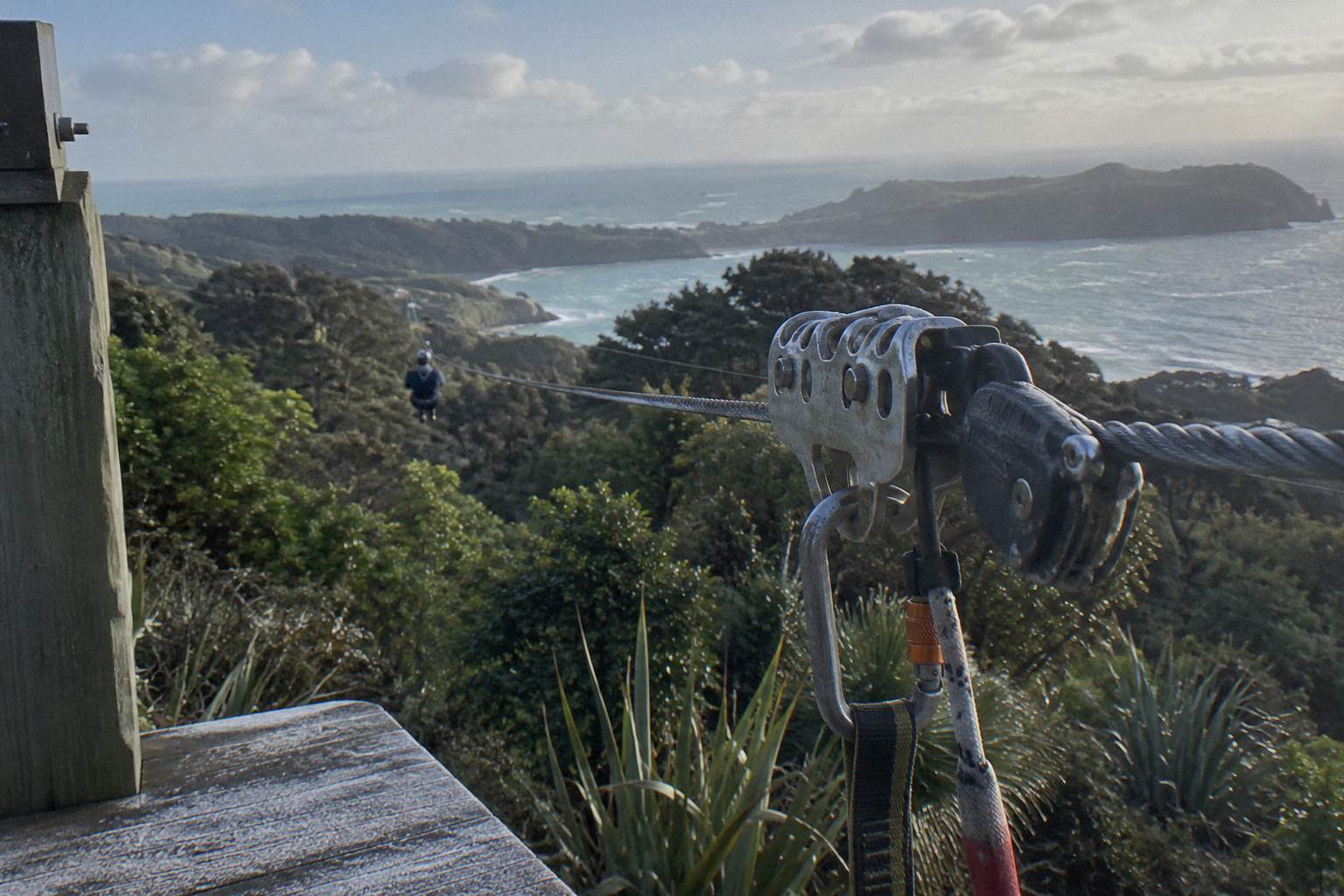
Equipment design is the second reassurance. A dual-cable commercial zipline of this type runs redundant cables and a brake system with a primary brake plus an independent emergency arrest device that engages automatically if the primary fails. International design criteria for commercial courses, such as ASTM F2959 for aerial adventure courses, cover exactly these elements: structural integrity, braking, and operations. You do not need to understand the standards, only to know that the cable, trolley, harness, and brake you are trusting were designed against documented criteria rather than improvisation.
What keeps you safe in practice, though, is behaviour as much as hardware. The briefing rules exist because the documented injury pattern is dominated by preventable causes: in the main US emergency-department study of zipline injuries, falls accounted for 77.3 percent of cases, and fractures, mostly of the upper extremity, accounted for 46.7 percent. That is why the two rules the guides repeat are do not grab the cable, and keep your hands where you are told. Follow the briefing and you have removed the largest documented risk factors.
For a fuller treatment of incident data and what it does and does not say, see whether the Waiheke zipline is safe.
What If You Panic Partway Through?
Tell a guide before you fly, not after. EcoZip's groups run up to 12 guests with 2 guides specifically so that someone can talk a hesitant flyer through a launch; the guides can slow the rotation, let you watch others go first, or repeat the sequence. What they cannot safely do is stop you mid-line, which is why the conversation belongs on the platform.
Panic on a platform is routine for operators and they have scripts for it. The practical sequence that works for most people: say "I'm nervous" at check-in, not at line three. Nervous flyers who flag it early get a guide keeping an eye on them from the first platform, and early disclosure costs you nothing. On the platform itself, the launch is controlled by the guide, so you can take as long as you need between being clipped in and stepping off.
There is a real decision point about who should not fly. Operators commonly list pregnancy, heart conditions, epilepsy, recent surgery, neck, back or spinal injuries, high blood pressure, and certain medications as conditions to disclose; EcoZip's terms list the same categories and reserve the right to refuse anyone affected by alcohol or drugs. If any of those apply to you, the answer is a conversation with the operator and your doctor before booking, not a decision made on a platform. There is a fuller rundown of who should not go zip lining that covers the medical side in detail.
What there is not, on Waiheke, is a halfway exit from a line. Once you step off, physics finishes the flight, which is precisely why the braking is automated. The exit points are the platforms: between line one and line two, and between two and three, you can tell a guide you are done flying. You will still need to complete the forest walk descent, because it is the way down. And the one absolute rule on every line, the rule the injury data backs, is never grab the cable with your hands.
What The Forest Walk Involves, And Why It Helps
After the three flights, the EcoZip experience descends about 1.4 to 1.5 km through native forest on foot: uneven ground, switchbacks, a few steady uphill stretches, possibly mud, and reasonable fitness required, with the guided commentary optional but the walk itself compulsory. Man O' War's equivalent is a 660 m elevated boardwalk through kauri forest, which is flatter underfoot and connects the three lines rather than following them.
Nervous first-timers should know the walk is not a victory lap, it is part of the product. If your concern is more about general physical confidence than heights, the walk deserves as much attention as the cables: uneven surfaces and steady uphill stretches are listed in EcoZip's own materials, and the descent is where legs that have been tense for an hour start to complain. Wear proper footwear, which the operator mandates anyway, closed, laced or buckled shoes, no jandals.
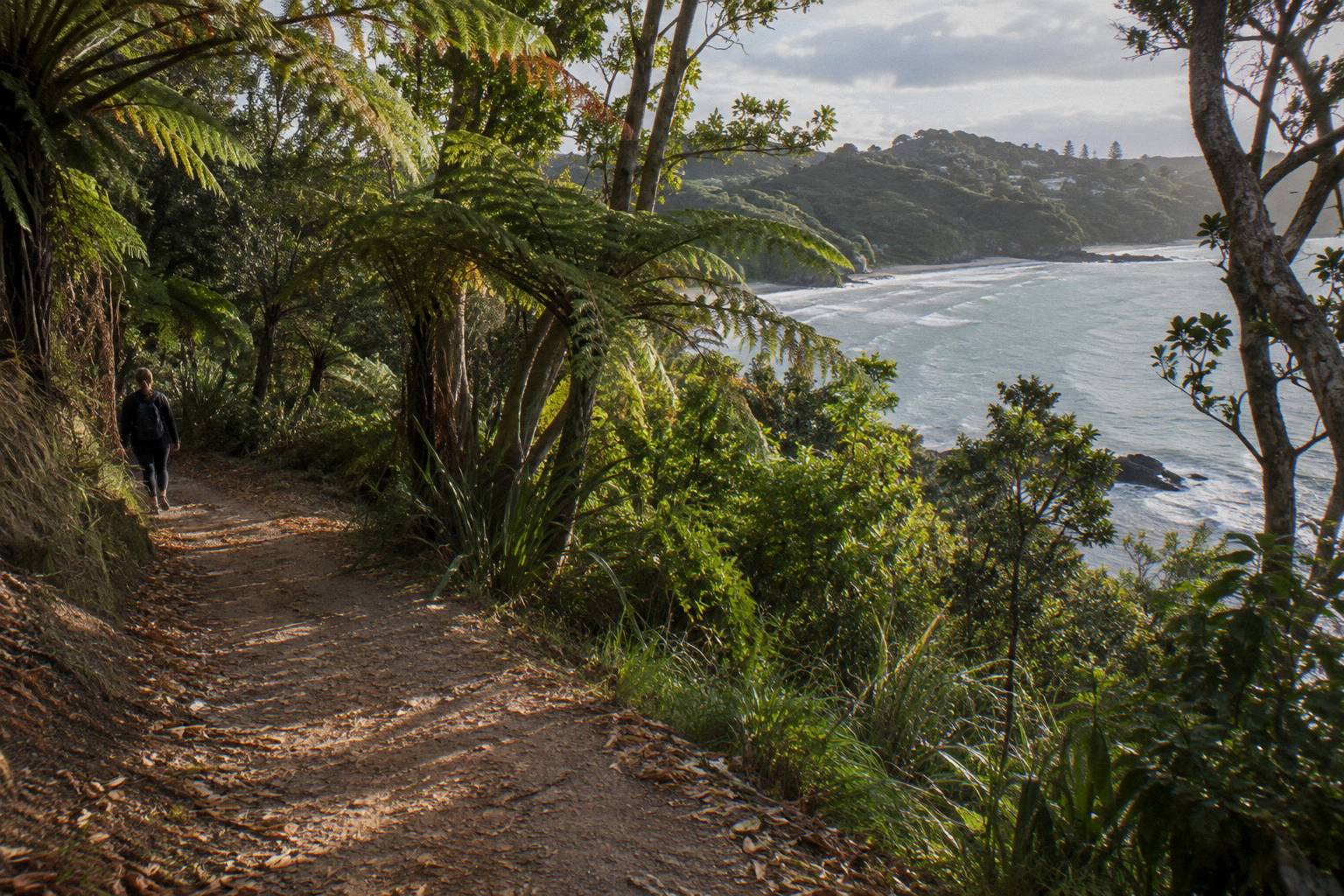
The walk is also, for many people, where the experience settles. Twenty minutes earlier you were terrified on a platform; now you are being shown native forest at ground level, at walking pace, with the flying already behind you. Psychologically that ordering, adrenaline first, calm second, is deliberate and it works in the nervous flyer's favour. Board a ferry straight after a flight and the memory is a blur; walk a forest track after it and the memory organises itself.
What Should You Wear And Bring To Feel More In Control?
Wear closed, laced or buckled shoes and weather-appropriate clothing, bring a warm layer in cold weather, sunscreen, and a hat that fits under a helmet, and your own rain jacket; phones and cameras must be strapped to you, with free phone bungees issued at EcoZip check-in. Getting the small things right is one of the few parts of the day fully in your control, which is exactly what an anxious person needs.
Footwear is the one item that can actually stop you flying, so treat it as non-negotiable. Beyond shoes, the clothing logic for a nervous flyer is about removing decisions: dress so you are neither cold nor sunburnt on the platform, because physical discomfort amplifies anxiety, and pre-decide where your phone will live so you are not fumbling mid-briefing. The free phone bungee at check-in straps your phone to you, and many nervous flyers find having the camera available on line two, once the first flight is survived, turns dread into documentation.
| Item | Why it matters for a nervous flyer |
|---|---|
| Closed, laced shoes | Operator requirement; secure footing on uneven platforms and the walk |
| Warm layer | Cold muscles tense faster; platforms are exposed |
| Hat under helmet, sunscreen | Waiting time on platforms is outdoors |
| Own rain jacket | EcoZip runs in rain and holds only a small stock of loan gear |
| Phone on a bungee | Hands stay free; no clutching a phone on launch |
The site keeps a dedicated what to wear ziplining on Waiheke guide if you want the full packing treatment.
Does Weather Make It Scarier, And When Do They Cancel?
EcoZip runs in rain and cancels or reschedules only when wind is consistently above 35 knots, offering a date or time change or a full refund in that case, so a grey or drizzly day still flies. Wind is the weather variable that genuinely changes the experience for a nervous flyer: a breezy day adds cable sway and platform movement, so if you have latitude, book a calm-forecast day for your first flight.
The wind threshold is worth knowing precisely because it reframes the decision. The operator is not gambling with your safety on marginal days: above 35 knots consistently, the course does not run. Below that, you may feel gusts, and the sensation of a swaying platform is a real trigger for some people, but it is within the envelope the systems are audited against. If you would rather remove even that variable, aim for a morning slot in a settled spell; Waiheke's driest, calmest months are the summer and the shoulders either side.
Cancellation cuts both ways, and nervous flyers should understand the terms before booking rather than after. The operator's own direct booking terms are stricter than they look: inside 48 hours the booking is non-refundable, rescheduling inside 48 hours costs NZ$49 per person, and cancelling more than 48 hours out carries a NZ$25 per person charge. The live listings on the tour cards carry their own cancellation terms, free cancellation up to 24 hours before departure on the platform listings, so read the card, not this paragraph, when you book. Waiheke weather cancellations themselves are always the operator's call, and they come with a full refund or a free date change.
What Should You Ask Before Booking A First Zipline?
Ask five things before you pay: the exact weight range and whether weighing happens, the group size and guide ratio, whether the lines are dual or tandem, what the on-foot portion involves, and the cancellation terms on the listing you book. For EcoZip the answers are 30 to 125 kg with a discreet weigh-in, 12 guests to 2 guides, dual cables, and a 1.4 km walk.
The questions are not about catching anyone out, they are about replacing imagination with information, which is the whole game for a nervous first-timer. A phone bungee, a seat on a shuttle, and knowing the flight lasts under half a minute are all things you can establish in one email or one read of a listing, and each one removes a category of unknown.
| Question | Why it matters | Waiheke answer (EcoZip) |
|---|---|---|
| Weight range, and who checks? | Braking is weight-dependent; over/under range is not auto-refunded | 30-125 kg, weighed discreetly at check-in |
| Group size and guides? | More guides means slower pace and more reassurance | Up to 12 guests, 2 guides |
| Dual or tandem lines? | Flying beside someone is easier than flying alone | Dual, side by side |
| What's the walking section? | You cannot skip it | 1.4-1.5 km guided native forest walk, uneven ground |
| Cancellation terms? | Direct terms differ from platform listings | Read the listing you actually book on |
One booking-side note: if you are booking the EcoZip Adventure Trip variant rather than the classic listing, the course, guides, and rules are identical, so everything above applies; the difference is small inclusions such as the phone bungee rather than a different experience. For nervous flyers the choice between them is genuinely trivial compared with the choice to go at all.
For Man O' War's Forest Flight, the listing gives a 30 to 125 kg weight range, and age and cancellation terms are on the live listing. Ask the same five questions there; the format answers differ, the reasoning does not.
How To Build A Low-Stress Day Around A First Flight
Anchor the day to the ferry, not the zipline: the Fullers360 crossing from Downtown Auckland to Matiatia takes about 40 to 45 minutes, EcoZip's shuttle collects right at the ferry terminal, and after your roughly 3-hour experience the operator drops you free at island vineyards and restaurants including Stonyridge, Te Motu, and Wild Estate. Sailing in on an earlier boat gives you buffer time, and buffer time is the nervous flyer's best friend.
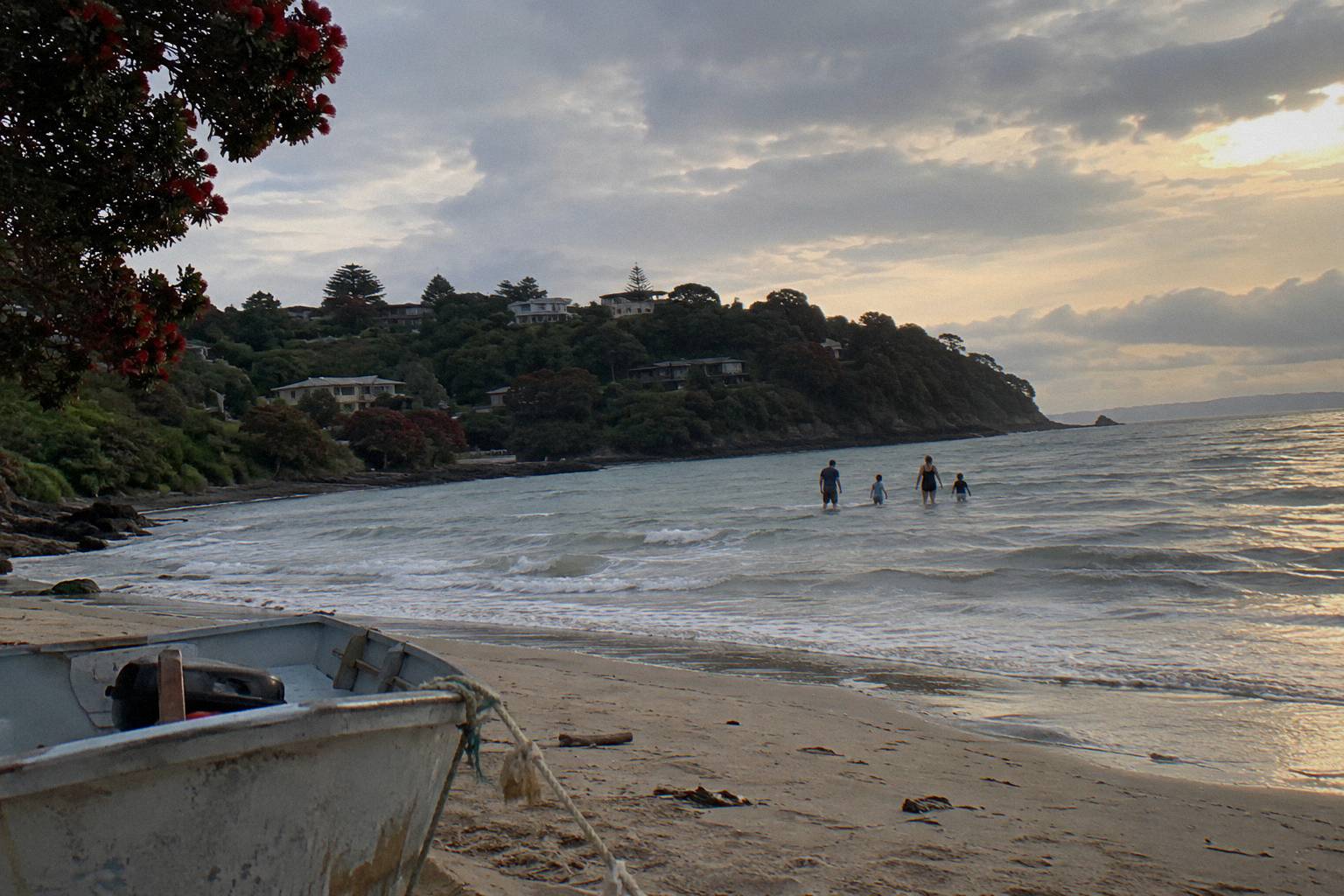
The temptation on a first zipline day is to compress everything into the smallest possible window, but the opposite strategy works better. Arrive on an earlier ferry, have a coffee in Oneroa, the island's largest village about 2 km from the wharf, and walk to your pick-up point unhurried. After the flight, take the free vineyard drop-off and let the afternoon decompress at ground level with a tasting flight of a different kind. The plan for a full day trip built around a zipline covers the timing in detail.
For travellers who want a fallback activity in reserve, in case the morning's courage does not materialise, the island's hop-on hop-off Explorer bus runs 16 to 17 stops on a loop from Matiatia and doubles as an escape plan: the Ferry Plus Hop-On Bus link on the bus and ferry combo listing shows current pricing, and the bus interchange at Bus Stop 7 is itself one of EcoZip's pick-up points. Check the ferry logistics for a morning zipline slot if timing is your main worry.
Whatever you decide, decide it deliberately. Waiheke Zipline Tours exists precisely because the difference between a terrified first-timer and a converted one is usually nothing more than format choice and information, and both of those are free.
Common Questions About Ziplining With A Fear Of Heights
Can You Zipline On Waiheke If You're Scared Of Heights?
In most cases, yes. Both Waiheke courses are guided, harnessed formats with automated braking, dual or tandem cables so you fly beside someone, and group sizes capped at 12 guests to 2 guides on the EcoZip experience. Severe acrophobia, or a listed medical condition such as pregnancy or a back injury, is a conversation to have with the operator or a doctor before booking.
Will I Have To Jump Off The Platform?
No. The guide clips you to the cable, checks your gear, and you step off into a seated harness position. The launch is controlled, and you can stand clipped in for as long as you need before stepping. Once you step, the flight lasts roughly 20 to 30 seconds per line and the ZipStop system handles the landing.
Which Waiheke Zipline Is Easiest For A First-Timer?
There is no single answer, but the shortest formats are the gentlest introductions. Man O' War's Forest Flight is a 2-hour experience with tandem lines and a boardwalk; EcoZip's classic trip is about 3 hours with three dual lines of about 200 m each plus a guided forest walk. The 9-hour zipline-and-wine day tour is a poor first flight for anyone anxious.
What If I Panic Halfway Down A Line?
You cannot stop mid-line, which is why disclosure happens on the platform. Tell a guide before you fly and they can slow the group, let you watch others launch, or talk you through the sequence. Between lines you can tell a guide you are done flying, though the forest walk descent remains part of the EcoZip experience.
Does The Zipline Run In Bad Weather?
EcoZip runs in rain. It cancels or reschedules only when wind is consistently above 35 knots, in which case you get a full refund or a free date or time change. Wind below that threshold can still sway platforms, so a calm-forecast day is the more comfortable first flight.
Is There An Age Or Weight Limit For Nervous Older First-Timers?
EcoZip has no age limit; under-18s need a parent or guardian to agree to the booking terms. The weight range is 30 to 125 kg, checked discreetly at check-in. Elsewhere in New Zealand operators have flown guests over 90 years old, and Waiheke's own guidance prioritises fitness and mobility over age.