Who Should Not Go Zip Lining? Health And Weight Rules At EcoZip
Who should not go zip lining on Waiheke? The EcoZip weight window, the health conditions on its terms, pregnancy, age limits, alcohol rules, and what the operator can refuse.
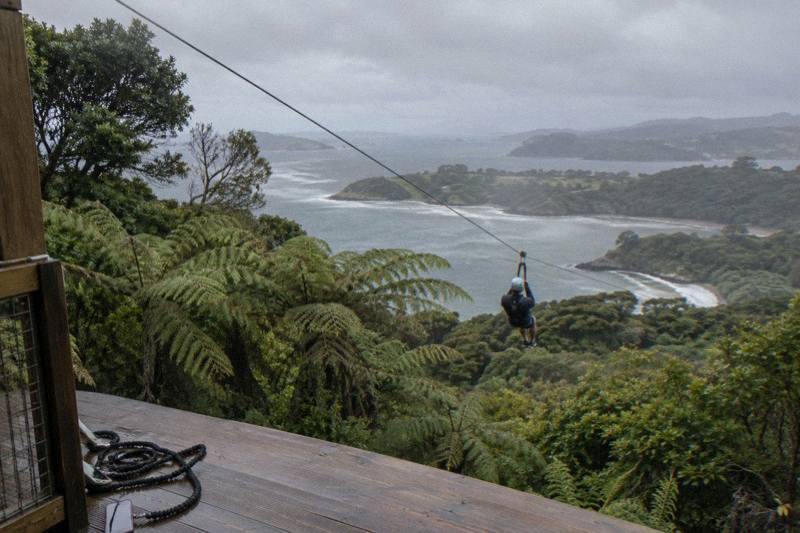
The three ziplines at EcoZip Adventures carry riders side by side at over 50 km/h above a native forest valley, and like every commercial zipline in New Zealand they run on rules that exist because physics does not negotiate. A rider outside the equipment's weight range cannot brake reliably; a harness pressing on the wrong medical condition can turn a thrill into an injury. The question of who should not go zip lining is not about nerves or enthusiasm. It is about a short, specific list of measurable limits that the operator publishes and enforces at check-in.
This page works through that list as it applies on Waiheke Island: the weight window at EcoZip, the health conditions named in its terms, pregnancy, alcohol, age at both ends, and the operator's right to refuse anyone on the day. Where other New Zealand operators publish comparable rules, they are included for context, because the pattern is consistent across the country and it explains why the limits are drawn where they are.
Who Should Not Go Zip Lining?
The people who should not go zip lining at EcoZip on Waiheke are riders under 30 kg or over 125 kg, anyone affected by alcohol or drugs, and guests with conditions the operator names on its terms page: high blood pressure, cardiac conditions, pregnancy, and back or neck injury. There is no age limit, but under-18s need a parent or guardian to sign the risk disclosure form. The operator can refuse anyone it judges unsafe on the day.
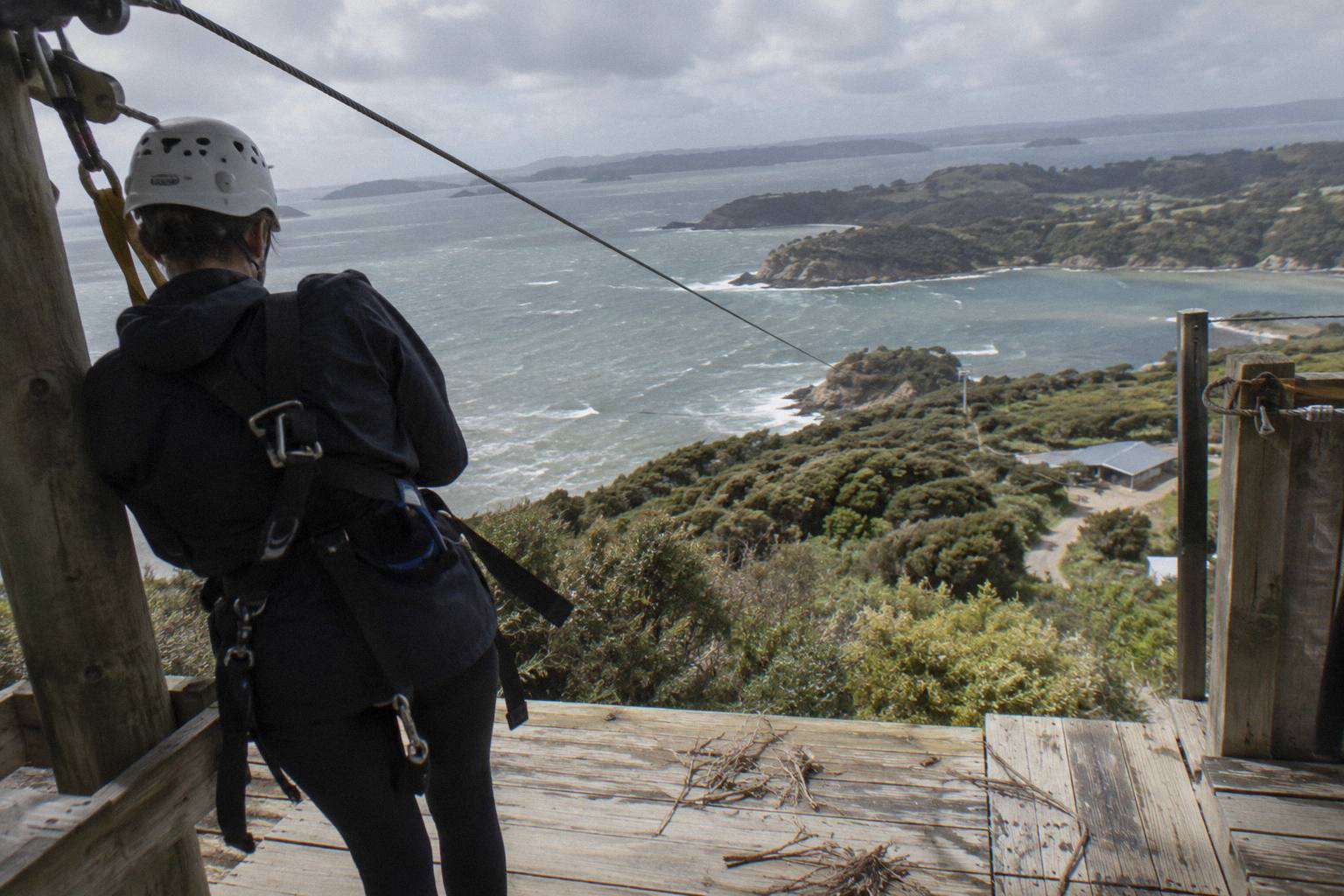
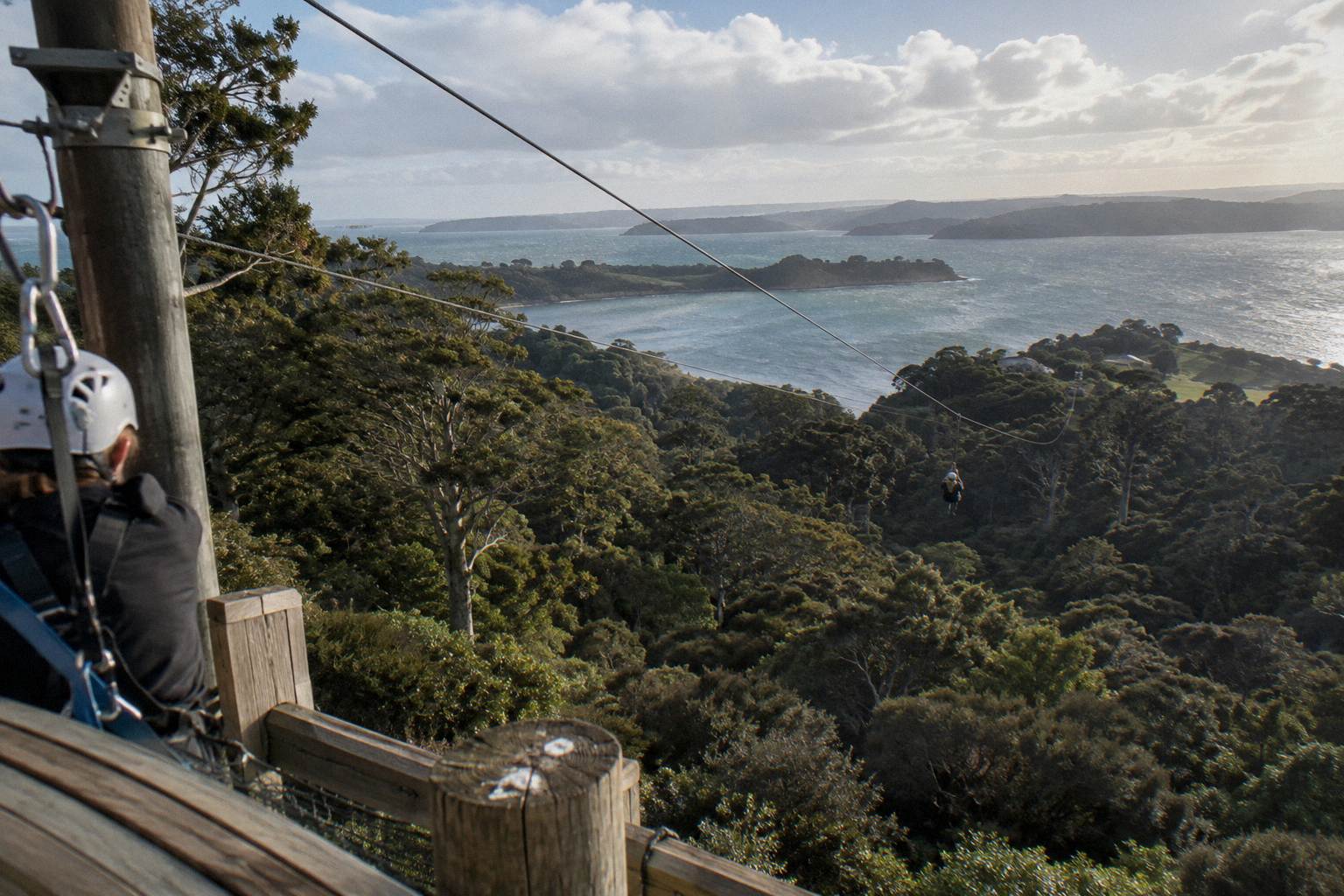
That list reads shorter than most people expect. There is no upper age limit at all, and no minimum age either: EcoZip's rules are built around weight and health rather than birthdays, because a 70-year-old within the weight window is a safer proposition on a zipline than a teenager with an unhealed back injury. The dual cables at EcoZip are each around 200 m long and the third, Kurinui, runs 220 m at over 50 km/h, so the braking system and the harness are doing real work, and the entry rules reflect that.
It helps to understand why the limits are drawn so firmly. Zipline weight limits exist so riders generate enough speed and momentum for reliable braking while staying inside the ratings of the harness, cable, trolley and brake equipment; too heavy risks equipment overload and excessive arrival speed, too light risks a rider stalling short of the landing platform. Falls accounted for 77.3 percent of zipline-related injuries treated in United States emergency departments between 1997 and 2012, per a study in the American Journal of Emergency Medicine, and most of the rest came down to harness fit, braking and body position, all things the entry rules are designed to control.
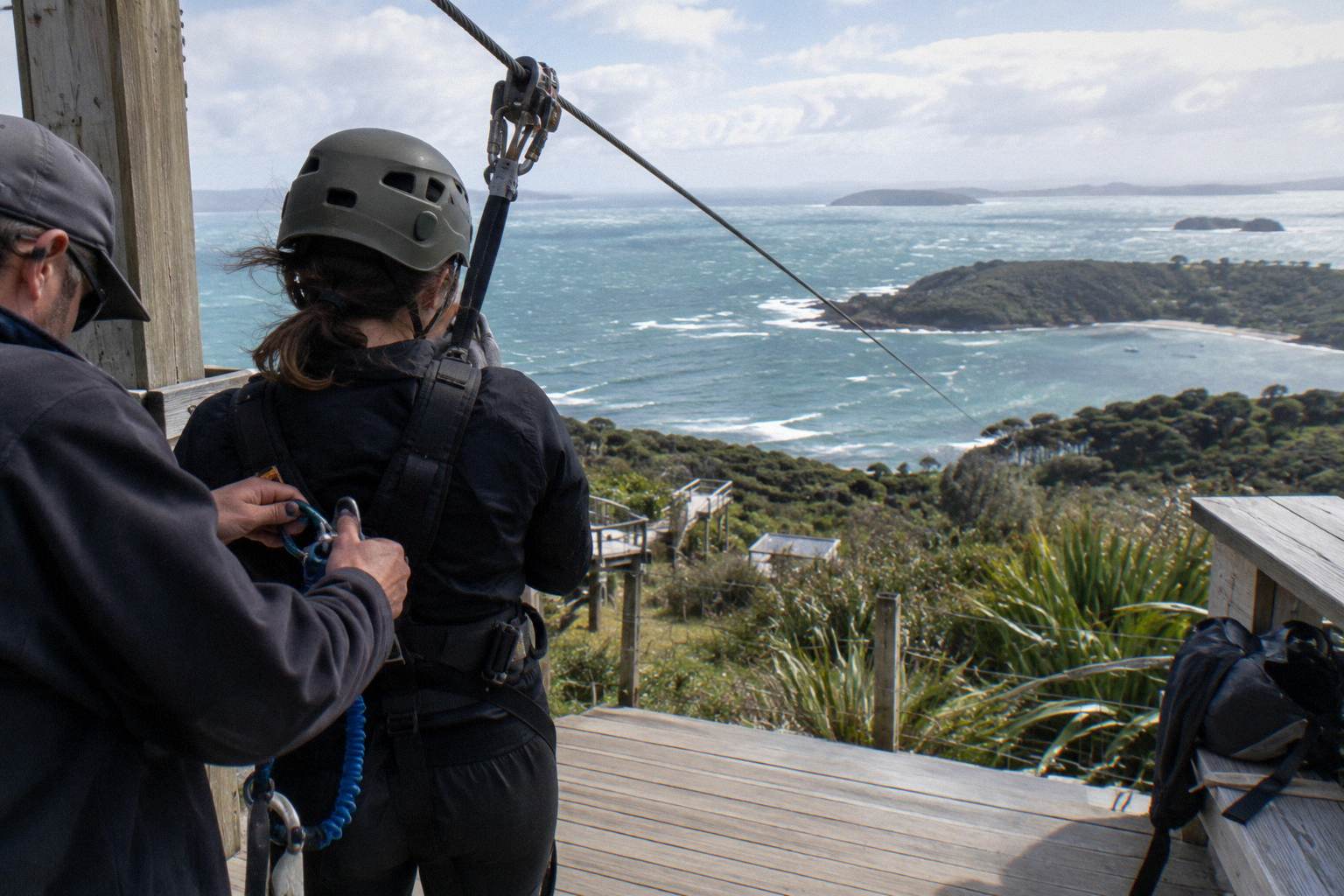
Under New Zealand's Health and Safety at Work (Adventure Activities) Regulations 2016, commercial zipline operators must pass a safety audit and register with WorkSafe NZ, which is why the rules are written down rather than improvised. EcoZip is AdventureMark accredited and has been registered since 2012, with daily, weekly and monthly hardware inspections on top. The exclusions below are the practical edge of that safety system, not marketing caution.
Under 30 Kg Or Over 125 Kg: The EcoZip Weight Rule
EcoZip requires every rider to weigh at least 30 kg and not more than 125 kg, and everyone is weighed discreetly at check-in. A rider outside that window cannot fly, and being over or under the limit does not automatically earn a refund. The limit is a hard engineering boundary set by the harness, cable, trolley and brake ratings, not a judgement about body size.
The 125 kg ceiling at EcoZip matches the top of the generic commercial range worldwide, which commonly runs to roughly 23 to 125 kg depending on course design. It also matches Ziptrek Ecotours in Queenstown, which sets the same 125 kg maximum across its tours. Some New Zealand operators draw the line lower: Rotorua Canopy Tours and Coromandel Zipline Tours both set 120 kg. If you are close to the limit, the honest answer is to weigh yourself before you travel, not at the wharf.
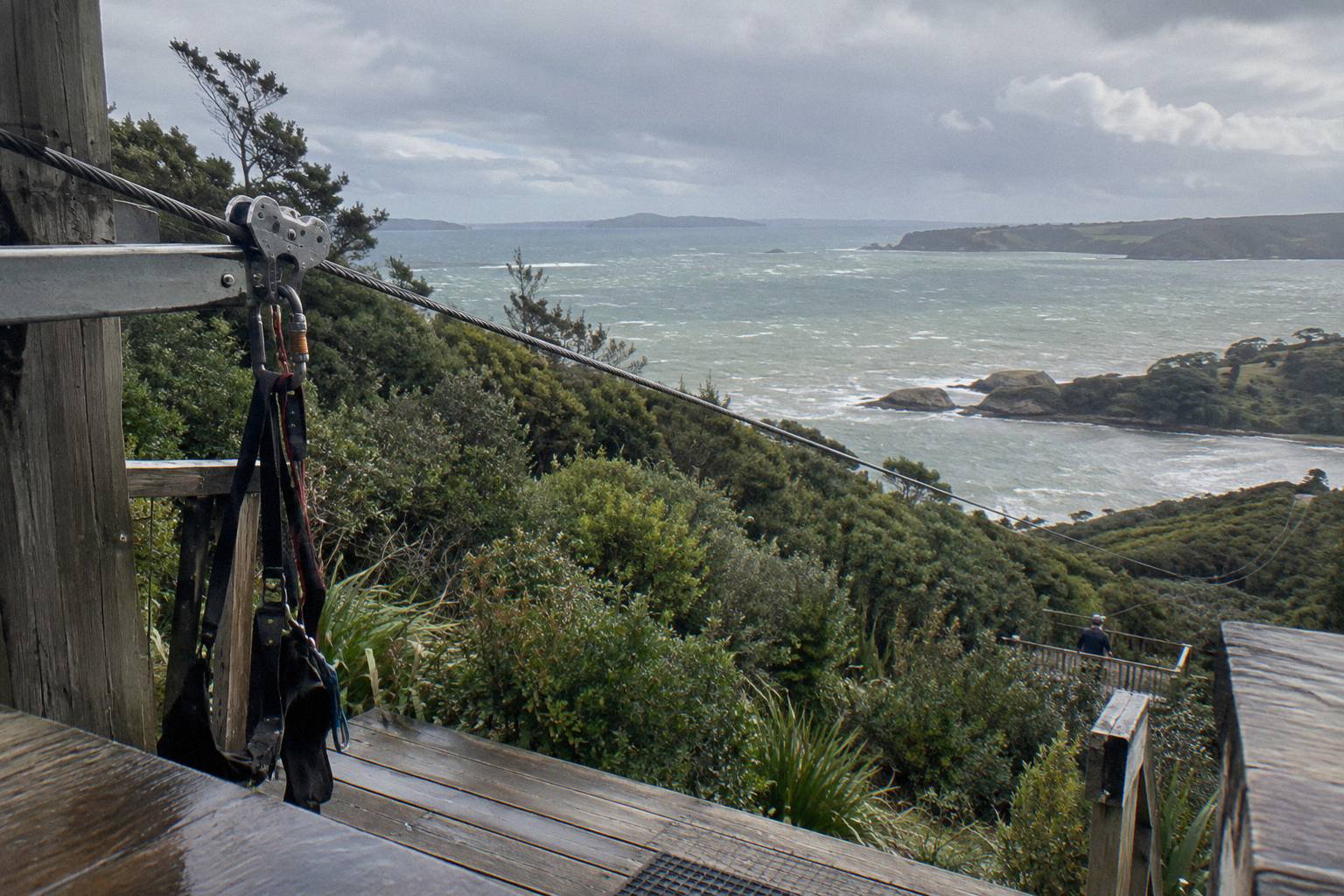
The 30 kg floor matters just as much and gets far less attention. A light rider does not build enough momentum to cross a 200 m span reliably and can stall mid-cable, which turns a controlled flight into a rescue. This is why small children are usually the practical exclusion at the bottom of the range, even though EcoZip formally has no age limit: a child who has not yet reached 30 kg simply cannot generate the arrival speed the brake system is designed around.
| Operator | Weight range | Notes |
|---|---|---|
| EcoZip Adventures (Waiheke) | 30 to 125 kg | Weighed discreetly at check-in; no automatic refund outside the range |
| Ziptrek Ecotours (Queenstown) | Max 125 kg | Applies across all tours |
| Rotorua Canopy Tours | Max 120 kg | Same ceiling on Original and Ultimate tours |
| Coromandel Zipline Tours | Max 120 kg | Ages 6 and up |
| Zipline Christchurch | 27 to 125 kg | Height over 122 cm; under-13s with an adult |
The refund point is the part that catches people out. EcoZip's terms treat an over- or under-weight no-show as a booking the guest could not use, not a cancellation the operator caused, so the money does not automatically come back. Checking weight in advance is free; discovering a mismatch at Trig Hill is expensive. Our guide to the Waiheke zipline weight limit and harness sizes goes deeper on harness fit and how the weigh-in actually works.
Health Conditions That Mean You Should Not Zip
EcoZip's terms name the conditions that may impair safety on the zipline: high blood pressure, cardiac conditions, pregnancy, and back or neck injury. Guests with these conditions should not ride, and the operator may refuse anyone it judges affected on the day. Recent surgery, epilepsy and certain medications appear on comparable operator lists across New Zealand and overseas.
The reason is mechanical rather than cautious. A zipline harness loads the body across the pelvis, hips and torso, and the flight ends in a braking event that pushes blood pressure and the spine around more than the view suggests. For a rider with uncontrolled high blood pressure or a cardiac condition, that sudden load is a genuine physiological stressor. For a rider with a healing back or neck, the compression at braking is exactly the motion a surgeon would tell them to avoid.
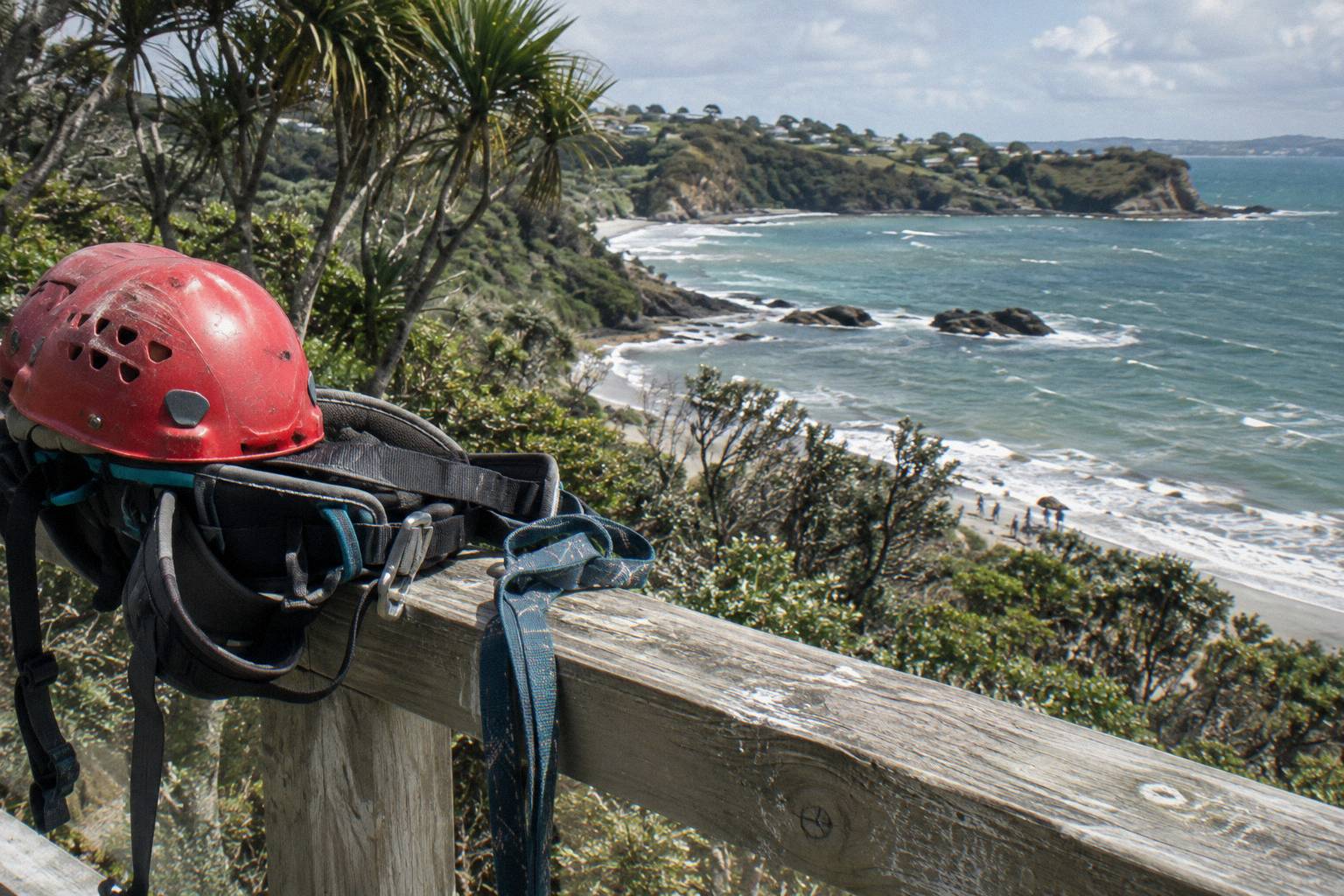
Other operators publish longer versions of the same list, which is useful context if you are weighing up a condition not named at EcoZip. Zipline Christchurch excludes participants with previous neck or back injuries, and standard medical guidance for ziplining with back, neck or spinal problems is to consult a doctor first, since recent injuries and chronic conditions are frequent contraindications. The consistent advice across operators: if a condition affects your spine, your heart, your circulation or your consciousness, get a medical opinion before booking rather than after.
| Condition | Ride or not | Why |
|---|---|---|
| High blood pressure (uncontrolled) | Do not ride | Braking load spikes blood pressure |
| Cardiac condition | Do not ride | Harness load and sudden deceleration stress the heart |
| Back or neck injury | Do not ride | Compression at braking aggravates healing tissue |
| Recent surgery | Do not ride | Common contraindication across operators |
| Epilepsy | Consult a doctor | Loss of consciousness mid-flight is the hazard |
| Stable, managed conditions | Ask the operator | Case-by-case, decided at booking |
One practical note: disclose at booking, not on the platform. Conditions raised in advance can be discussed, documented and sometimes accommodated with a doctor's clearance; conditions discovered during the pre-flight briefing usually end in a refusal at the site. The operator also treats being under the influence of alcohol or drugs as an automatic refusal, covered in its own section below. For the broader injury picture, our piece on the real risks of zip lining sets out what the injury data does and does not show.
Pregnancy And Ziplining On Waiheke
Pregnant guests should not zip at EcoZip: pregnancy appears on the operator's list of conditions that may impair safety, and most commercial zipline operators prohibit pregnant riders outright. Standard harnesses are not designed for pregnancy, and the risks are abdominal pressure from the harness and sudden stops during braking.
The mechanism is worth understanding because it explains why there is no "early pregnancy exception" in most policies. The harness webbing crosses the lower abdomen and pelvis, and the brake at the end of a 200 m line delivers a firm deceleration. Neither is compatible with a pregnant abdomen at any stage. Across New Zealand the published policies differ only in wording: Zipline Christchurch and Ziptrek Ecotours in Queenstown do not permit pregnant participants at all, and Rotorua Canopy Tours draws its line at 15 weeks.
That 15-week line at Rotorua is the most permissive published policy among the major NZ operators, and even it comes with medical-consent language. The sensible reading is that pregnancy and ziplining do not mix, and Waiheke has no shortage of alternatives: the island runs around 30 wineries with roughly 20 cellar doors, tasting flights typically run NZ$20 to NZ$55 per person, and the Waiheke Zipline Tours roster includes wine tours and hop-on hop-off bus options that a pregnant guest can enjoy while the rest of the group flies. Our dedicated piece on whether you can zipline while pregnant on Waiheke covers the policies in more detail.
Alcohol, Drugs, And The Operator's Right To Refuse
EcoZip may refuse anyone affected by alcohol or drugs, and this is the one exclusion that applies to otherwise perfectly healthy, in-range riders. It is also the one most often wasted: a vineyard lunch before an afternoon zipline slot is a classic Waiheke mistake. Book the zip first, drink after.
The refusal right is broad and written into the operator's terms, which state it may refuse anyone it judges affected by alcohol or drugs or otherwise unsafe to participate. In practice the pre-flight briefing makes impairment obvious quickly: riders repeat braking positions and hand signals back to the guide, and a rider who cannot do that reliably is not flying. There is no breathalyser and no argument, just a guide declining to clip someone in, and no refund follows.
The Waiheke scheduling trap deserves a heading of its own because the island's tourism runs on wine. A typical day pairs a morning zipline with an afternoon of cellar doors, and that order works. The reverse order, a long lunch at a vineyard followed by a 3 pm zipline slot, puts the rider in exactly the position the terms exclude. If your group is doing both, take the morning ferry, zip first, and let the tasting room be the reward. The ferry from downtown Auckland takes about 40 minutes, so a morning slot from the city is comfortable.
Age Limits: Children And Older Riders
There is no age limit at EcoZip in either direction: no minimum age and no upper age limit. Under-18s need a parent or guardian to agree to the booking terms and sign the risk disclosure form, and children 15 and under pay the child price. The practical barrier for small children is the 30 kg weight floor, and for older riders it is mobility and fitness, not age.
The upper end is the more surprising half of that answer. New Zealand operators consistently report that fitness and capability matter more than birth years: Rotorua Canopy Tours has hosted guests up to 93 years old and Ziptrek in Queenstown has zipped riders over 90. If you can walk the forest trail, climb the stairs to the launch platform and follow a briefing, the cable does not care how many candles were on your last cake.
At the lower end, the gatekeeper is weight rather than age. A child under 30 kg cannot ride at EcoZip no matter how keen or how well-supervised, because the physics of a light rider on a 200 m span do not change for enthusiasm. Elsewhere in New Zealand, published minimum ages run from 6 years at Rotorua Canopy Tours' Original tour to 10 years at the more demanding courses, which gives a fair picture of when children typically clear both the weight and the comprehension bar for a guided briefing.
| Rider | Can they zip at EcoZip? | What decides it |
|---|---|---|
| Child under 30 kg | No | Weight floor, enforced at check-in |
| Child 30 kg and over | Yes | Guardian signs the risk disclosure form |
| Teenager | Yes | Same weight window, guardian signature under 18 |
| Adult in weight range | Yes | Health conditions list is the only barrier |
| Older rider, any age | Yes | Fitness and mobility, not age, are the test |
For families weighing the whole question up, the family and group guide to the Waiheke zipline covers how the family ticket (2 adults plus 2 children, or 1 adult plus 3 children aged 15 and under) works alongside the eligibility rules.
If the family group is mixed in age or confidence, the signature EcoZip product is the one that fits most of these rules in a single about-3-hour package: three dual-cable flights where two riders go side by side, then the guided forest walk, then a minivan highlights tour back from Trig Hill. The dual-cable layout is genuinely useful for nervous or younger riders, because a parent can fly the same line at the same moment rather than watching from a platform. Full details and the operator's eligibility wording are on the Waiheke Island: Zipline And Forest Walk page.
If You Cannot Zip: What Still Works On Waiheke
A rider excluded by weight or health does not have to sit in the car park. EcoZip's shuttle drop-off reaches vineyards and restaurants including Stonyridge, Te Motu and Wild Estate, the hop-on hop-off Explorer bus runs 16 to 17 stops on an 80-minute loop from Matiatia, and the Man O' War side of the island offers a 660 m forest boardwalk experience with its zipline tour.
The boardwalk point is worth expanding because it reframes what an excluded rider is actually missing. The Man O' War Forest Flight on Waiheke's eastern end is a 2-hour experience built around three tandem ziplines totalling over 900 m, connected by a 660 m elevated boardwalk through coastal forest, ending steps from a beachfront tasting room. Its listing gives a 30 to 125 kg weight range, and age and cancellation terms should be checked on the live listing before booking, but the structure of the tour, drive, forest, wine, makes it a full island morning even for a non-flying companion in some configurations.
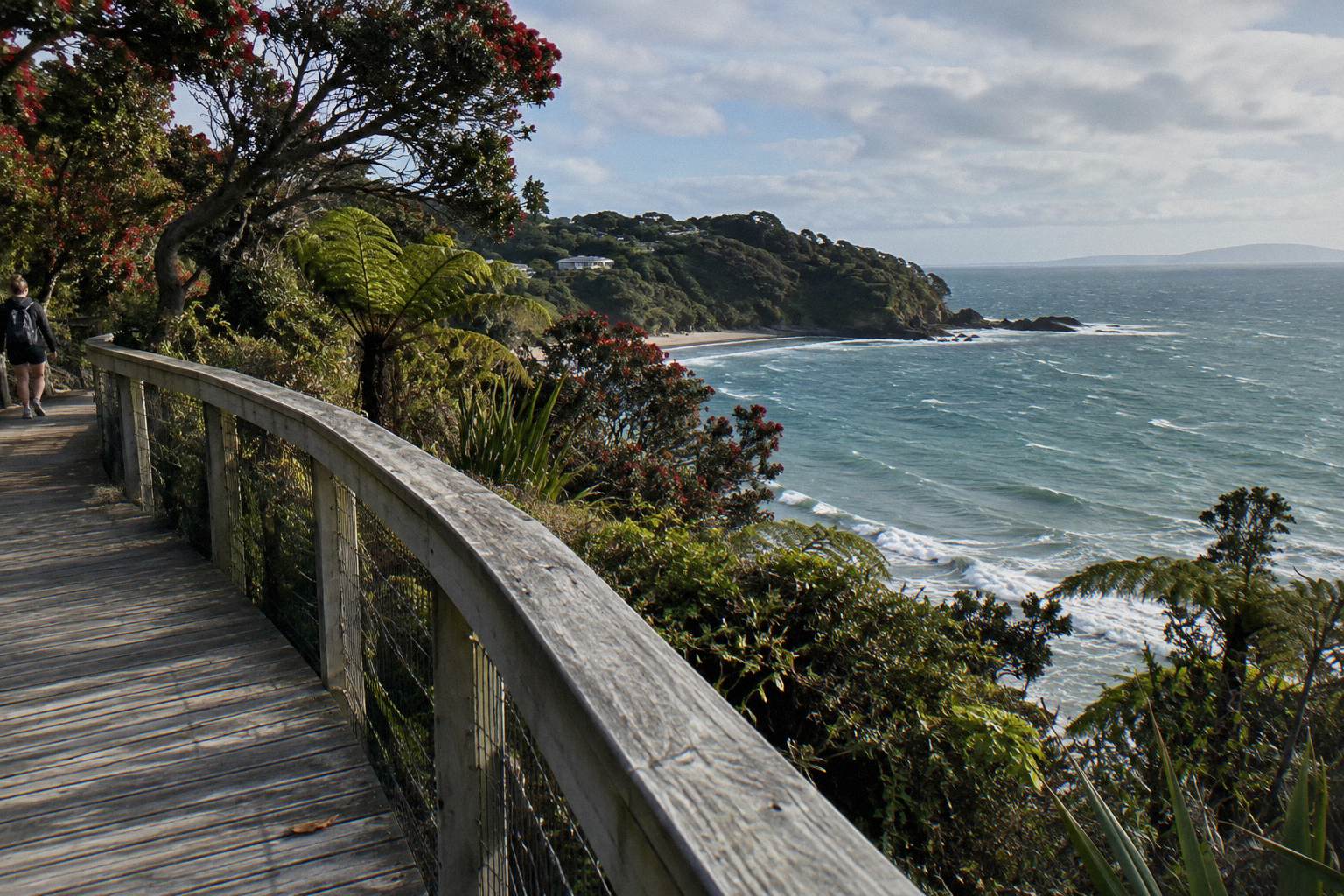
For a guest excluded on health grounds, the honest consolation is that Waiheke's core pleasures do not require a harness. The island's cellar doors mostly open from around 11 am to 5 pm with tastings of three to five wines, Oneroa village sits about 2 km from the ferry with cafes and two beaches, and Onetangi stretches roughly 2 km of golden sand along the island's northern coast. A non-zipping partner can build a genuinely good day out of a tasting pass, a long lunch and a swim while the rest of the group flies.
The one planning note that applies to everyone: check the eligibility rules on the operator's live listing at booking time, not on the morning of the trip. Weight windows and health wording are stable, but platform listings and the operator's own pages carry the current binding version, and a two-minute read beats an argument at a launch platform. If nerves rather than rules are the barrier, our guide for nervous first-timers on the Waiheke zipline walks through what the briefing and first flight actually feel like.
Common Questions About Who Should Not Go Zip Lining
Who Should Not Go Zip Lining?
Riders under 30 kg or over 125 kg, anyone affected by alcohol or drugs, and guests with the health conditions named on EcoZip's terms: high blood pressure, cardiac conditions, pregnancy, and back or neck injury. Under-18s can ride but need a guardian's signature on the risk disclosure form.
Do You Get Weighed Before Ziplining On Waiheke?
Yes. Everyone at EcoZip is weighed discreetly at check-in, and riders outside the 30 to 125 kg window cannot fly. Being over or under the limit is not automatically refunded, so weigh yourself before you travel.
Can I Zipline If I Am Over 70?
Yes, if you are inside the weight window and can manage the forest walk and launch-platform stairs. EcoZip has no upper age limit, and New Zealand operators elsewhere have hosted riders in their nineties. Fitness and mobility decide, not age.
Can Pregnant Guests Watch Instead Of Riding?
Yes, and non-riding companions are a normal part of the day. The EcoZip shuttle drops at vineyards including Stonyridge, Te Motu and Wild Estate, and the hop-on hop-off bus covers the main sights from Matiatia.
What Happens If I Turn Up Outside The Weight Limit?
You will not be able to fly, and EcoZip's terms do not automatically refund riders outside the 30 to 125 kg window. The weigh-in happens at check-in, which is why weighing yourself before booking matters.
Can I Drink At A Vineyard Before My Zipline Slot?
No. EcoZip may refuse anyone affected by alcohol or drugs, with no refund. The standard advice is to zip first and taste after, which is how most Waiheke days are sequenced anyway.