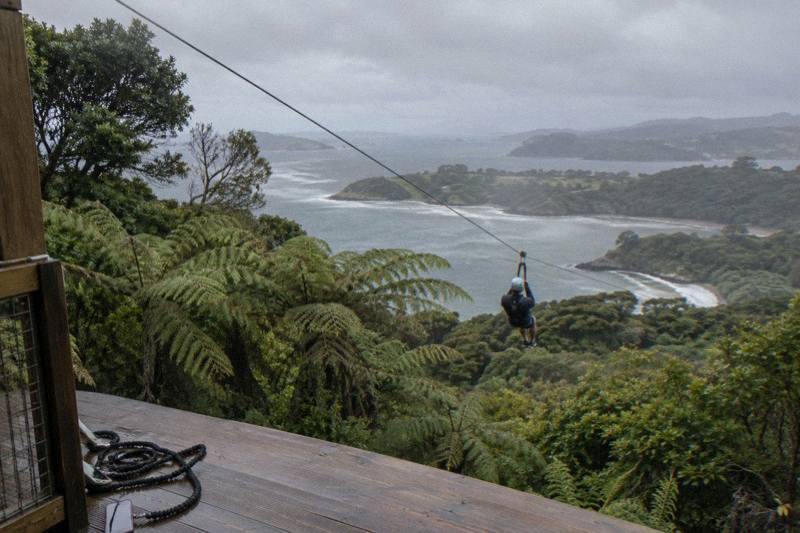
Can You Zipline While Pregnant? What EcoZip Says
Pregnancy sits on EcoZip's list of conditions that may impair safety, and most New Zealand zipline operators exclude it. Here is what the rules say and what to do instead on Waiheke.
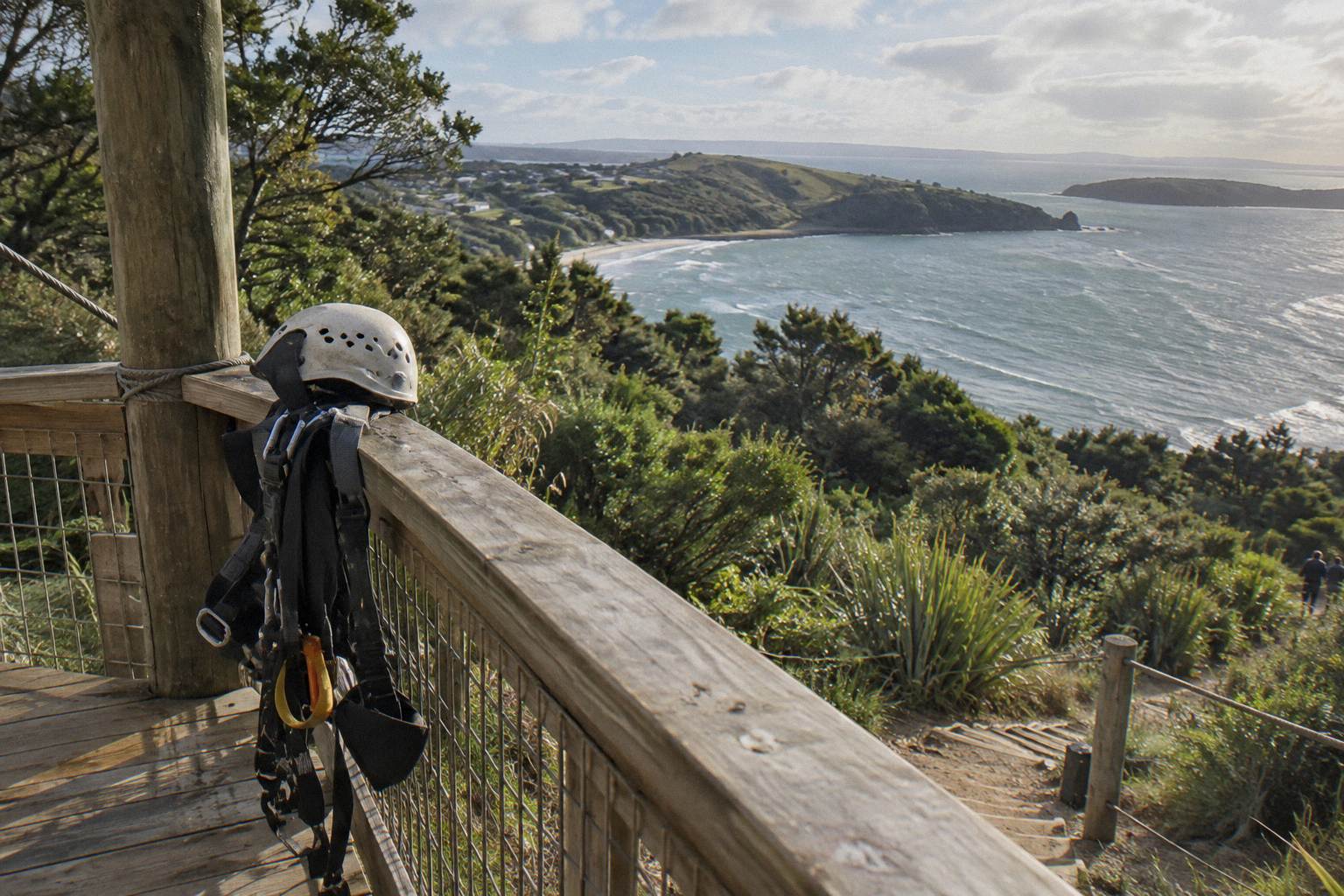
Can You Zipline While Pregnant?
No operator on Waiheke actively invites pregnant riders, and the honest answer is no unless a doctor and the operator both clear it. EcoZip Adventures lists pregnancy among the conditions that may impair safety, and its terms reserve the right to refuse participation. Several other New Zealand operators exclude pregnancy outright, so plan on a different Waiheke activity for this trip and save the zipline for later.
That is a disappointing answer if you had your heart set on the three dual lines above Trig Hill, but it is the one the safety documents support. The two zipline operators on the island, EcoZip Adventures and Man O' War Vineyards, both run harness-based courses where a full-body harness presses straps across the pelvis and abdomen, and where the arrival at the far platform involves an engineered braking system. Neither factor is designed with a pregnancy in mind.
The practical route is simple. If you are pregnant and hold a booking, contact the operator before your travel date rather than at the check-in desk. If you are pregnant and considering a booking, hold off and choose one of the island experiences that carry no harness, no fall arrest and no abrupt deceleration: the ferry itself, the hop-on hop-off Explorer bus, the cellar doors, or an e-bike ride if your doctor is comfortable with cycling. Waiheke has roughly 30 wineries and around 20 cellar doors open to the public, so a harness-free day is easy to build.
For a wider look at who the courses suit, when they do, our guide to whether anyone should skip zip lining works through the full list of conditions operators flag, from heart problems to recent surgery. The operator's own terms remain the deciding document in every case.
Why A Harness And A Brake Make Pregnancy Different
A zipline harness loads the pelvis and lower abdomen with webbing under tension, and the braking system stops your body mass abruptly at the far end. Both are engineered for a typical adult body, not a changing one, and that is why operators treat pregnancy as a contraindication rather than a preference. The risk is abdominal trauma from harness pressure and sudden stops, not the height itself.
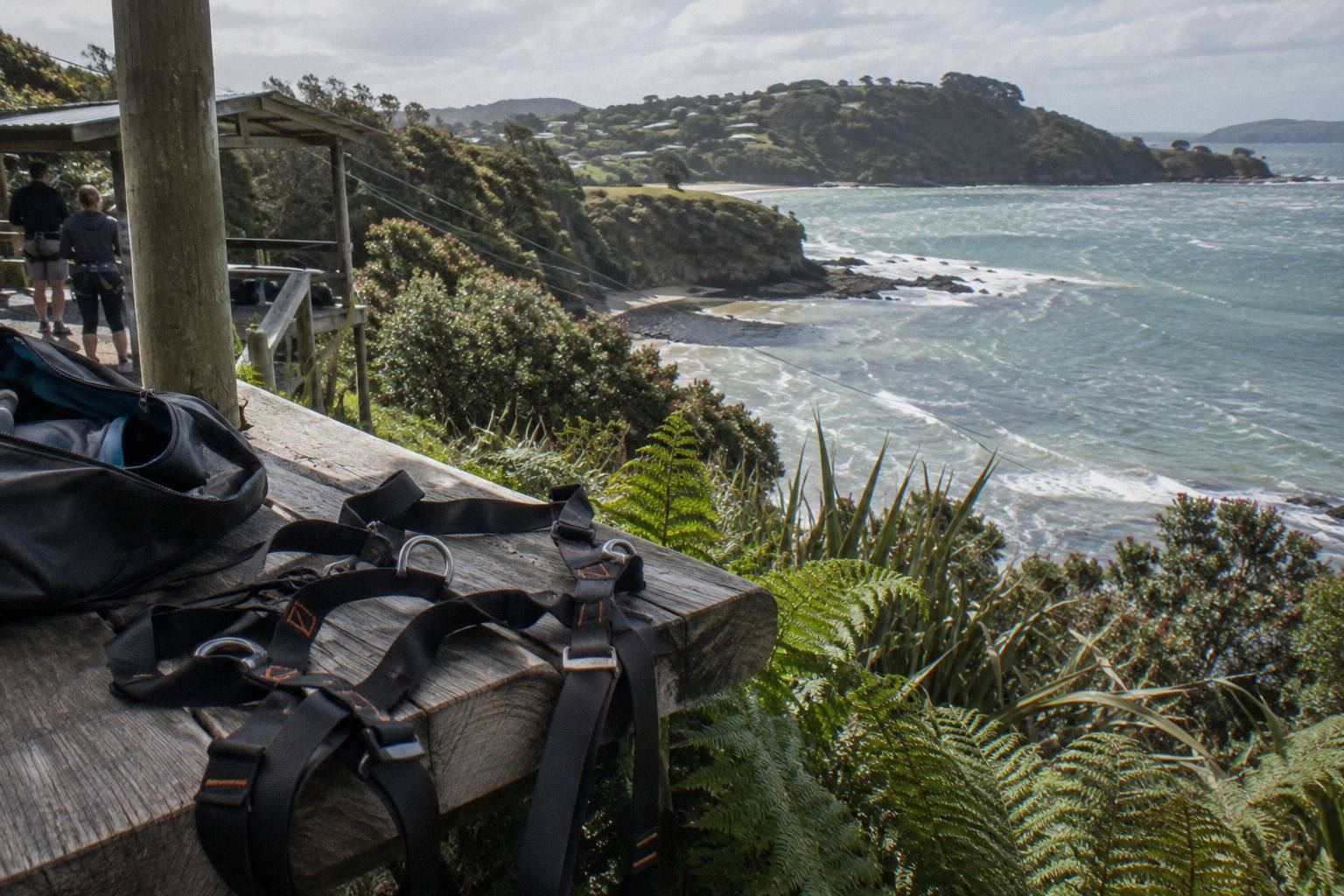
It helps to understand what the equipment actually does. A dual-cable zipline with a backup brake system typically runs redundant cables and a primary brake plus an independent emergency arrest device that engages automatically if the primary fails, as braking-dynamics engineering literature describes. Those redundancies protect against equipment failure, and they work. What they cannot do is soften the deceleration your body experiences at the platform, because a firm, predictable stop is precisely what makes the activity safe for everyone else on the line.
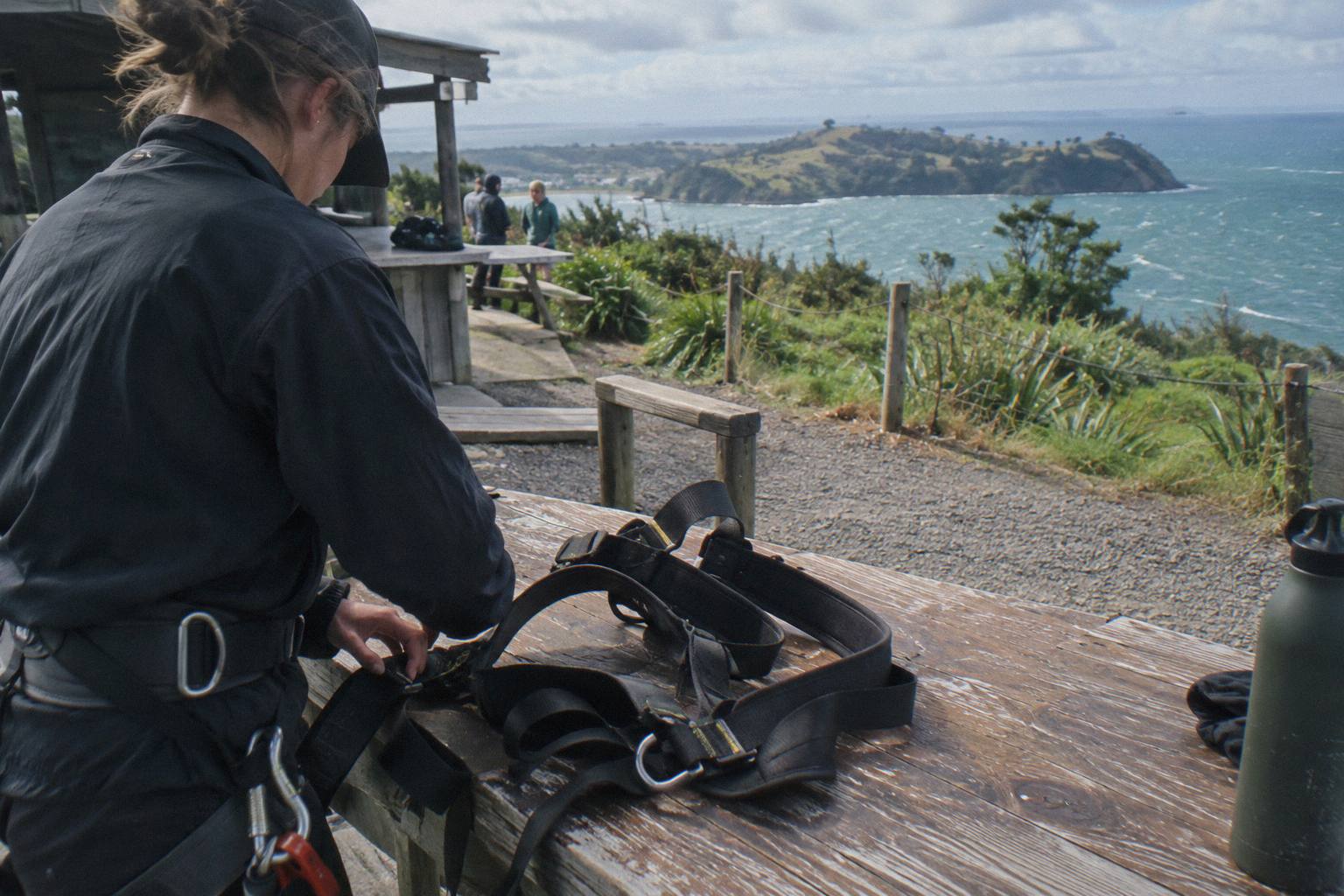
A standard full-body or seat harness is the second half of the problem. The leg loops and waist belt sit exactly where a pregnancy sits, and the webbing is sized and rated for load transfer during a fall or a hard landing, not for comfort or clearance around a growing abdomen. This is why generic operator guidance says standard harnesses are simply not designed for pregnancy, and why the exclusion exists even on courses with spotless safety records.
The injury data, though it is not pregnancy-specific, shows what the braking and harness systems are managing in ordinary operation. In a study of US emergency department visits between 1997 and 2012, falls accounted for 77.3% of zipline-related injuries, and fractures made up 46.7% of them, with the upper extremities the most commonly affected body region at 44.1% (American Journal of Emergency Medicine study). Those are injuries to riders the equipment was designed for. An expectant mother's risk profile adds a layer the data set never had to model, which is exactly the gap the operator exclusions address.
| Equipment element | What it does | Why pregnancy changes the picture |
|---|---|---|
| Full-body harness | Transfers load through pelvis and torso webbing under tension | Webbing sits across the abdomen, which is not designed for |
| Primary brake | Stops the rider firmly at the arrival platform | A predictable hard stop is the design goal, not a soft one |
| Emergency arrest device | Engages automatically if the primary brake fails | An unplanned stop can be more abrupt than the primary |
| Dual cables | Redundant lines so a single failure is survivable | Redundancy protects equipment, not abdominal exposure |
If the zipline is off the table for now but someone in your party is keen, the operator's live listing takes bookings for the standard three-hour experience, and the question heading below covers the fence-sitters too.
Worrying about a partner flying while you wait is understandable, and it is worth reading how nervous first-timers handle the Waiheke zipline if anxiety rather than pregnancy is the companion issue in your group. Waiting at Matiatia or Oneroa with a coffee is a pleasant enough way to spend three hours, and the group shuttle returns to the wharf area.
What EcoZip Adventures' Own Documents Say
EcoZip's terms list pregnancy among the medical conditions that may impair a participant's safety, and the operator reserves the right to refuse anyone whose condition, in its judgement, creates risk. That is not a ban written in bold letters, but it shifts the decision to the operator, and no pregnant visitor should board a course expecting to argue the point at the platform. The correct move is a phone call or email before booking.
The EcoZip course at Trig Hill runs three ziplines, the Vineyard Cruise, City View and the 220 m Kurinui line, at speeds over 50 km/h, followed by a guided native forest walk of about 1.4 to 1.5 km. The experience takes about three hours from Matiatia pick-up to drop-off. Every element of it, the dual cables, the ZipStop braking with backup systems, the harness fit check and the uneven walking track, assumes a participant who meets the operator's health conditions.
| EcoZip Waiheke fact | Detail |
|---|---|
| Ziplines | 3 dual lines: Vineyard Cruise, City View, Kurinui (220 m) |
| Speeds | Over 50 km/h |
| Forest walk | About 1.4-1.5 km, uneven with uphill stretches |
| Duration | About 3 hours from Matiatia pick-up to drop-off |
| Weight range | 30 to 125 kg, weighed discreetly at check-in |
| Group size | Up to 12 people with 2 guides |
| Pregnancy | Listed among conditions that may impair safety |
The operator's safety accreditation is real and current: EcoZip is AdventureMark accredited by Quality Standards International and has been registered since 2012, with hardware inspected on daily, weekly and monthly cycles (EcoZip safety page). New Zealand's adventure activities regime backs that up. Under the Health and Safety at Work (Adventure Activities) Regulations 2016, commercial zipline operators must pass a safety audit and register with WorkSafe NZ, and the Safety Audit Standard version 2.0 has applied since 1 April 2024 (New Zealand Gazette notice). None of that machinery, however, is calibrated for a rider whose harness fit and abdominal exposure change month to month.
The terms also give the operator the right to refuse anyone affected by alcohol or drugs, and the same clause structure covers medical conditions. The listed conditions include high blood pressure, cardiac conditions, back and neck injuries and pregnancy. In practice that means the answer at check-in for a visibly pregnant guest is a polite refusal, and a refund conversation, not a flight.
If you have already booked and the pregnancy is new since you paid, the cancellation path matters more than the safety argument. EcoZip's direct cancellation terms are stricter than the platform listings: cancelling within 48 hours is non-refundable, more than 48 hours ahead carries a NZ$25 per person charge with the balance refunded, and a reschedule inside 48 hours costs NZ$49 per person. Platform listings generally advertise free cancellation up to 24 hours, and the platform listing's text governs a platform booking. Either way, the sooner you act, the more of your money comes back.
How The Rest Of New Zealand Handles It
Across New Zealand the pattern is consistent: operators either exclude pregnancy entirely or set a gestational cut-off, and none of the major courses advertise pregnancy as acceptable. Zipline Christchurch and Ziptrek Queenstown prohibit it, Rotorua Canopy Tours draws the line at 15 weeks, and Waiheke's EcoZip lists it as a condition of concern. A pregnant visitor should treat every commercial course in the country as a no without written operator approval.
That uniformity is not a coincidence. The operators face the same harness designs, the same braking physics and the same audit regime, so their medical screening converges. Rotorua Canopy Tours, which hosts guests up to 93 years old and imposes no upper age limit, still states its course is not suitable after 15 weeks of pregnancy (Canopy Tours FAQ). Ziptrek Ecotours, which has flown guests over 90 and caps weight at 125 kg, takes a harder line and states pregnant guests cannot participate (Ziptrek safety page). Age and fitness are negotiable on these courses; pregnancy is not.
| NZ operator | Published pregnancy policy | Other notable rules |
|---|---|---|
| EcoZip Adventures (Waiheke) | Listed among conditions that may impair safety; operator discretion | Weight 30-125 kg; no age limit; guardian for under-18s |
| Rotorua Canopy Tours | Not suitable after 15 weeks of pregnancy | No upper age limit; guests up to 93; max weight 120 kg |
| Ziptrek Ecotours (Queenstown) | Pregnant guests cannot participate | Max weight 125 kg; guests over 90 have flown |
| Zipline Christchurch | Pregnant participants not permitted | Height over 122 cm; weight 27-125 kg |
| Man O' War Forest Flight (Waiheke) | Policy not published on the listing | Weight range 30 to 125 kg; age and cancellation terms on the live listing |
The pattern extends to other flagged conditions, and it is worth knowing them if you are screening a whole family. Operators commonly list heart conditions, epilepsy, recent surgery, neck, back and spinal injuries, high blood pressure and certain medications alongside pregnancy. If you are deciding for a group rather than one person, the sibling post on who should not go zip lining and the deeper safety guide on whether the Waiheke zipline is safe cover those cases with the same sourcing.
For comparison shoppers, the Man O' War Forest Flight on Waiheke's eastern end runs three tandem ziplines totalling over 900 m, connected by 660 m of elevated boardwalk through kauri forest, in a two-hour guided experience. Its published facts do not state a weight, age or pregnancy policy, so if that course tempts a non-pregnant member of your party, the pregnancy question is moot for them but the unknown policy fields mean asking the operator directly about any other medical condition.
The EcoZip Native Forest Adventure Trip variant carries the same core experience, three 200 m dual zipline flights plus the guided forest walk, with an optional Matiatia pick-up and a phone bungee included. It runs to the same EcoZip weight band of 30 to 125 kg and the same health conditions, so nothing about the variant changes the pregnancy answer.
If You Are Pregnant And Already Booked
Contact the operator immediately, in writing, and expect a refund or reschedule rather than a ride. EcoZip's direct terms charge NZ$25 per person for cancellations more than 48 hours out and are non-refundable inside 48 hours, while platform bookings typically allow free cancellation up to 24 hours before. A pregnancy disclosed early almost always costs less than one disclosed at the check-in desk.
The sequencing matters more than people expect. Every hour closer to the departure window moves you into a harsher refund tier, and the no-show clause forfeits 100% of what you paid. Operators deal with medical cancellations constantly and handle them more gracefully when given notice, both because they can resell the seats and because the conversation happens without a queue behind you.
Keep three details in the message: the booking reference, the departure date and a plain statement of the situation. You do not owe an operator your medical history, only enough information for them to process a cancellation under their own terms. If you booked through a platform, cancel through that platform so the platform's cancellation text governs; if you booked direct, the operator's direct terms apply and they are stricter, so move fast.
If the zipline was the anchor of a whole island day, reframe the day rather than cancelling it. The Waiheke hop-on hop-off bus with a zipline trip planning pattern works perfectly well with the zipline component swapped out, because the Explorer bus loop from Matiatia covers 16 to 17 stops on an roughly 80-minute cycle and runs independently of any activity booking. The bus, the ferry and the cellar doors have no harness between them.
Harness-Free Ways To Spend The Same Day On Waiheke
The strongest pregnant-visitor substitutes for a zipline day are the ferry crossing itself, the hop-on hop-off Explorer bus, the island's cellar doors and a self-guided e-bike loop, none of which involves a harness or a brake. Waiheke has roughly 30 wineries, about 20 cellar doors open to the public and beaches from Oneroa to Onetangi's roughly 2 km of sand, so the island does not stop at the zipline platform.
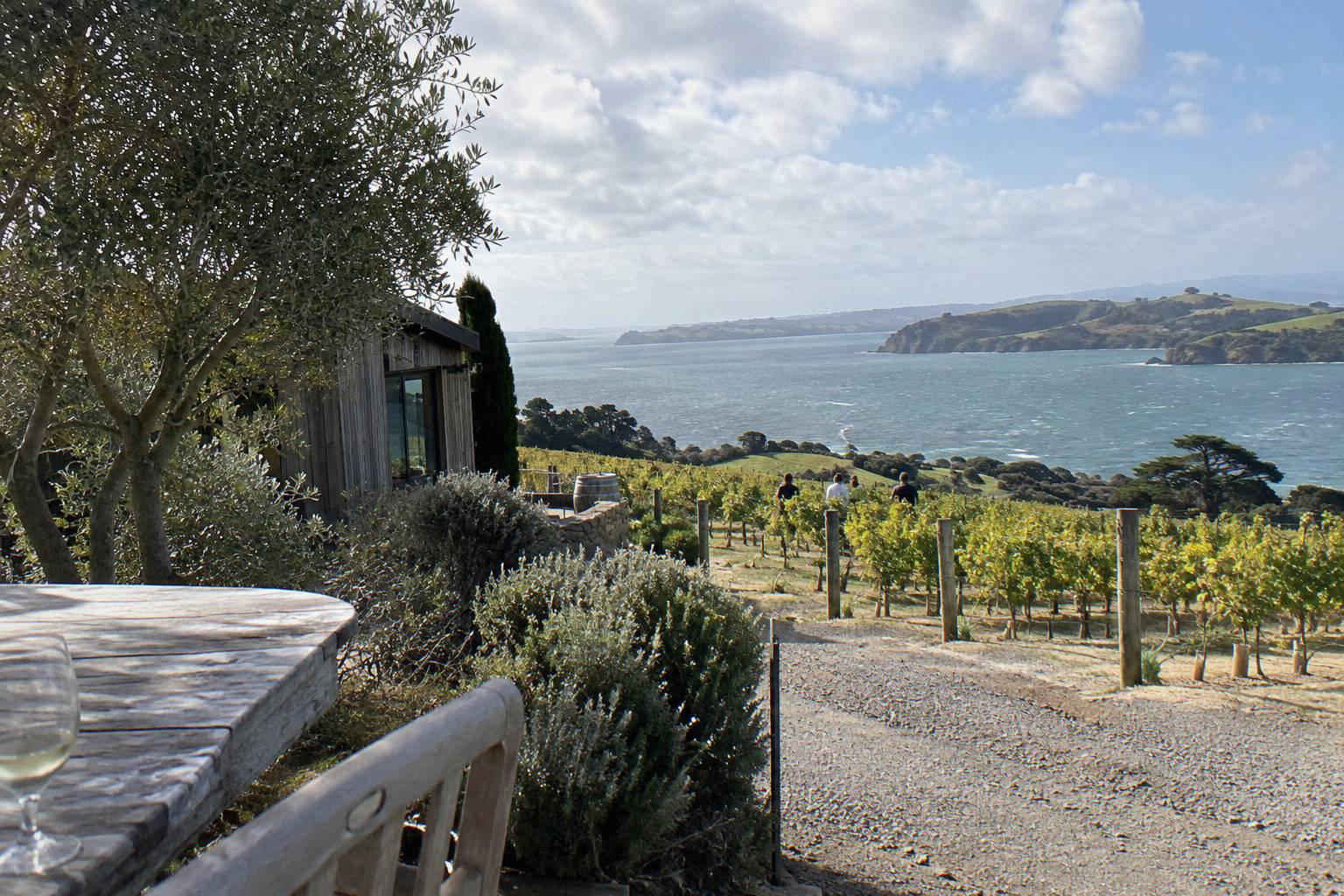
A practical harness-free itinerary pairs the Fullers360 ferry from Downtown Auckland, about 40 to 45 minutes across to Matiatia, with the Explorer bus and two or three cellar door stops. Tastings typically run 3 to 5 wines with flights commonly in the NZ$20 to NZ$55 range, and many cellar doors open from around 11 am to 5 pm, though hours vary and a call ahead is wise for groups. Non-drinkers are welcome at most tables, and the views at Mudbrick, Cable Bay or Man O' War's beachfront tasting room carry the visit on their own.
| Waiheke option | Harness involved | Typical duration | Notes for pregnant visitors |
|---|---|---|---|
| Explorer hop-on hop-off bus | No | 1 day ticket, ~80 min loop | 16-17 stops from Matiatia; seated, shaded, flexible pace |
| Cellar door tasting circuit | No | 1-2 hours per stop | Flights commonly NZ$20-55; food available at many venues |
| Fullers360 ferry crossing | No | 40-45 min each way | Comfortable indoor seating; deck views of the Hauraki Gulf |
| Premium eRide eBike experience | No | About 4.5 h, up to full day | Pedalling still required; check with your doctor first |
| Zipline and forest walk | Yes | About 3 h | Pregnancy on operator's conditions list; ask before booking |
The e-bike line in that table needs a caveat. E-bikes remove the hills, not the balance or the fall risk, so treat cycling as a question for your doctor rather than a default yes, especially later in pregnancy. The bus and ferry rows carry no such caveat and are the safest default substitutions.
Beach time fills any gaps. Oneroa, about 2 km from Matiatia, offers the island's main village amenities plus Big and Little Oneroa beaches, while Onetangi stretches roughly 2 km of golden sand about 15 minutes' drive further east. Palm Beach is quieter still, with calm water for a swim when the season allows. Weather-wise, February averages around 23 °C daytime highs and July around 15 °C, with July also the wettest month at about 123 mm of rain, so summer and the shoulder months reward the outdoor version of this itinerary most.
For anyone whose pregnancy is the only barrier, the island is worth returning to. The flagship experience, covered in detail in our EcoZip three-hour trip explained guide, will still be here, and booking it after the pregnancy is one of the cleaner ways to mark the chapter closing.
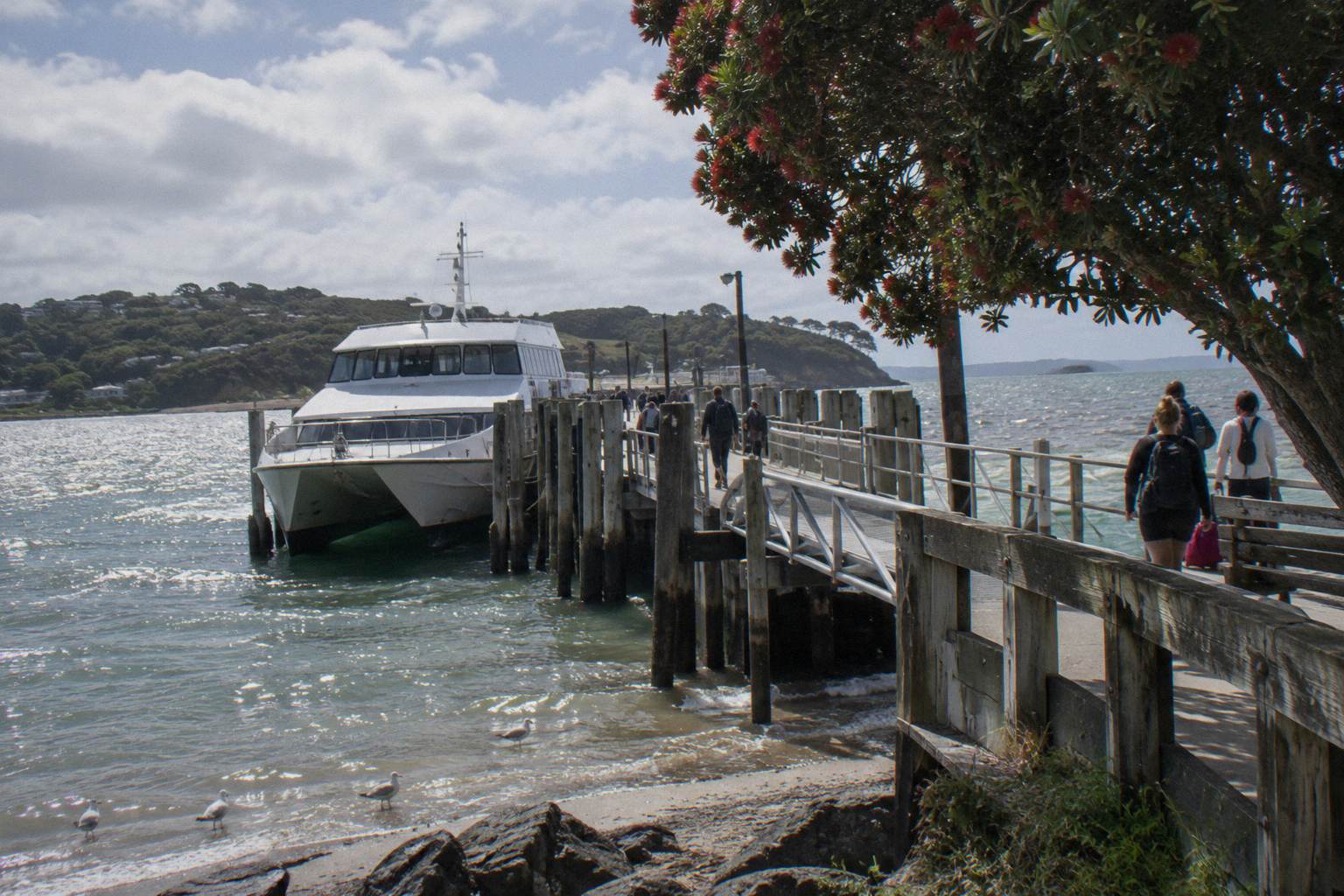
Planning the return trip is half the fun. Our Waiheke day trip built around a zipline guide shows how the ferry, the flight and a vineyard lunch slot together, and the prices and inclusions on Waiheke Zipline Tours are laid out tour by tour so the future booking takes minutes rather than an afternoon of tabs.
Whatever this visit looks like, take the operator's word over any article's, including this one. Ring EcoZip on the number on its contact page, state the situation plainly, and let the people who own the risk make the call. The zipline will wait; the island does not require a harness to be worth the ferry fare.
Common Questions About Ziplining While Pregnant
Can You Zipline While Pregnant?
Not on Waiheke without the operator's explicit approval. EcoZip Adventures lists pregnancy among conditions that may impair safety and may refuse participation, and most New Zealand operators either prohibit pregnancy outright or set a gestational cut-off. Ask the operator directly before booking, and expect the answer to be no.
Why Do Zipline Operators Exclude Pregnancy?
The harness webbing loads the pelvis and abdomen under tension, and the braking system decelerates your body firmly at the platform. Neither is designed for a changing body, and the primary concern is abdominal trauma from harness pressure and sudden stops rather than the height of the course.
Can You Zipline In Early Pregnancy, Under 15 Weeks?
Some operators allow it early and some do not. Rotorua Canopy Tours states its course is not suitable after 15 weeks, which implies earlier weeks are considered, while Zipline Christchurch and Ziptrek Queenstown prohibit pregnancy at any stage. EcoZip does not publish a week cut-off, so the answer has to come from the operator.
Will EcoZip Refund A Booking Cancelled For Pregnancy?
Booked direct, cancelling more than 48 hours ahead carries a NZ$25 per person charge with the balance refunded, while inside 48 hours the booking is non-refundable. Platform bookings typically show free cancellation up to 24 hours before, in which case the platform's terms govern. Contact the operator or platform as early as possible.
What Waiheke Activities Suit Pregnant Visitors Instead?
The ferry crossing, the hop-on hop-off Explorer bus, cellar door visits and beach time at Oneroa, Palm Beach or Onetangi all work without a harness. The island has roughly 30 wineries and around 20 cellar doors open to the public, plus villages and walking tracks that need no activity booking at all.
Can I Zipline While Pregnant If My Doctor Says I Am Healthy?
A doctor's clearance helps but does not override the operator's rules. The operator owns the safety decision on its own course, and EcoZip's terms let it refuse any participant whose condition may impair safety. Get the operator's written agreement before you travel, not just a medical opinion.