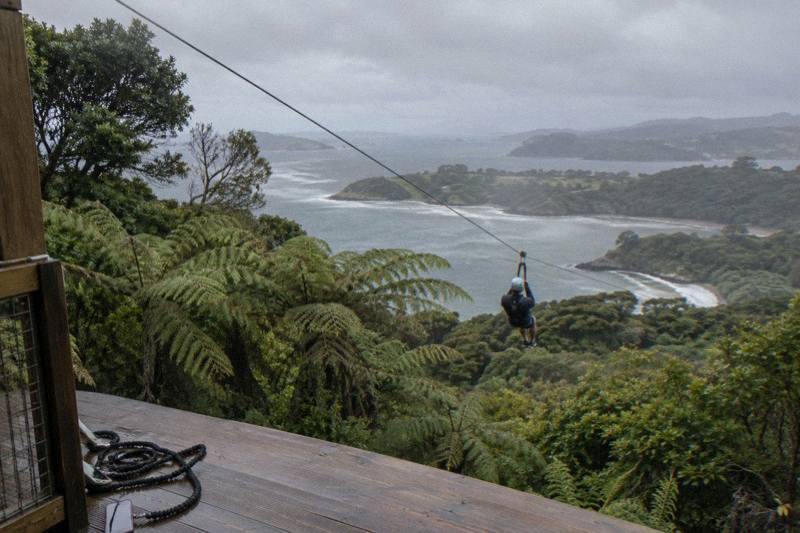
Are There Any Risks With Zip Lining? What Waiheke Operators Control
An honest look at zipline risks: US injury data, who should skip it, and how Waiheke operators like EcoZip control the dangers with audits, braking systems and daily checks.
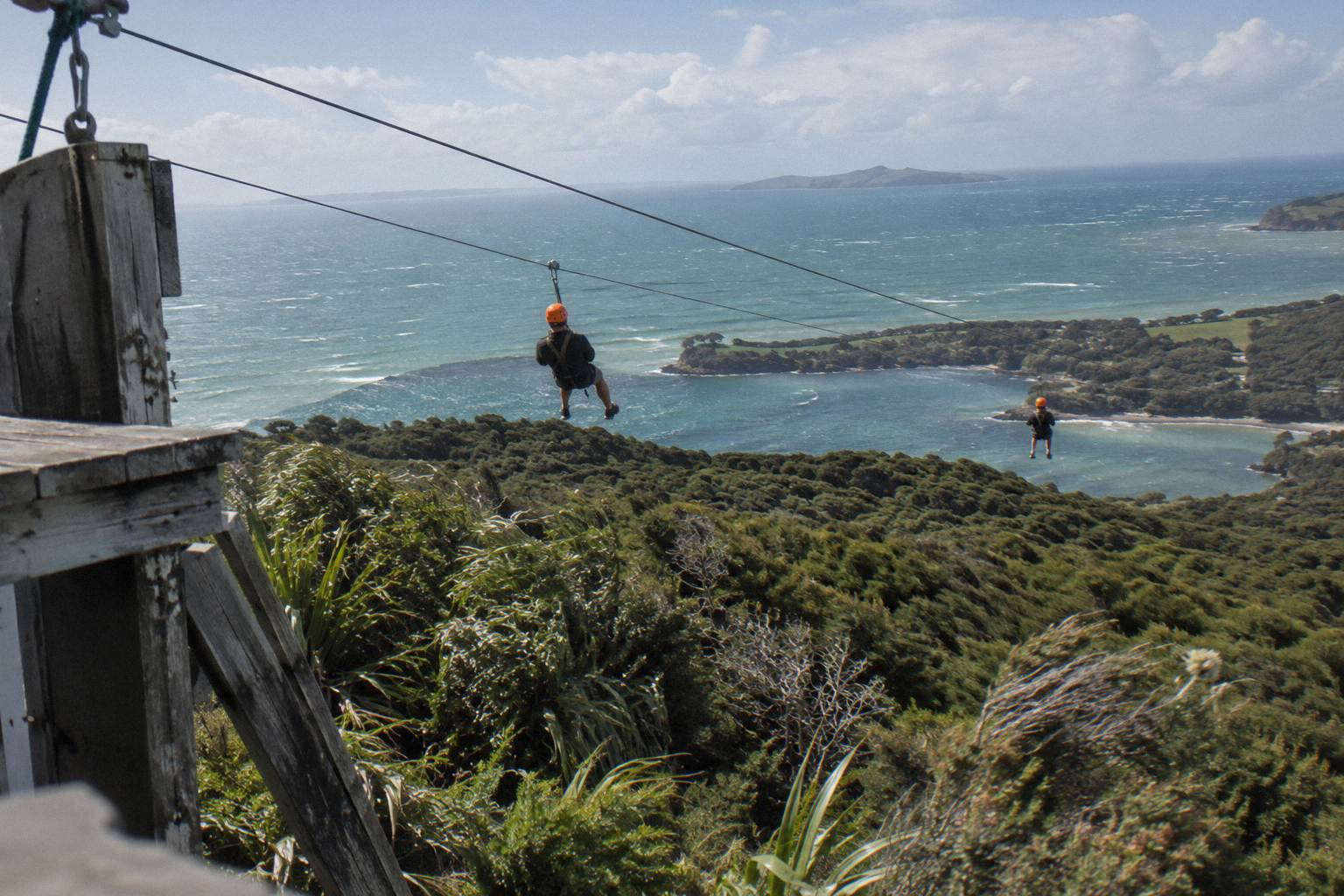
Yes, zip lining carries real risks, and anyone who tells you otherwise is selling something. The largest study of its kind counted an estimated 16,850 zipline-related injuries treated in United States emergency departments between 1997 and 2012, with falls accounting for 77.3% of them. The saving grace is context: commercial operations in New Zealand sit inside one of the world's stricter adventure-activity regulatory systems, and Waiheke's main operator layers audited equipment, redundant braking and daily inspection routines on top of it.
That is the short version. The longer version separates what the numbers actually say, which risks are inherent to the activity, which belong to the rider, and which are engineered away before you ever clip into a harness on Waiheke. This page does not soften the topic.
Are There Any Risks With Zip Lining?
Yes, real risks exist, and the injury record shows exactly where they live. In United States emergency department data covering 1997 to 2012, an estimated 16,850 zipline injuries were treated, falls caused 77.3% of them, fractures made up 46.7% of cases, and the upper extremities were the most commonly injured body region at 44.1%. A separate count estimated 7,962 lower extremity zipline injuries treated in US emergency departments between 2000 and 2024, or 17.1% of all zipline injuries in that period. Those are US figures from a much larger and less uniformly regulated market, but they describe the hazard profile honestly: this is an activity where gravity is involved, and things can go wrong.
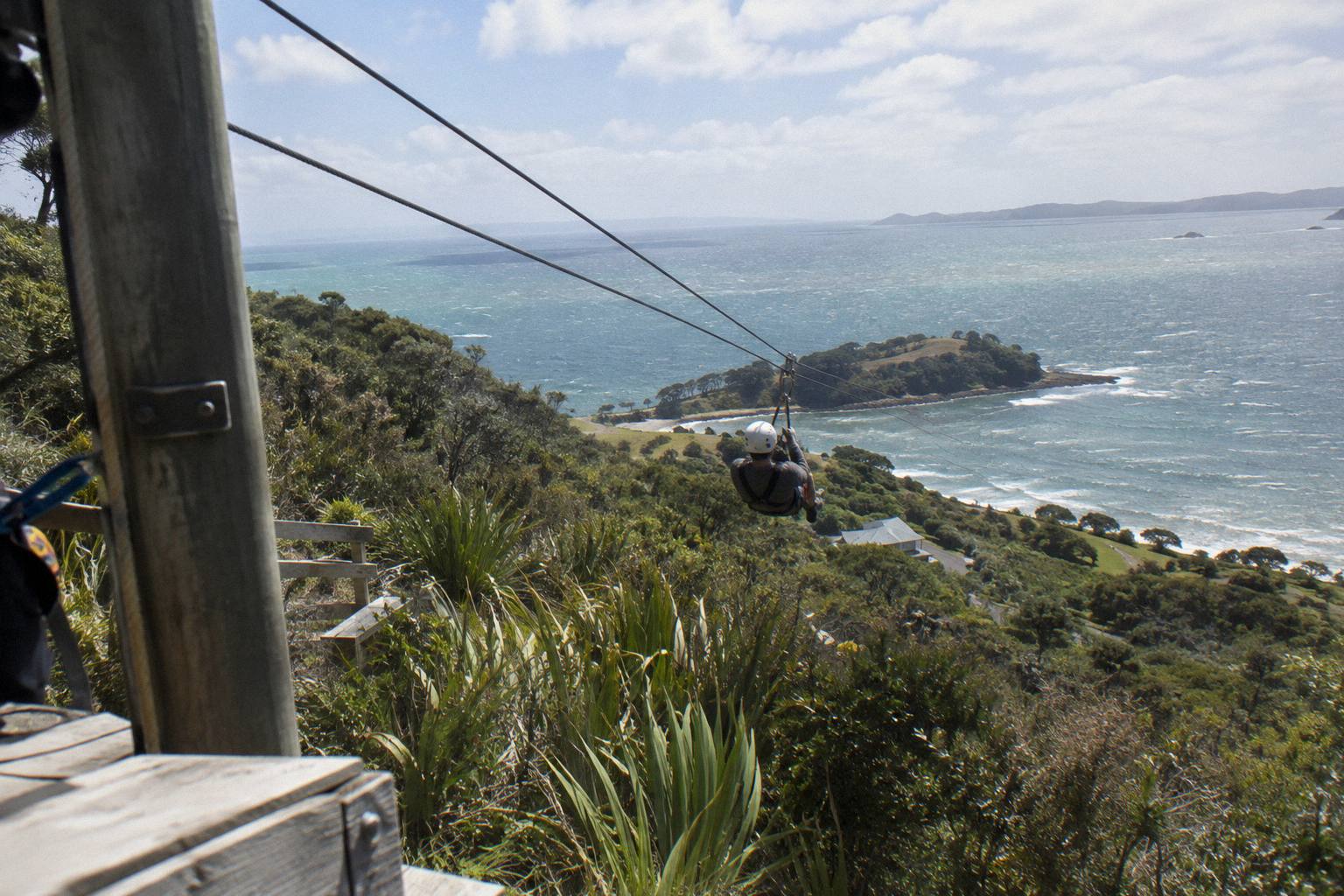
Two things keep that profile in proportion. First, virtually every injury category in the data maps to a specific control that a well-run commercial operator deploys: redundant cables, primary-plus-emergency braking, harness fit checks and pre-flight briefings. Second, New Zealand requires commercial zipline operators to pass a safety audit and register with WorkSafe under the Health and Safety at Work (Adventure Activities) Regulations 2016, which removes the bottom tier of operators that drives much of the overseas injury count. Risk is real, said plainly, and risk is also managed, which is the more useful half of the sentence.
If you are weighing a Waiheke trip specifically, three experiences dominate the island's roster, and all three are covered in depth elsewhere.
What The Injury Data Actually Shows
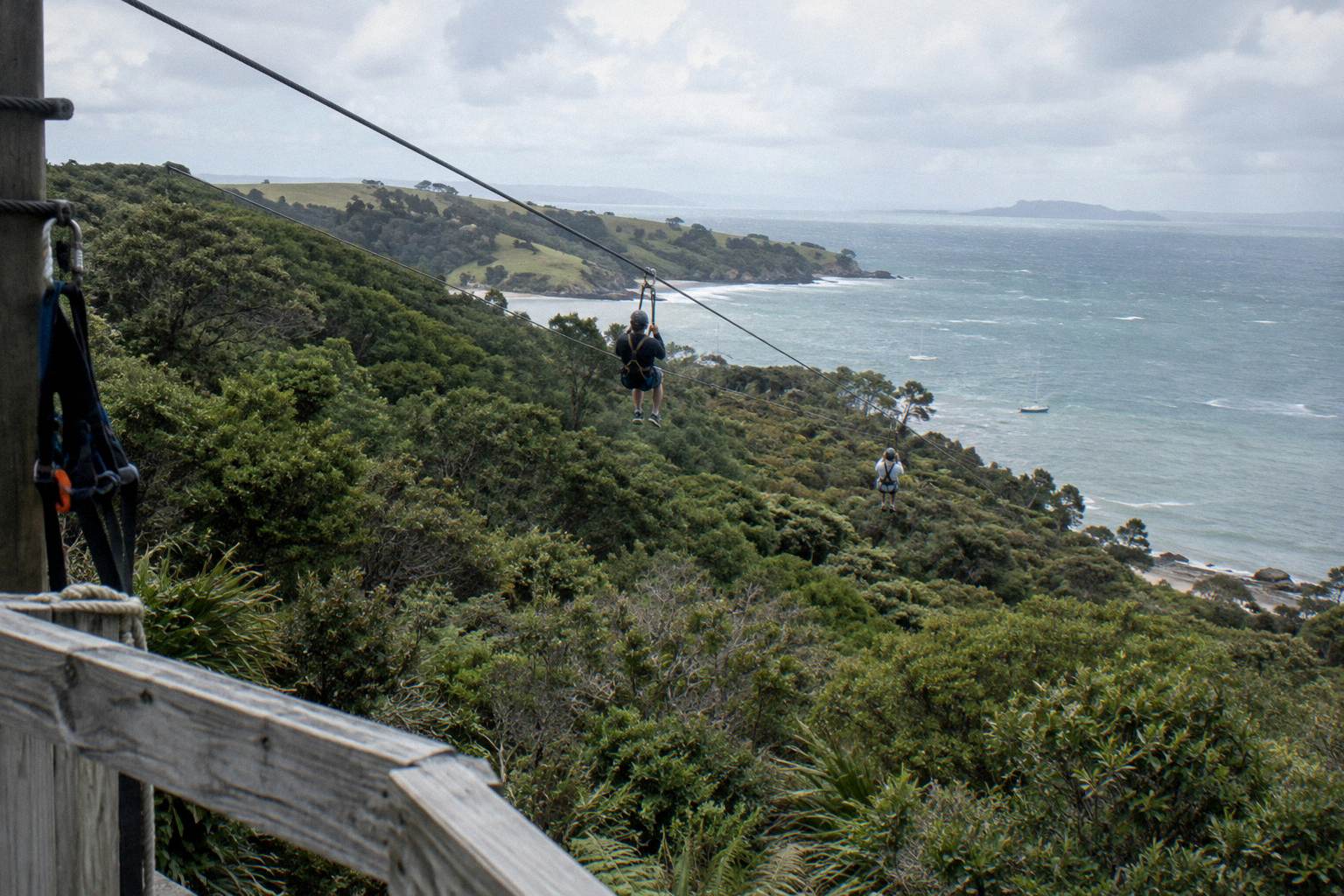
The clearest picture comes from US emergency department records spanning fifteen years: an estimated 16,850 zipline injuries treated between 1997 and 2012, overwhelmingly fractures from falls, concentrated in the arms and upper body, with falls responsible for 77.3% of the total and fractures for 46.7%. Researchers drawing on NEISS and CPSC data also found upper extremity injuries in 44.1% of cases. The lower extremity follow-up study, covering 2000 to 2024, counted an estimated 7,962 leg and foot injuries, or 17.1% of all zipline injuries in that period. Those numbers are worth reading twice, because they tell you where the danger actually lives: not in the cable snapping mid-flight, a scenario the data barely registers, but in people coming off platforms, ladders and arrival zones.
Here is the breakdown in one place:
| Figure | What it measures | Source period |
|---|---|---|
| 16,850 estimated injuries | All zipline injuries treated in US emergency departments | 1997-2012 |
| 77.3% | Share caused by falls | 1997-2012 |
| 46.7% | Share that were fractures | 1997-2012 |
| 44.1% | Share affecting upper extremities | 1997-2012 |
| 7,962 estimated injuries | Lower extremity zipline injuries in US emergency departments | 2000-2024 |
| 17.1% | Lower extremity share of all zipline injuries | 2000-2024 |
Treat these as US market figures. The American Journal of Emergency Medicine study, published at ScienceDirect, covers a country with thousands of courses of wildly varying quality, including makeshift backyard lines that would never pass an audit here. New Zealand's regulatory floor means the comparison is conservative, but the injury mechanisms themselves are universal, and knowing them makes the operator controls in the next section make sense.
How Waiheke Operators Control The Risks
Waiheke's zipline operators work inside a regulated, audited system, and the layers are specific: EcoZip Adventures is AdventureMark accredited, registered since 2012, uses ZipStop braking with independent backup systems, and inspects hardware on daily, weekly and monthly cycles, while every NZ commercial zipline must hold a WorkSafe safety audit under the Adventure Activities Regulations 2016. That sentence compresses several distinct layers of protection, and each one answers a specific risk from the injury data. The regulatory layer comes from the Health and Safety at Work (Adventure Activities) Regulations 2016, which require commercial zipline operators to pass a safety audit and register with WorkSafe New Zealand; WorkSafe's Safety Audit Standard version 2.0, effective 1 April 2024, sets out the safety management system requirements operators must meet, as gazetted at gazette.govt.nz. Accreditation is not a rubber stamp: AdventureMark is a JAS-ANZ accredited, WorkSafe-approved certification body, and EcoZip's own safety page documents its accreditation by Quality Standards International.
The engineering layer tackles the 77.3% fall problem and the arrival-collision problem directly. A dual-cable setup with a backup brake system carries redundant cables plus a primary brake and an independent emergency arrest device that engages automatically if the primary fails. ZipStop braking, the type EcoZip uses, controls arrival speed at the end of each line rather than leaving it to a guide catching you or, worse, to your own legs. Hardware inspections on a daily, weekly and monthly cycle catch wear before it becomes failure. International standards back this approach up: ASTM F2959 sets criteria for the design, installation, operation and auditing of commercial ziplines, and the ACCT challenge-course standards require brake systems designed and tested for the extremes of participant weight and arrival speed.
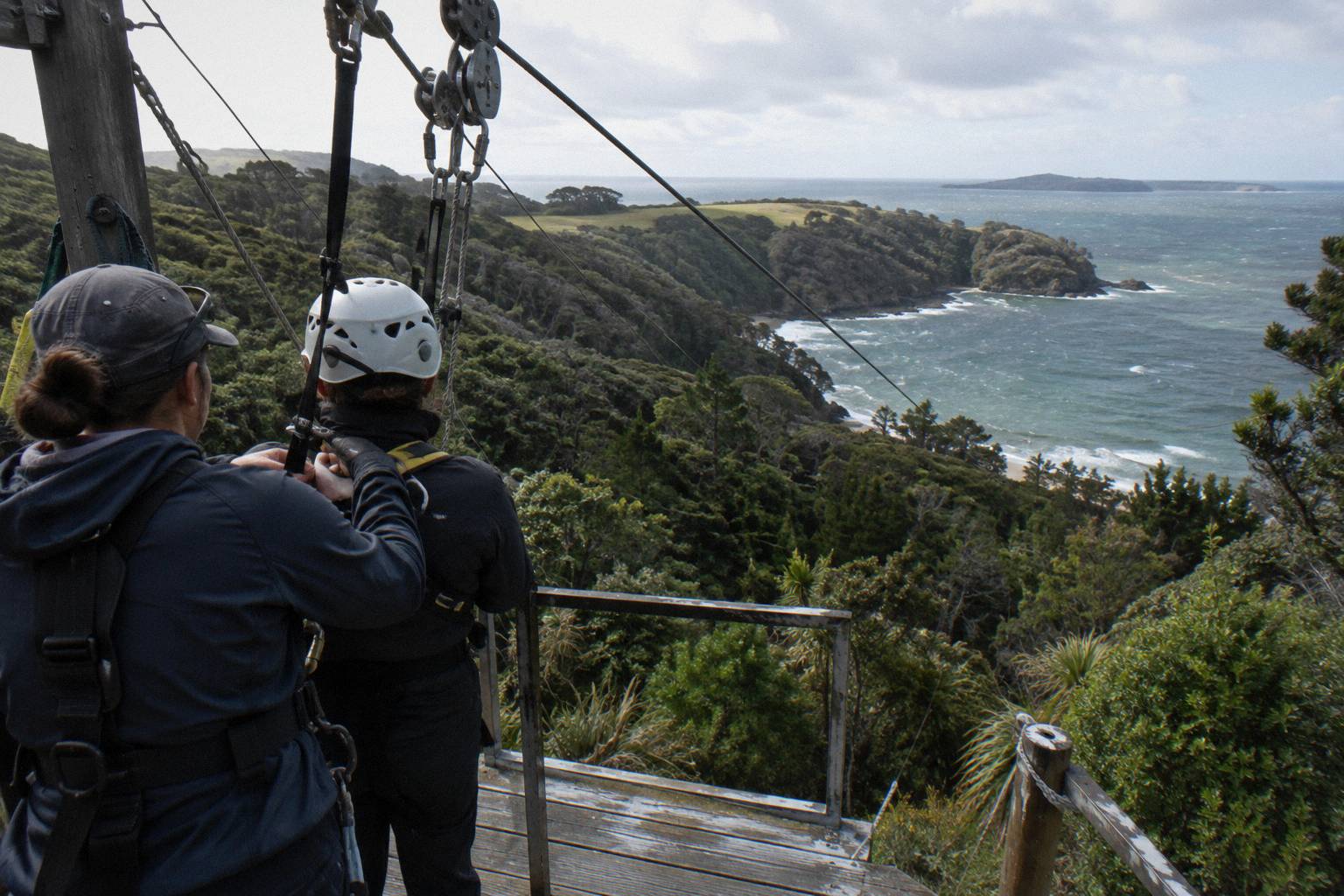
The human layer is the briefing. Safety briefings instruct riders not to grab the cable with their hands, to use designated hand positions, and to follow specific braking and leg-positioning instructions, because a hand around a moving cable is one of the fastest routes into the upper-extremity injury statistics. Waiheke's second major zipline experience, the Man O' War Forest Flight, runs three tandem lines totalling over 900 m connected by 660 m of boardwalk, which trades some of EcoZip's side-by-side dual-cable format for a vineyard-integrated course with its own guided controls. Both formats keep a guide with the group throughout.
Is A Zipline Day With Wine Added Riskier?
Not in any meaningful sense, but the risk profile shifts. The zipline-and-wine day tour format, like the Waiheke Island Day Tour combining ziplining, wine tasting and a vineyard lunch, moves the riskiest 90 minutes to the morning and spends the rest of the day on flat vineyard terraces. If you are nervous about the zipline segment, our companion breakdown of how the Waiheke zipline and wine day actually runs walks through the sequencing in detail.
Who Should Think Twice Before Zip Lining
The standard contraindication list is consistent across operators, and it is not short: pregnancy, heart conditions, epilepsy, recent surgery, neck, back or spinal injuries, high blood pressure and certain medications all appear on it, and operators can refuse anyone affected by alcohol or drugs. This is not gatekeeping for its own sake. Harnesses are not designed for pregnancy, and sudden stops create abdominal pressure and spinal loading that a compromised back or neck should not take. Several New Zealand operators state their positions plainly: Rotorua Canopy Tours is not suitable after 15 weeks of pregnancy, Zipline Christchurch prohibits pregnant participants and those with previous neck or back injuries, and EcoZip's own terms list conditions including high blood pressure, cardiac problems, pregnancy and back or neck injury as things that may impair safe participation. Our longer piece on who should not go zip lining covers the medical side in more depth.
Age is largely a non-issue in New Zealand when fitness is fine. EcoZip has no age limit at all, requiring only that under-18s have a parent or guardian agree to the booking terms and sign the risk disclosure form; Rotorua Canopy Tours has hosted guests up to 93 years old and Ziptrek Ecotours has zipped guests over 90. Weight is the firmer gate. EcoZip requires riders to weigh between 30 and 125 kg, with everyone weighed discreetly at check-in, and being over or under the range is not automatically refunded, so check before you book rather than at the counter.
| Operator (NZ) | Weight range | Age rule | Notable restriction |
|---|---|---|---|
| EcoZip Adventures (Waiheke) | 30-125 kg | No age limit | Under-18s need a guardian's signature |
| Zipline Christchurch | 27-125 kg | No minimum, height over 122 cm | No pregnancy, no neck/back injury history |
| Rotorua Canopy Tours | Max 120 kg | Min 6 years (Original tour) | Not suitable after 15 weeks of pregnancy |
| Ziptrek Ecotours (Queenstown) | Max 125 kg | Min 6-10 years by tour | Pregnant guests cannot participate |
Fear of heights deserves its own sentence. Operators advise that severe acrophobia is a genuine reason to reconsider, because panic on a platform causes exactly the uncontrolled movements the briefing is trying to prevent. If that is you, read how the Waiheke zipline works for nervous first-timers before deciding; the tandem formats on Waiheke, where you ride beside or with someone rather than alone, change the experience considerably.
What Weather Can Do To A Zipline Day
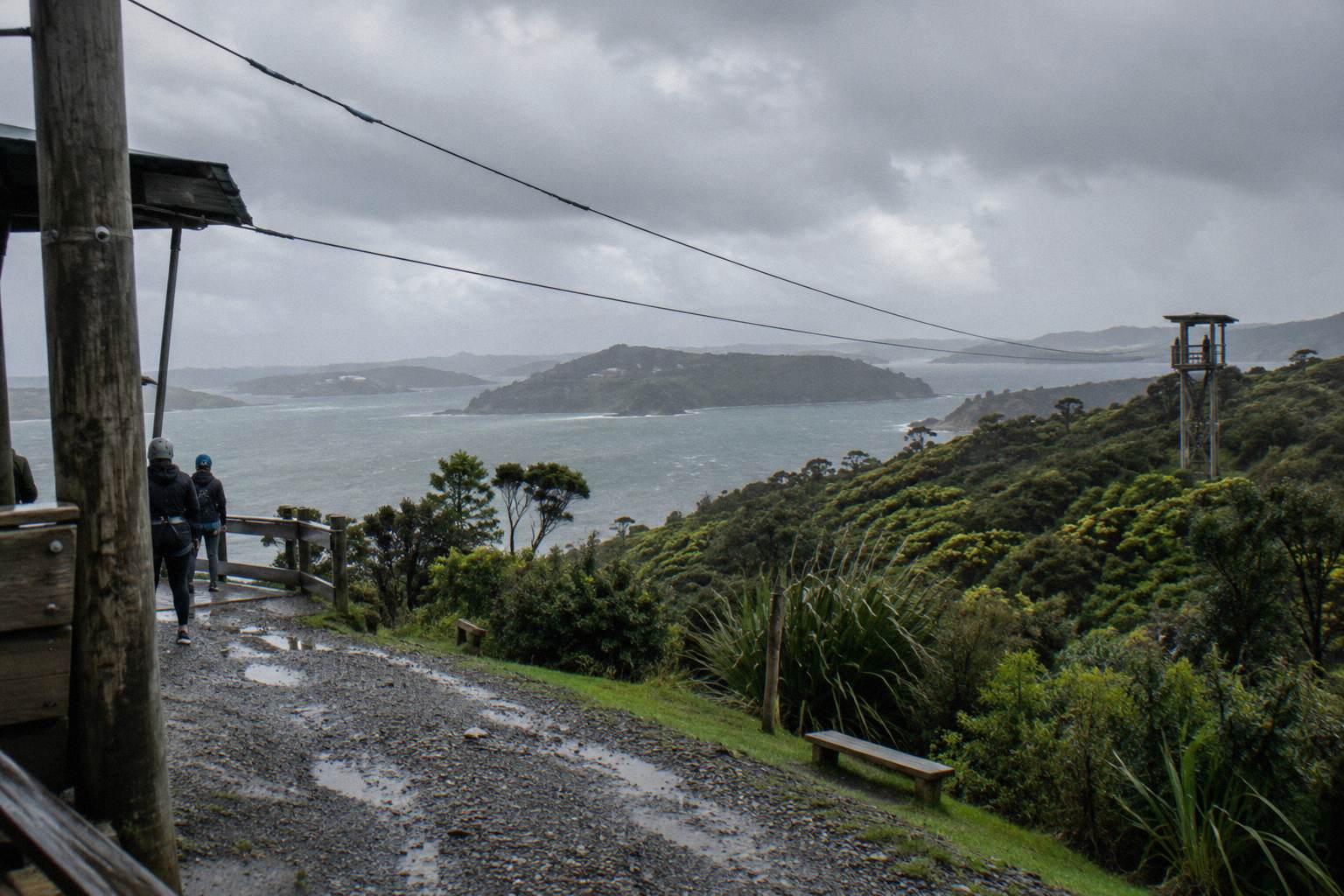
Wind is the weather variable that actually cancels ziplines rather than merely dampening them: EcoZip runs in rain but may cancel if wind is consistently above 35 knots, in which case it offers a date or time change or a full refund rather than leaving the decision to the rider. Rain itself is handled with loan wet-weather gear and a request that you bring your own jacket, and the forest walk portion of the Waiheke experience proceeds on muddy, uneven track in wet conditions, which is one reason closed, laced shoes are mandatory rather than suggested. Lightning policy is less commonly published by NZ operators, but the practical rule is the same everywhere: the operator makes the call, not the rider, and a cancelled flight is a refund conversation rather than an argument.
The cancellation terms differ by how you book, and this is where travellers get caught. Book direct with EcoZip and the policy is strict: cancellation within 48 hours is non-refundable, rescheduling inside 48 hours costs NZ$49 per person, and cancelling more than 48 hours out carries a NZ$25 per person charge with the balance refunded. The live listings generally show free cancellation up to 24 hours. Read whichever applies to your booking before you rely on it, and if a stormy forecast is in play for your travel week, our guide to Waiheke zipline weather, wind and cancellations goes deeper on seasonal patterns and how to pick a slot that suits your comfort level.
What You Personally Control On The Day
Most rider-side risk collapses into four behaviours you fully own: wear proper closed, laced shoes, strap your phone or camera to your body, keep your hands in the designated positions the briefing shows you, and arrive sober, rested and honest about your health on the disclosure form. The briefing exists because the injury data shows rider error at platforms and arrivals, not mid-cable catastrophe. Phones and cameras must be strapped to clothing or the harness on EcoZip's course, with free phone bungees handed out at check-in, because a dropped phone from a platform is a nuisance and a hand darting after it is a genuine hazard. Clothing matters more than people expect: a hat that fits under a helmet, sunscreen, and a warm layer in cold weather keep you focused on instructions instead of discomfort.
Here is how the everyday rider choices map onto the injury record:
| Rider behaviour | Risk it controls | Where it shows in the data |
|---|---|---|
| Closed, laced shoes, no jandals | Slips on platforms and the forest walk | Falls, 77.3% of injuries |
| Hands in designated positions, never on the cable | Cable friction and grip injuries | Upper extremities, 44.1% of cases |
| Phone strapped to clothing or harness | No lunging after dropped items | Falls from platforms |
| Honest health disclosure at booking | Abrupt stops on a compromised back or neck | Fractures, 46.7% of cases |
| Following braking and leg-position instructions | Arrival collisions and hard landings | Lower extremity injuries, 17.1% |
Beyond the basics, a small discipline of things-not-to-do covers most of the rest. Do not sit down or lean back before the guide signals, do not grab the cable, do not stiffen your legs into the arrival brake, and do not treat the forest walk as a low-risk afterthought, since its 1.4 to 1.5 km of uneven, switchbacked, sometimes muddy track asks for reasonable fitness even though the guided commentary is optional and the walk is not. If you want the full list of mistakes guides see over and over, our what not to do on a zipline rundown covers them with the reasoning attached.
How The Regulatory Picture Compares With Elsewhere
New Zealand's system is audit-and-register, not trust-me: every commercial zipline operator must hold a current safety audit and WorkSafe registration to run legally, a higher floor than the largely state-by-state patchwork behind the US injury counts, and it is enforced through published standards rather than voluntary goodwill. The 16,850-injury US dataset spans a market that includes unaudited backyard courses and operators with no national registration requirement, so its rates cannot be read across to a Waiheke booking. International engineering standards such as ASTM F2959 and the ANSI/ACCT challenge-course standards fill a similar role elsewhere, but in New Zealand the obligation is legal, not voluntary: operating a commercial zipline without registration breaches the Adventure Activities Regulations, and WorkSafe's audit standard specifies exactly what the safety management system must contain.
For a rider, the practical takeaway is a two-minute habit. Before booking any zipline anywhere, look for the operator's accreditation statement and registration, check the stated weight range, and confirm the cancellation and weather policy. On Waiheke that homework is easy: the accreditation, the braking system and the inspection schedule are published, and the answers to the remaining questions, weight limits, age rules and harness sizing, are collected in our guide to the Waiheke zipline weight limit and harness sizes.
The featured experience, the Waiheke Island: Zipline And Forest Walk, sits inside that audited system with three dual ziplines of about 200 m each, a guided native forest walk and an island highlights shuttle from Matiatia, all inside about three hours. If the full-day vineyard version appeals more, the zipline, wine tasting and vineyard lunch combination stretches the same core activity across a full day from Auckland. For readers still weighing whether the whole thing is a sensible idea, our broader assessment of whether the Waiheke zipline is safe and the detailed step-by-step walkthrough of the Waiheke zipline tour let you see exactly what happens, in order, before you commit.
Common Questions About Zip Lining Risks
Are There Any Risks With Zip Lining?
Yes. The dominant risks are falls from platforms or arrival zones, collisions at the end of a line, and injuries from sudden braking. In US emergency department data covering 1997 to 2012, falls accounted for 77.3% of an estimated 16,850 injuries, with fractures making up 46.7%. New Zealand's audit-and-register system and Waiheke's redundant braking and daily equipment checks reduce these risks substantially but do not delete them.
Has Anyone Been Seriously Hurt On A Waiheke Zipline?
No serious-injury figure for Waiheke's ziplines appears in our verified sources, so we print nothing on it. What can be verified is the control environment: EcoZip is AdventureMark accredited and WorkSafe-registered since 2012, uses ZipStop braking with backup systems, and inspects hardware daily, weekly and monthly.
What Is The Most Common Zipline Injury?
According to the US emergency department study, fractures were the most common injury type at 46.7% of cases, and the upper extremities, arms, wrists and hands, were the most injured body region at 44.1%. Falls caused the overwhelming majority of cases at 77.3%.
Can The Zipline Cable Break?
Cable failure is rare in the injury data; falls and arrival impacts dominate instead. Redundant design is the reason: a dual-cable setup with backup braking carries a primary brake plus an independent emergency arrest device that engages automatically if the primary system fails, and hardware is inspected on daily, weekly and monthly cycles at EcoZip.
Is Zip Lining Regulated In New Zealand?
Yes. Under the Health and Safety at Work (Adventure Activities) Regulations 2016, commercial zipline operators must pass a safety audit and register with WorkSafe New Zealand. WorkSafe's Safety Audit Standard version 2.0, effective 1 April 2024, specifies the safety management system requirements auditors check against.
Who Should Not Go Zip Lining?
Standard exclusions include pregnancy, heart conditions, epilepsy, recent surgery, neck, back or spinal injuries, high blood pressure and certain medications. Operators can refuse anyone affected by alcohol or drugs. On Waiheke, EcoZip requires riders to weigh between 30 and 125 kg but sets no age limit, with under-18s needing a guardian's signature.