Waiheke Zipline Accessibility: Mobility, Fitness And Older Visitors
The zipline flight itself is the easy part. On Waiheke, the part that decides whether the day works is the guided forest walk that follows it, and this guide walks through exactly what that demands of your body.
Short answer
EcoZip on Waiheke has no age limit and a weight range of 30 to 125 kg, but it is not a low-mobility experience: the guided native forest walk is about 1.4 to 1.5 km, uneven, with switchbacks, steady uphill stretches and possible mud. Reasonable fitness is needed, the commentary is optional and the walk is not.
Zipline marketing photographs make every course look effortless: helmets on, harnesses clipped, a smile mid-flight. What the photographs never show is everything around the flight. On Waiheke, the flagship EcoZip experience is about three hours long, end to end, and the actual time on the cables is a small slice of that. There is a shuttle ride up a hill, a walk between and after the lines, uneven ground under regenerating native forest, and a set of health and weight rules that decide who can clip in at all.
This guide takes the accessibility question seriously and literally. It sets out the zipline mobility limits as the operators state them, separates the flight from the walk, compares the two Waiheke courses honestly, and gives you the exact questions to ask before you hand over money. Where something is genuinely unknown, including wheelchair and mobility-aid access, it says so and tells you to phone the operator rather than guessing.
What Level Of Fitness Does The Waiheke Zipline Actually Need?
You need reasonable general fitness rather than athletic conditioning: the ability to walk about 1.4 to 1.5 km on uneven, uphill, sometimes muddy forest track, stand for stretches, and climb a few short rises. The zipline flights themselves demand almost nothing physically, you sit in a harness and let gravity work. EcoZip states reasonable fitness is needed for the guided forest walk, which is a required part of the experience, not an optional extra.
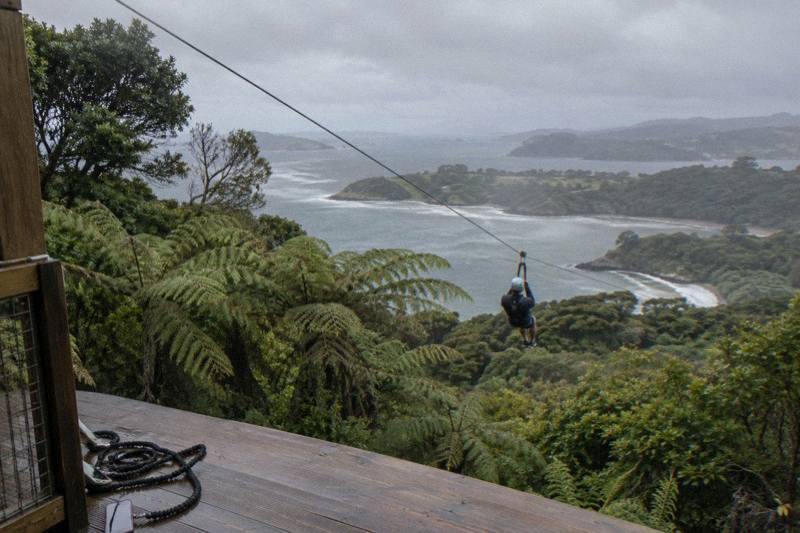
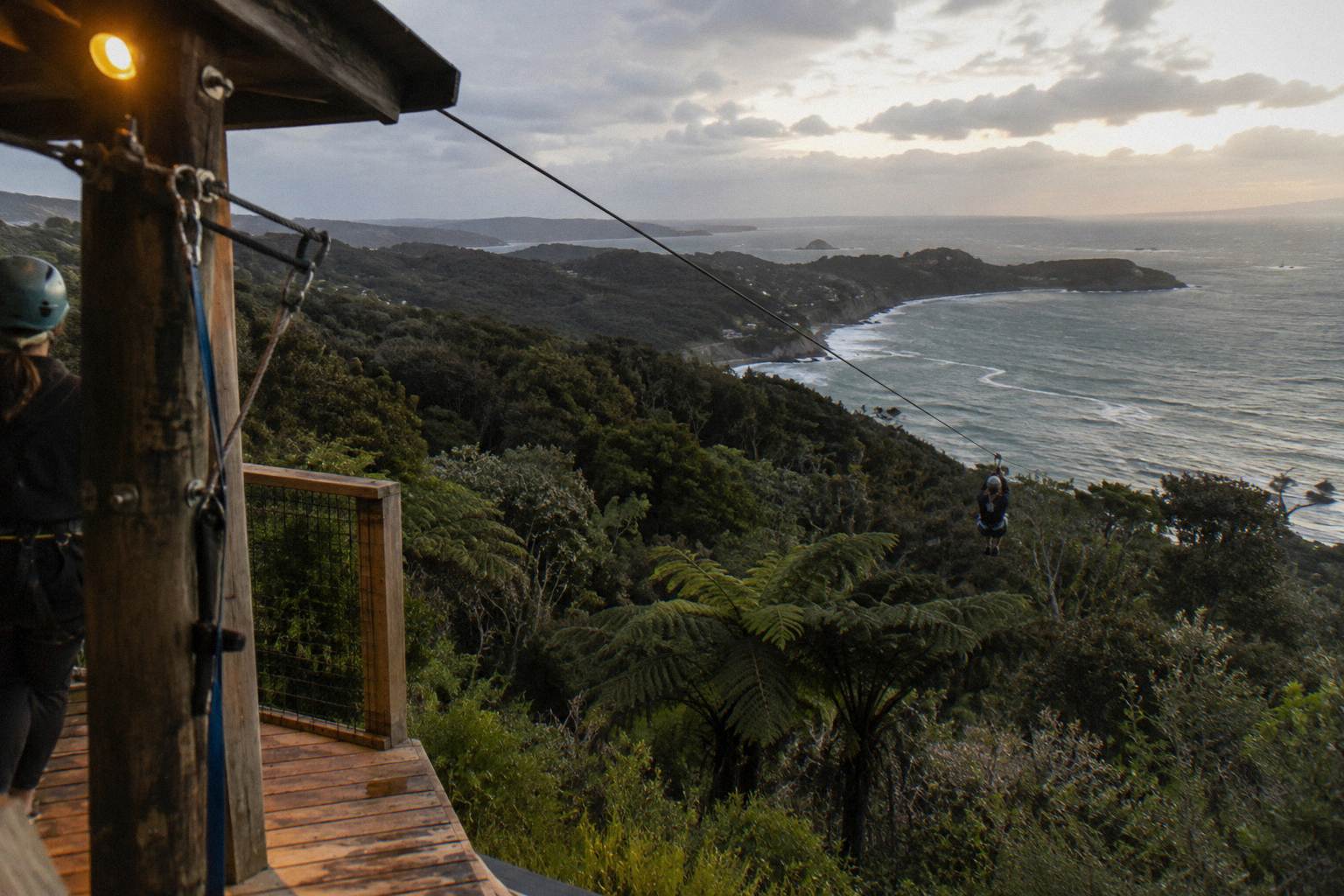
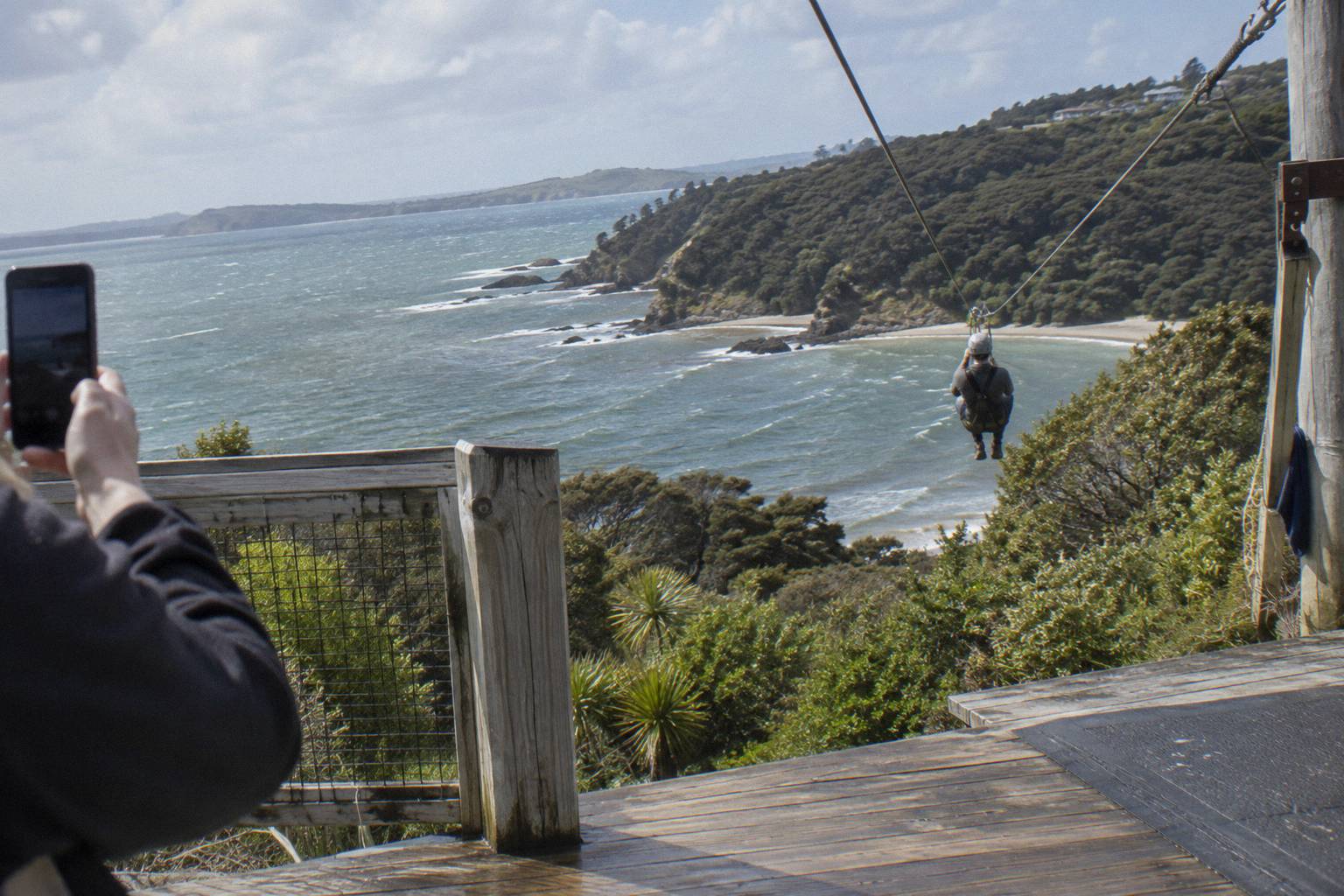
The honest breakdown is this. The three dual ziplines are each around 200 m long and require nothing more than sitting in a harness, holding a designated hand position and landing with your legs up as briefed. Children and grandparents fly the same lines as everyone else. What separates a comfortable day from a hard one is everything on foot.
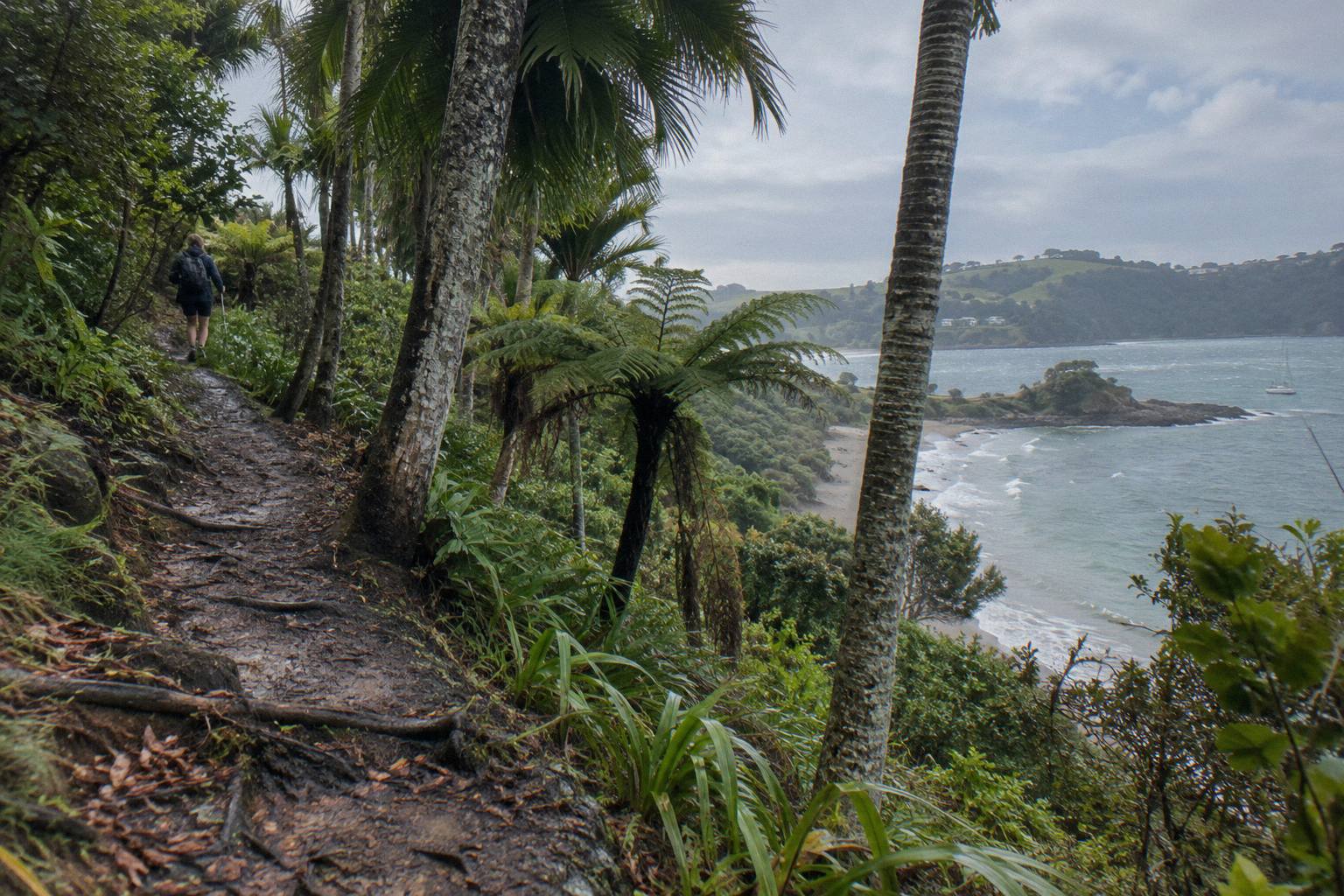
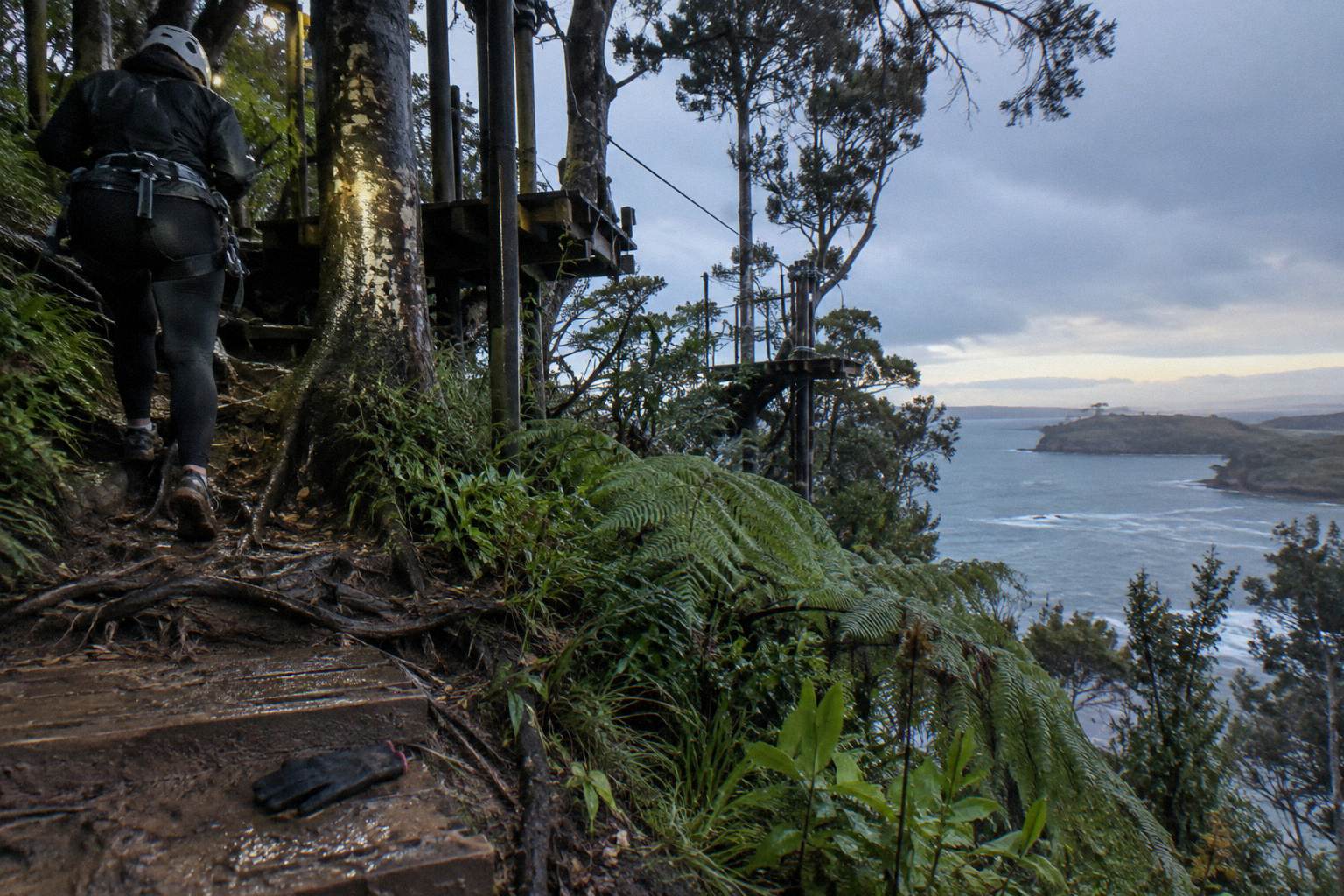
After the third line, the group descends through native forest on a guided walk. The track is uneven, cut with switchbacks, includes a few steady uphill stretches and can be muddy after rain. Guides set a social pace and stop for interpretation, but nobody carries you. If a 40 to 50 minute bush walk on a rough track sounds manageable, the day is manageable. If it does not, that is the single fact to build your decision on, and it is worth reading our fuller rundown of the Waiheke Zipline Tours roster before committing to any one product.
It also helps to be realistic about the day as a whole. Most visitors arrive by ferry, walk on and off at Matiatia, and take the operator's shuttle up to the launch site. That is ordinary tourism walking, not a hike, but it adds up. Visitors who pace themselves, wear proper shoes and treat the walk as the physical core of the day consistently report a better time than those who arrive expecting a theme-park ride with a bus in between. For the practical side of that, see our guide on what to wear ziplining on Waiheke, because footwear choices matter more here than on most zipline courses.
| Segment of the day | Physical demand | Notes |
|---|---|---|
| Ferry crossing and Matiatia wharf | Low | Walking on and off the ferry, ramps and gangways |
| Shuttle to the launch site | None | Roughly 20 minutes, commentated, seated |
| Safety briefing and harnessing | Low | Standing, some waiting |
| Three zipline flights | Very low | Seated in harness, legs up on landing |
| Guided forest walk | Moderate | About 1.4 to 1.5 km, uneven, switchbacks, uphill stretches, possible mud |
| Shuttle drop-off | None | Seated, with free vineyard drop-off options |
Can You Do The Waiheke Zipline With Limited Mobility?
EcoZip does not advertise wheelchair or mobility-aid access, and no verified claim of it exists either way, so treat that as unknown and phone the operator before booking. What is documented: the forest walk is mandatory, groups are up to 12 people with 2 guides, and the terrain is uneven with uphill stretches. Anyone who cannot complete a 1.4 km rough bush track independently should not assume the standard experience will work.
This is the section where honesty matters more than sales copy. Neither Waiheke zipline operator publishes a wheelchair-accessibility statement, and an absence of information is not a promise. The correct move is a direct call. EcoZip's team can tell you, for your specific situation, what the shuttle, the platforms, the walk and the toilets involve. The contact number is on the operator's FAQ page, and the same page covers the weight, footwear and clothing rules in the operator's own words (EcoZip Waiheke FAQs).
Limited mobility is a spectrum, and the honest middle of that spectrum is workable. If you use a walking pole, move slowly but steadily, and can manage uneven ground with rests, the walk has been done by plenty of people in that category, at a guide's pace, in a group of twelve. If you cannot manage unpaved, rooty, sometimes slippery ground at all, the standard EcoZip product is the wrong buy, and no amount of positive thinking changes the track surface.
There are partial workarounds worth asking about rather than assuming. Some visitors with a partner or family member flying have joined only the shuttle and the commentary portions, but whether that is possible on a given day, and at what price, is an operator decision made on the phone, not a published entitlement. Ask specifically. Then weigh the answer against the alternative course on the island, covered below, whose layout is genuinely different.
The three products above span the island's zipline offerings, and their physical demands differ more than their marketing suggests. The two EcoZip variants share the same site, the same shuttle and the same mandatory forest walk. The Man O' War course sits at the other end of the island, on vineyard land, with its own boardwalk-based design. Choosing between them is, in large part, a mobility decision.
The Forest Walk: The Part That Decides The Day
The walk is about 1.4 to 1.5 km of uneven native forest track with switchbacks, a few steady uphill stretches and possible mud after rain. It is guided, it is part of the experience, and it is not optional: the commentary is optional, the walk is not. Reasonable fitness is the operator's stated requirement, and this is where it bites.
Say it plainly, because it is the single most under-communicated fact in Waiheke zipline reviews: you cannot skip the walk. The three ziplines land you progressively lower down the hillside, and the way back to the shuttle is on foot. The guides interpret the regenerating forest, the kauri and the pest-control work as you go, which breaks the walk into conversational chunks, but the track itself is a track. Roots, steps cut into earth, switchbacks, and sections that steady themselves upward.
Weather changes the equation. After rain the track can be muddy, and closed, laced shoes are required, with jandals explicitly banned. In winter a warm layer matters because the walk happens at island pace, not gym pace. These are small details that decide whether the walk feels like a highlight or an ordeal, and they are all covered in the operator's own guidance (EcoZip FAQ page).
For visitors who find the walk feasible but daunting, two honest reassurances. First, nobody is racing: the group moves at the slowest comfortable pace with two guides for up to twelve guests. Second, nervous energy is far more common on the flights than on the walk, and if that is your situation, our piece on the Waiheke zipline for nervous first-timers addresses the flight-side fears directly. The walk is effortful but psychologically easy; the flight is physically easy but can be psychologically big. People struggle with one or the other, rarely both.
| Walk fact | Detail |
|---|---|
| Distance | About 1.4 to 1.5 km |
| Surface | Unpaved forest track, roots, uneven ground |
| Gradient | Switchbacks plus a few steady uphill stretches |
| Mud risk | Yes, after rain |
| Pace | Guided, interpretive, set to the group |
| Optional? | Commentary is optional, the walk is not |
| Group size | Up to 12 guests with 2 guides |
Man O' War Forest Flight: The Lower-Impact Alternative
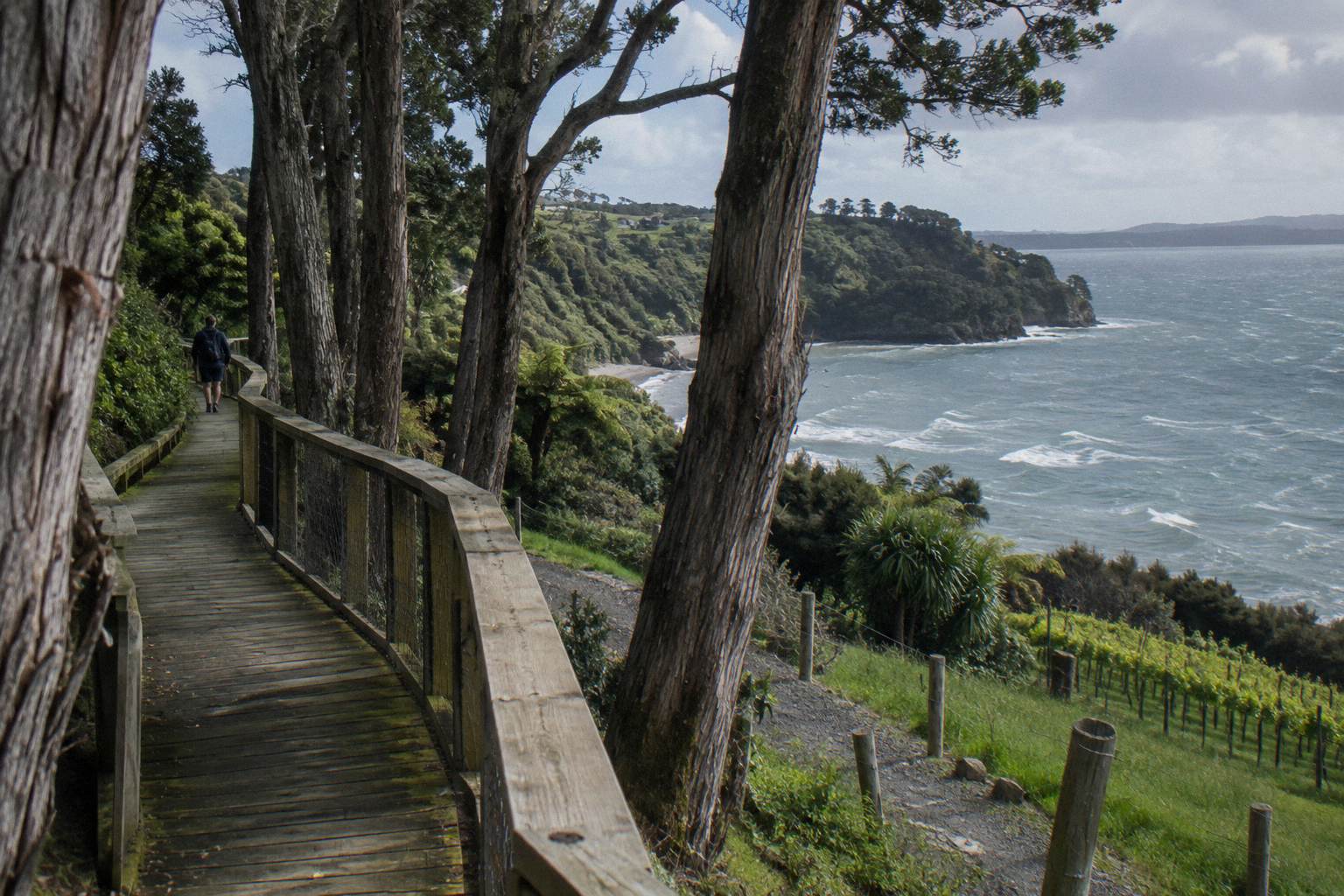
The Man O' War Forest Flight replaces EcoZip's bush track with 660 m of elevated boardwalk connecting three tandem ziplines totalling over 900 m, in a two-hour experience that ends steps from a beachfront tasting room. Boardwalk is not the same as flat, and stairs appear, but for many limited-mobility visitors it is the gentler layout of the two Waiheke courses.
Comparing the two honestly: EcoZip's walk is a forest track, while Man O' War's connective tissue is a purpose-built 660 m elevated boardwalk through kauri forest. A boardwalk removes roots, mud and most trip hazards, and it makes progress predictable in a way a rough track never can. The course also starts with a scenic drive to a 210 m viewpoint rather than a shuttle-and-walk arrival sequence, and it finishes at the vineyard's beachfront tasting room and restaurant, which shortens the total time on your feet to about two hours.
The caveats are real too. A boardwalk is raised, which means steps or ramps at the transitions, and "tandem" ziplines mean you fly paired with a companion rather than side by side on parallel cables, which changes the harnessing and launch routine slightly. Man O' War's listing gives the same 30 to 125 kg weight range; ask on the phone about age and health rules for this specific product. Our fuller comparison, Man O' War Forest Flight versus EcoZip, works through the differences product by product.
The card above shows the live listing for the Man O' War course, with price and rating details on the listing itself. If mobility is the deciding factor for your group, the two-hour, boardwalk-based structure is worth the trade-off of being based at the island's eastern end rather than near the ferry.
Age Limits And Older Visitors On The Waiheke Ziplines
EcoZip has no age limit at all: anyone from small children to visitors in their nineties can fly provided they meet the weight range and the physical requirements, and under-18s need a parent or guardian to sign the risk disclosure form. Capability, not birth year, is the operator's test, and the same philosophy holds across New Zealand zipline operators.
This is one of the most reassuring facts in NZ ziplining and it is well documented across the industry. Rotorua Canopy Tours reports hosting guests up to 93 years old with no upper age limit, prioritising fitness, mobility and the ability to meet physical requirements over age (Rotorua Canopy Tours FAQs). Ziptrek Ecotours in Queenstown states it has zipped guests over 90 and sets a 125 kg maximum weight across its tours (Ziptrek safety page). Waiheke's EcoZip sits squarely in that tradition: no age limit, a guardian signature for under-18s, and a child price for ages 15 and under.
For older visitors the practical advice is therefore about the walk, not the wires. If an 80-year-old in your group handles uneven ground with a walking pole and reasonable steadiness, the flight itself will be the easy, joyful part of their day. If balance or stamina on rough ground is the concern, the Man O' War boardwalk course, described above, or a spectator-plus-shuttle arrangement agreed by phone with EcoZip are the two honest paths. Our blog post on whether a 70-year-old can go ziplining on Waiheke covers the same ground for that specific age question.
| Operator | Age rule | Weight rule | Older-guest position |
|---|---|---|---|
| EcoZip, Waiheke | No age limit, under-18s need a guardian | 30 to 125 kg | Capability-based, no upper age limit |
| Rotorua Canopy Tours | Minimum age 6 on the Original tour | Maximum 120 kg | No upper age limit, guests up to 93 |
| Ziptrek Ecotours, Queenstown | Minimum age 6 to 10 by tour | Maximum 125 kg | Has zipped guests over 90 |
| Zipline Christchurch | No minimum age, height over 122 cm | 27 to 125 kg | Children under 13 accompanied by an adult |
The table above is drawn from operator-published rules, and it makes one pattern obvious: New Zealand zipline operators uniformly refuse to set upper age limits, because age is a poor proxy for the thing that actually matters, which is whether you can walk the course, follow instructions and fit the harness. That is also why the weight and health rules exist, and they are stricter than the age rules.
Weight Limits And Harness Fit On Waiheke
EcoZip requires participants to weigh at least 30 kg and no more than 125 kg, with everyone weighed discreetly at check-in, and being outside the range does not automatically earn a refund. Weight limits exist because braking systems, trolleys, cables and harnesses are rated for a design range, and riders outside it either arrive too fast at the brake or overload the equipment.
Those mechanics are not gatekeeping, they are physics. A rider too light may not generate enough momentum to reliably reach the landing platform; a rider too heavy arrives with excessive speed and loads the brake beyond its rating. Zipline engineering standards, including ASTM F2959 covering the design and operation of commercial aerial courses, treat braking and structural ratings as core safety requirements. EcoZip's 30 to 125 kg band, checked by a discreet weigh-in at check-in, is its implementation of exactly that kind of requirement.
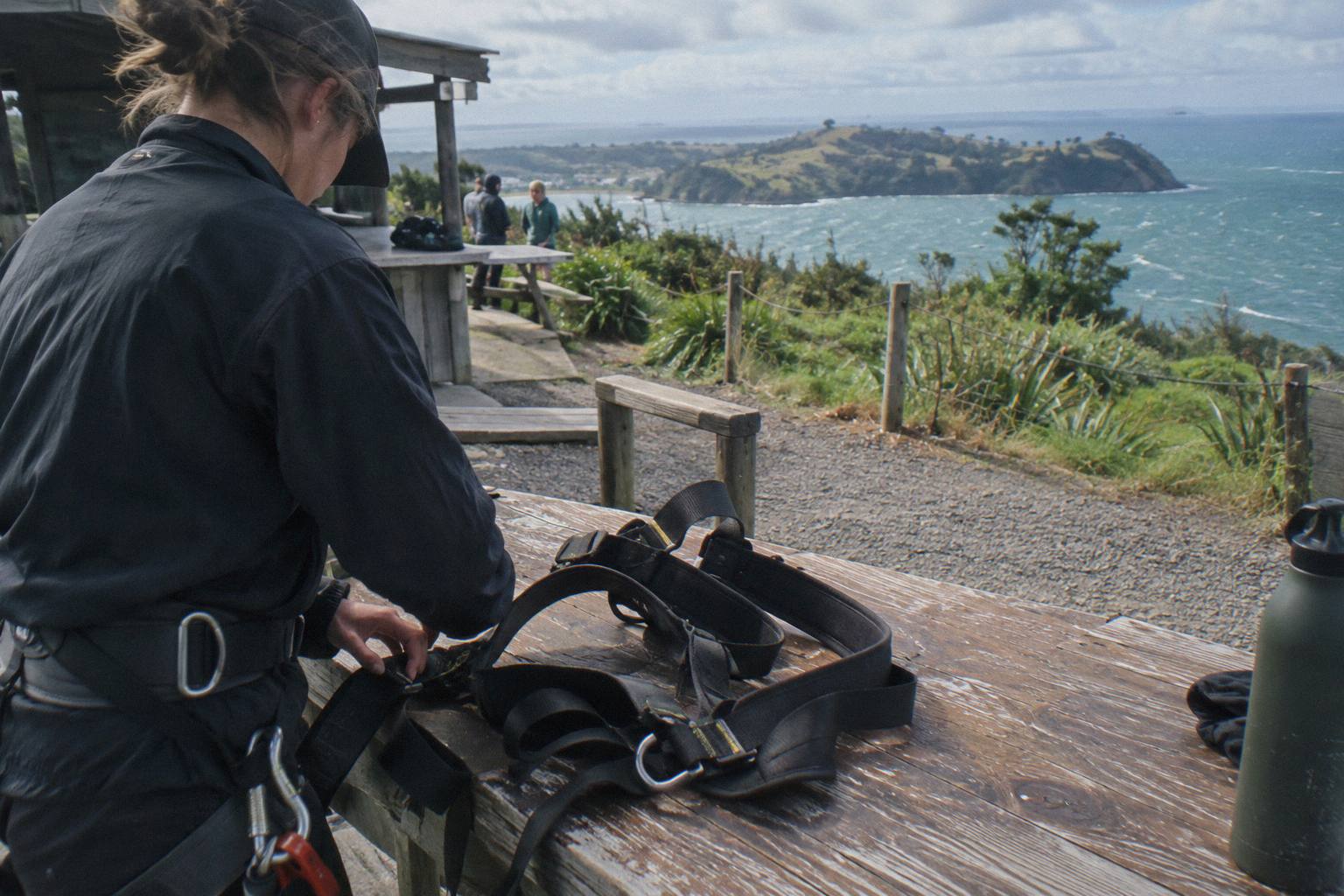
The health-adjacent detail worth knowing: the weigh-in is discreet and quick, and the harness fit is checked by staff. If harness fit is a concern, whether for body size or for comfort, our dedicated guide on the Waiheke zipline weight limit and harness sizes goes into far more depth than this accessibility overview can. And for plus-size visitors specifically, the honest industry picture, including which NZ operators run wider bands, is in our post on whether plus-size people can zipline.
| EcoZip weight rule | Detail |
|---|---|
| Minimum | 30 kg |
| Maximum | 125 kg |
| How checked | Discreet weighing at check-in |
| Outside the range | Not automatically refunded |
| Harness | Fitted and checked by staff |
Health Conditions: Who Should Check With A Doctor First
EcoZip's terms list conditions that may impair safe participation, including high blood pressure, cardiac conditions, pregnancy, and back or neck injuries, and the operator may refuse anyone affected by alcohol or drugs. Common zipline contraindications across the industry also include epilepsy, recent surgery and certain medications. Anyone with one of these should raise it before booking, not at the harnessing bench.
The industry-wide pattern is consistent and worth stating plainly, because visitors often assume these lists are legal boilerplate. They are not. A harness loads the body in ways ordinary clothing does not, the arrival at a brake is a sudden deceleration, and the forest walk adds impact and uneven loading on joints. Operators across New Zealand maintain similar exclusion lists: Zipline Christchurch bars pregnant participants and those with previous neck or back injuries, Rotorua Canopy Tours excludes pregnancy past 15 weeks, and Ziptrek Queenstown does not permit pregnant guests on its courses (Ziptrek safety information). Pregnancy rules in particular are near-universal because standard harnesses are not designed for one.
Back and neck concerns deserve a specific word, because they come up often. Ziplining itself is a smooth, seated descent, but the walk down is genuinely jarring for a compromised spine, and the deceleration at each landing loads the neck and back briefly. If you have a chronic or recent back, neck or spinal condition, the correct sequence is doctor first, operator second, booking third. Our post on whether you can hurt your back ziplining works through the evidence and the operator positions in detail, and our wider round-up of who should not go zip lining lists the full set of contraindications.
Fear of heights sits somewhere between a preference and a health question, and operators treat severe acrophobia seriously: comfort in the air is itself a safety factor, because panicking mid-line leads to exactly the wrong instinct, grabbing the cable. Briefings are explicit about hand positions for this reason. If nerves rather than mobility is your question, the dedicated first-timers guide linked above is the right next read.
It runs on the same site with the same walk and the same 30 to 125 kg and guardian rules, so nothing in the accessibility analysis above changes between the two EcoZip listings; choose on schedule and price, not on physical demands.
What To Ask The Operator Before You Book
Ask five things before paying: whether your specific mobility aid or limitation can be accommodated on the shuttle, platforms and walk; the exact weight and harness rules; whether a non-flying companion can ride along; the cancellation terms for a decision changed at the last minute; and whether weather on your date changes the walking conditions. A three-minute phone call beats a disappointed morning at the harness bench.
Booking platforms summarise, operators know. The table below is the exact question set worth asking, with the reason each one matters for accessibility specifically. Print it or screenshot it.
| Question to ask | Why it matters |
|---|---|
| Can my mobility limitation be accommodated end to end? | Shuttle boarding, platform access, toilets and the mandatory walk each have their own answer |
| What is the walking distance and surface on the day? | Rain changes the 1.4 to 1.5 km track; staff know current conditions |
| Can a non-flying companion join the shuttle or walk? | Sometimes possible, always an operator decision, never assumed |
| What are the weight rules and how is weighing done? | 30 to 125 kg at EcoZip, discreet check-in weigh-in, no automatic refund outside the range |
| What are the cancellation terms? | Direct and platform bookings can carry different terms; check before, not after |
| Are there steps between the ziplines and the walk? | Transition terrain is the part listings describe least |
One caution on cancellations, because it intersects with accessibility. EcoZip's direct-booking cancellation terms differ from the free-cancellation wording that appears on some platform listings, and knowing which terms govern your booking before the day matters if health or mobility might force a change. Weather is a separate matter: the course runs in rain and may close for consistent winds above about 35 knots, with a reschedule or refund offered, which is covered in full in our guide to Waiheke zipline weather, wind and cancellations.
Getting There: Ferry, Wharf And Shuttle Logistics
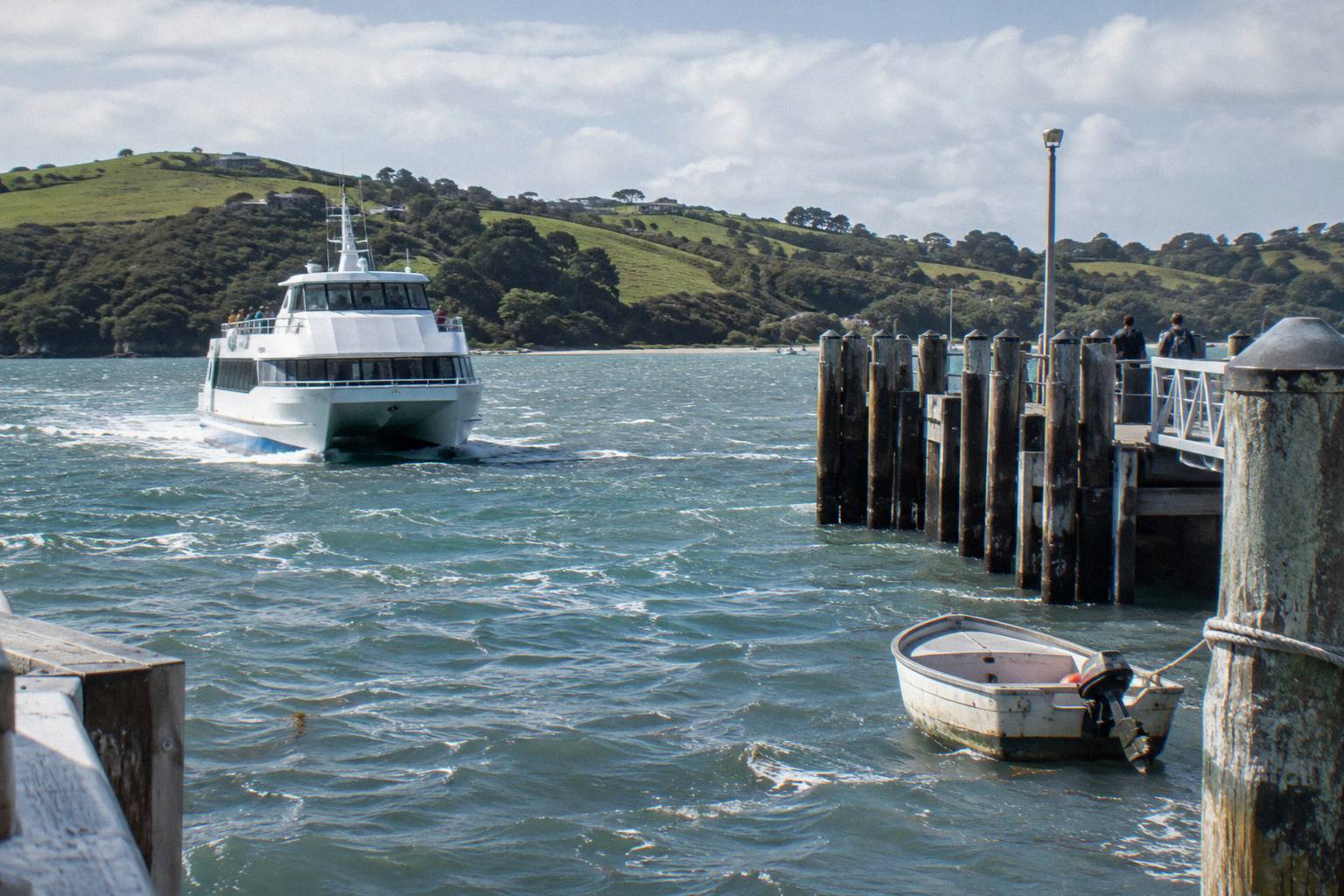
The ferry from Auckland's Downtown Ferry Terminal to Matiatia takes about 40 minutes, EcoZip's shuttle picks up at the terminal and the ride to the launch site is about 20 minutes, seated and commentated. The arrival sequence involves gangways, ramps and wharf walking before you ever reach the shuttle, so budget that walking when you budget the day.
Accessibility planning starts at the Auckland end, not the island end. The Fullers360 crossing runs from the Downtown Ferry Terminal on Quay Street, typically every 30 to 60 minutes, with gangway boarding at both ends (Fullers360 Waiheke destination page). For a morning zipline slot this means an early ferry, which is exactly why our guide on catching the ferry to Matiatia for a morning zipline slot exists: the ferry times, not the zipline times, set the shape of the day.
On the island, EcoZip offers pickup choices including Matiatia, Oneroa village and the Explorer bus interchange, and free drop-offs after the experience to a list of vineyards and restaurants. For a visitor conserving energy, those drop-off options are quietly one of the best accessibility features of the product: the day's walking can end at a lunch table rather than a bus stop. Cruise passengers face a tighter version of the same timing puzzle, worked through in the Waiheke zipline guide for cruise ship passengers.
For visitors who want a lower-key island day with no zipline at all, or a companion activity while others fly, the island's hop-on hop-off Explorer bus runs 16 to 17 stops on an 80-minute loop from Matiatia with frequent departures, and it pairs naturally with a zipline booking. And if the question is whether an e-bike day beats a zipline day for your group's fitness profile, e-bikes still demand pedalling on real hills, a comparison made honestly in our e-bike versus zipline day guide.
It is its own fitness test, Waiheke's hills do not flatten for electric motors, but it is a genuine option for splitting a group across abilities.
Pairing The Zipline With A Day That Suits Your Body
A mobility-aware Waiheke day works best built backwards from the walk: book a late-morning zipline slot, take the free vineyard drop-off afterwards, and keep the afternoon seated with lunch or a tasting rather than adding a second walking activity. Visitors who front-load one physical challenge and then rest report far better days than those who stack the zipline, a bushwalk and a bike hire into one visit.
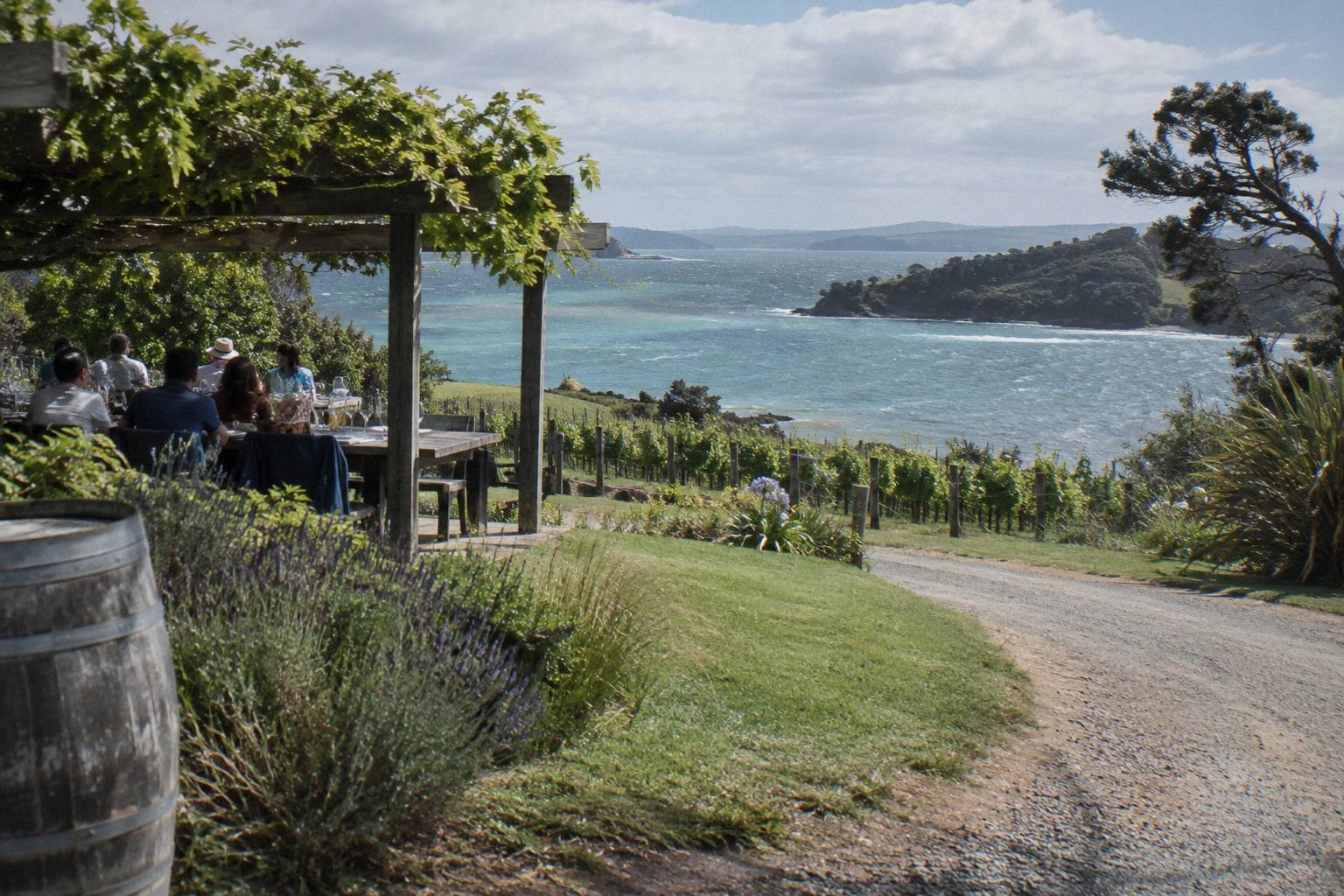
The island lends itself to this. Around 30 wineries and roughly 20 cellar doors mean the post-zipline drop-off can land your group at a table with a view, and a tasting flight of three to five wines commonly runs NZ$20 to NZ$55 at the cellar door, with many open from about 11am. The afternoon becomes recovery, conversation and food, which suits every mobility level in a mixed group. Our guide to the vineyards that pair with a Waiheke zipline day maps the options, and the lunch-and-vineyard-stop logistics, including which drop-offs the EcoZip shuttle covers, are detailed in the Waiheke zipline lunch and vineyard stops guide.
Season belongs in the plan too. February averages daytime highs around 23 °C and July around 15 °C, with July also the wettest month at roughly 123 mm of rain, which translates directly into muddier forest track. A dry late-summer or autumn day gives the gentlest walking conditions; a wet July day makes the mandatory walk the hardest version of itself. The seasonal trade-offs are laid out in the best time of year for a Waiheke zipline.
One last planning fact that surprises people: the standard EcoZip listing does not include the ferry ticket. Budget and book the crossing separately, and remember the ferry timetable is seasonal, so check sailings for your date rather than trusting a remembered time. Those two details cause more disrupted zipline mornings than any mobility issue does.
Common Questions About Zipline Accessibility On Waiheke
What Level Of Fitness Do I Need For The Waiheke Zipline?
EcoZip asks for reasonable fitness, and the reason is the mandatory guided forest walk of about 1.4 to 1.5 km on uneven track with switchbacks, uphill stretches and possible mud. The zipline flights themselves require almost no physical effort.
Is The Waiheke Zipline Wheelchair Accessible?
That is not verified either way. Neither Waiheke operator publishes a wheelchair-accessibility statement, so phone the operator directly before booking and describe your needs; treat any answer here as unknown rather than yes or no.
Is There An Age Limit For The Waiheke Zipline?
No. EcoZip sets no age limit in either direction; under-18s need a parent or guardian to sign the risk disclosure form, and children 15 and under pay the child price. Fitness and capability, not age, decide participation.
Can I Do The Zipline But Skip The Forest Walk?
No. The commentary during the walk is optional, the walk is not: the ziplines land you below the shuttle pickup and the track is the way back. If the walk is not feasible for you, ask the operator about alternatives by phone before booking.
Which Waiheke Zipline Is Easier For Limited Mobility?
For many visitors, the Man O' War Forest Flight: its three ziplines are connected by 660 m of elevated boardwalk rather than a bush track, and the whole experience runs about two hours. Ask about steps and transitions, and confirm its weight and health rules on the phone.
Can I Zipline While Pregnant On Waiheke?
EcoZip's terms list pregnancy among conditions that may impair safe participation, and NZ zipline operators almost universally exclude pregnant guests because standard harnesses are not designed for pregnancy. Our dedicated post on ziplining while pregnant covers the details.