What Is The Fatality Rate For Ziplining? What The Figures Say Before A Waiheke Trip
No verified fatality rate exists for ziplining, but the injury research and New Zealand's safety rules tell you a lot. Here is what the data says before you book a Waiheke zipline.
Zip lining sits in that strange category of activities that feels dangerous and, statistically, behaves more like a theme park ride than an extreme sport. Before you book anything on Waiheke, you deserve a straight answer about the numbers rather than a reassuring slogan. This article lays out what published research actually says, what New Zealand law requires of operators, and how the two Waiheke courses are built, so you can make the call with facts in front of you.
What Is The Fatality Rate For Ziplining?
No verified fatality rate for ziplining exists in the published research, and none is invented here. The most-cited figures come from a US emergency department study covering 1997 to 2012, which counted injuries, not deaths: roughly 16,850 zipline-related injuries treated in US emergency departments across that 16-year period, an average of just over 1,000 a year in a country of hundreds of millions.
That study, published in the American Journal of Emergency Medicine, is the closest thing the activity has to a rigorous dataset, and it is worth reading carefully. Of those injuries, falls accounted for 77.3 percent, fractures made up 46.7 percent, and the upper extremities were the most commonly injured body region at 44.1 percent. A later analysis of lower extremity injuries counted an estimated 7,962 such cases treated in US emergency departments between 2000 and 2024, about 17.1 percent of all zipline injuries in that period. All of these are US figures and should be read as such: they describe a huge, mixed market of courses, from professionally audited commercial operations to homemade backyard cables.
What the study does not contain is a death rate, and that gap matters. Deaths on ziplines are tracked poorly across jurisdictions, no international registry exists, and any single number a blog or brochure quotes would be an estimate layered on guesswork. The honest position is that fatal accidents are rare enough that researchers measuring a 16-year, whole-country injury pool did not build a reliable fatality denominator from them. If a seller tells you a precise fatality rate, ask where the number came from.
For Waiheke specifically, no New Zealand zipline fatality figure is published, so none is printed. What can be verified is the regulatory environment, the accreditation of the operators, and the engineering of the courses, which the rest of this article covers in turn. If your question is really "how likely am I to get hurt on the Waiheke zipline," the answer lives in those sections, not in a national death statistic that does not exist.
How Dangerous Is Ziplining Compared With Everyday Activities?
US emergency department data suggests zipline injuries are uncommon relative to participation, but they are not zero, and they cluster in predictable ways: falls while landing, launching or moving on platforms, and injuries to arms and hands. Fractures dominate at 46.7 percent of cases, which tells you the injury pattern is mostly impact and bracing, not catastrophic equipment failure. The data also skews toward the US market's least regulated corners.
Breaking the numbers down helps. The 1997-2012 study period coincided with the rapid, lightly supervised growth of ziplines in the United States, including backyard builds and courses opened before modern standards circulated. New Zealand's commercial market is structurally different: it is small, heavily audited, and dominated by a handful of long-running operators. That does not make it risk-free, but it changes which part of the US data is relevant to you. The falls-on-platform pattern is the part that travels.
| US injury finding (1997-2012 unless noted) | Figure | What it means for a visitor |
|---|---|---|
| Estimated zipline injuries treated in emergency departments | 16,850 over 16 years | About 1,000+ per year across the entire US, across all course types |
| Falls as the injury cause | 77.3% | Most injuries happen at launch, landing or on platforms, not mid-flight |
| Fractures as injury type | 46.7% | Impact and bracing injuries, typically recoverable |
| Upper extremity injuries | 44.1% | Hands and arms take the force when people reach or brace |
| Lower extremity injuries (2000-2024) | 7,962 cases, 17.1% of the period total | Legs are the minority of injuries, often landing-related |
Two practical readings follow from that table. First, the dominant injury mechanism is not the cable snapping or the harness failing, it is people falling on platforms or landing badly, which is exactly what safety briefings and guide supervision address. Second, the injury severity profile is dominated by broken bones rather than catastrophic outcomes, which is consistent with the absence of a measurable fatality rate. Neither point makes the activity safe by assertion; both tell you where the real risk sits and what your own behaviour controls.
If you want the deeper statistical picture of who ends up in the wrong demographic for this activity, the guide on which Waiheke visitors should skip the zipline covers the medical contraindications operators actually list, from pregnancy to neck and back injuries. The short version: most injuries in the data involve otherwise healthy people doing something impulsive on a platform, and operators manage that with briefings, guide ratios and hardware.
How Does New Zealand Regulate Zipline Safety?
This is the single most important fact on this page for a Waiheke visitor, and it is one most first-page Google results skip. In New Zealand you cannot legally run a commercial zipline as a fly-by-night operation. The Health and Safety at Work (Adventure Activities) Regulations 2016 put ziplines and flying foxes squarely in the regulated category, and the 2023 audit standard tightened what operators must document, practise and prove. The AdventureMark certification scheme is one of the approved bodies that audits against those requirements and issues the certification operators display.
EcoZip Adventures, which operates the main Waiheke course on Trig Hill, is AdventureMark accredited through Quality Standards International and has been registered since 2012. Its published safety systems include ZipStop braking with backup systems, and hardware inspected on daily, weekly and monthly cycles. Those are the kinds of documented, audited processes the regulations exist to force, and they map directly onto the injury mechanisms in the US data: controlled braking addresses the landing-impact pattern, and platform procedures address the fall pattern.
International standards sit underneath the national ones. ASTM F2959-26A is the Standard Practice for Aerial Adventure Courses, covering design, manufacture, installation, operation, maintenance and auditing of ziplines and canopy tours for commercial use, and ANSI/ACCT 03-2019 sets parallel requirements for structural integrity, braking and operations. New Zealand operators build and audit against this ecosystem of standards rather than a single local rulebook, which matters when you ask any operator, anywhere, what their course is certified to.
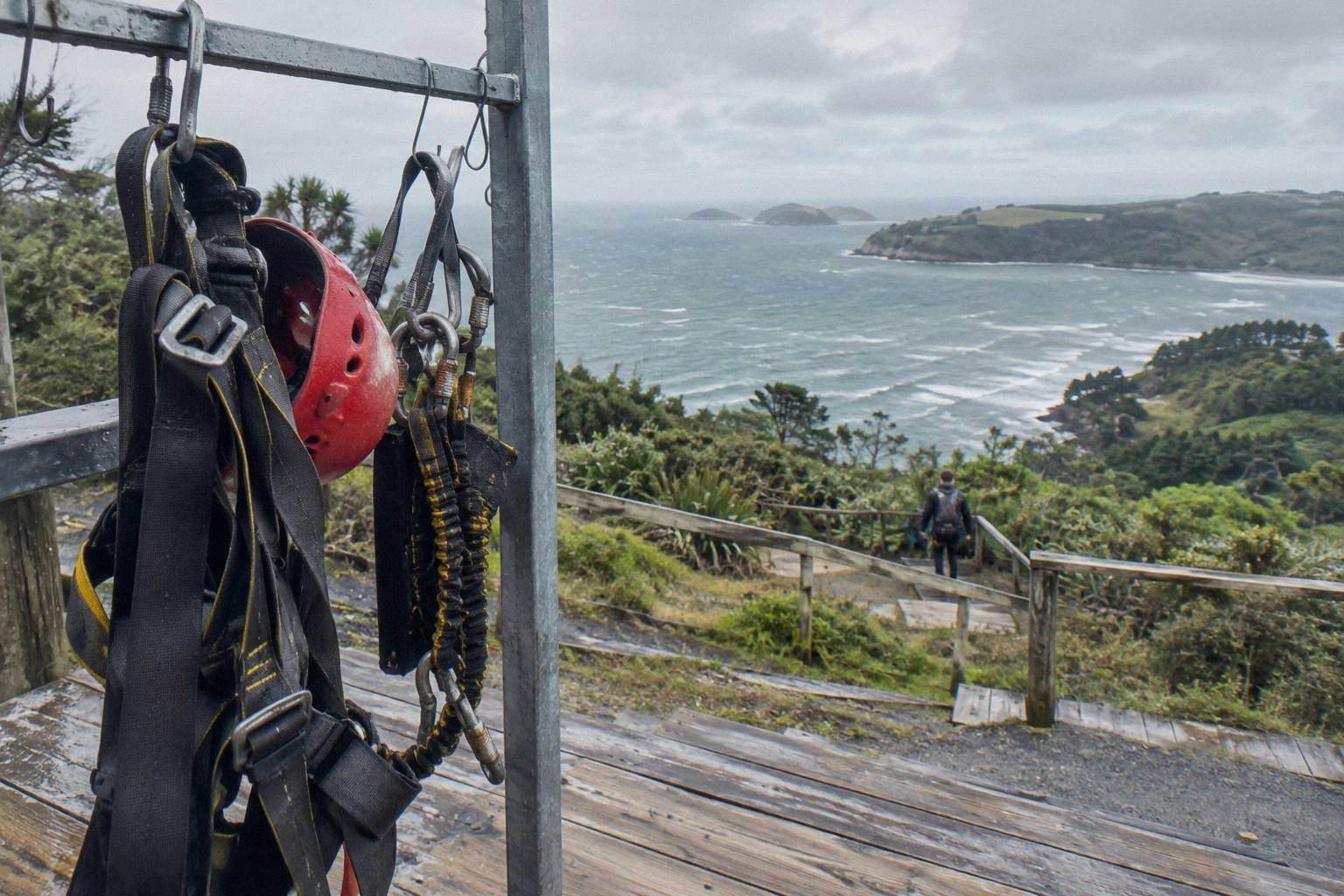
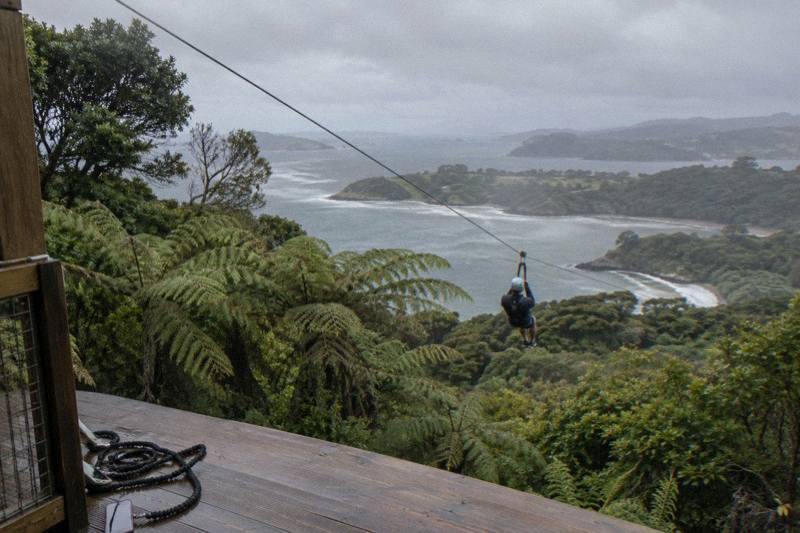
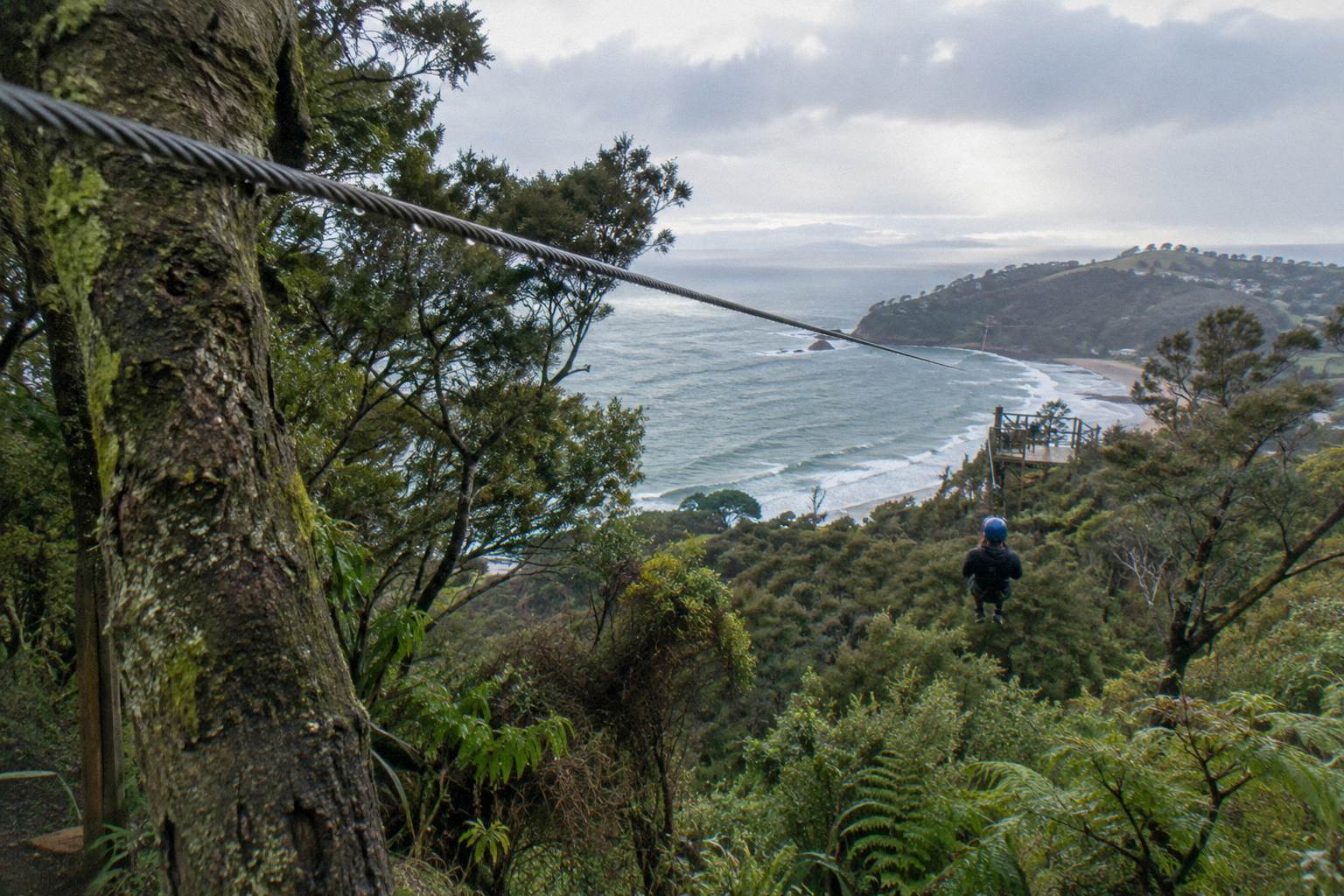
A reasonable question at this point is how Waiheke's two courses differ in character. EcoZip runs three dual-cable lines, each around 200 to 220 m, with side-by-side flying and a guided native forest walk between launch points. The Man O' War Forest Flight, at the eastern end of the island, runs three tandem lines totalling over 900 m, linked by a 660 m elevated boardwalk through kauri forest, finishing steps from a beachfront tasting room. Both are audited commercial operations; the choice between them is about format and location, not about one being visibly more dangerous than the other.
What Actually Keeps You Safe On A Zipline?
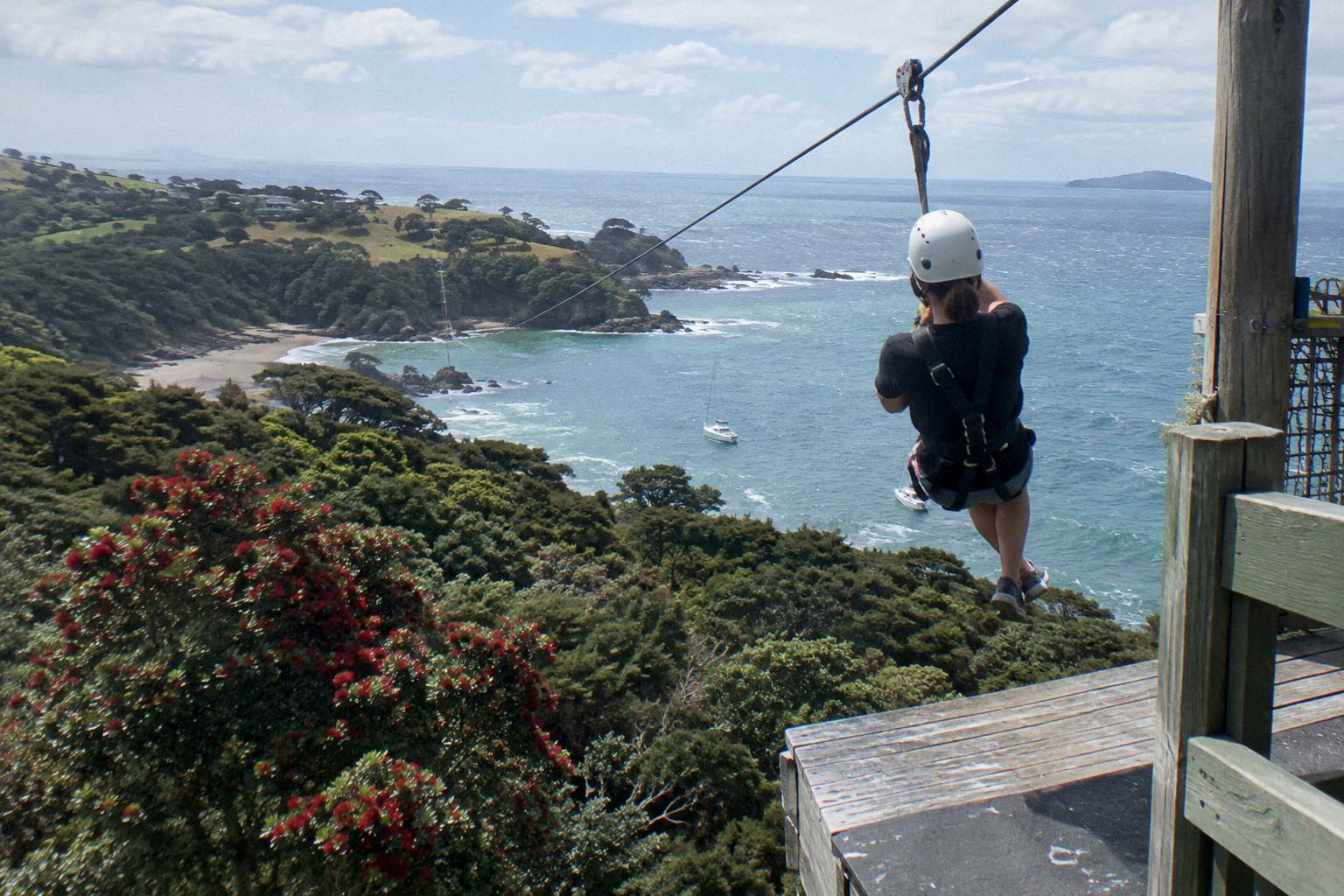
Modern commercial ziplines rely on layered redundancy: dual or tandem cables where designed, a primary brake plus an independent emergency arrest device that engages automatically if the primary fails, and harness systems rated far above the 30 to 125 kg participant range EcoZip enforces. Standards require brakes to be designed and tested for the extremes of participant weight and arrival speed, not just the average.
The engineering picture is worth understanding because it explains why the catastrophic-failure scenario that fuels most fear does not show up in the injury data. A dual-cable zipline with a backup brake system, the configuration used on Waiheke's EcoZip course, carries redundant cables and a braking chain in which the primary brake, a magnetic or friction system like ZipStop, does the routine work while the emergency arrest device sits in reserve. Industry standards from ACCT explicitly require brake systems, primary plus emergency, to be designed for the weight and arrival-speed extremes of real riders and tested by qualified persons.
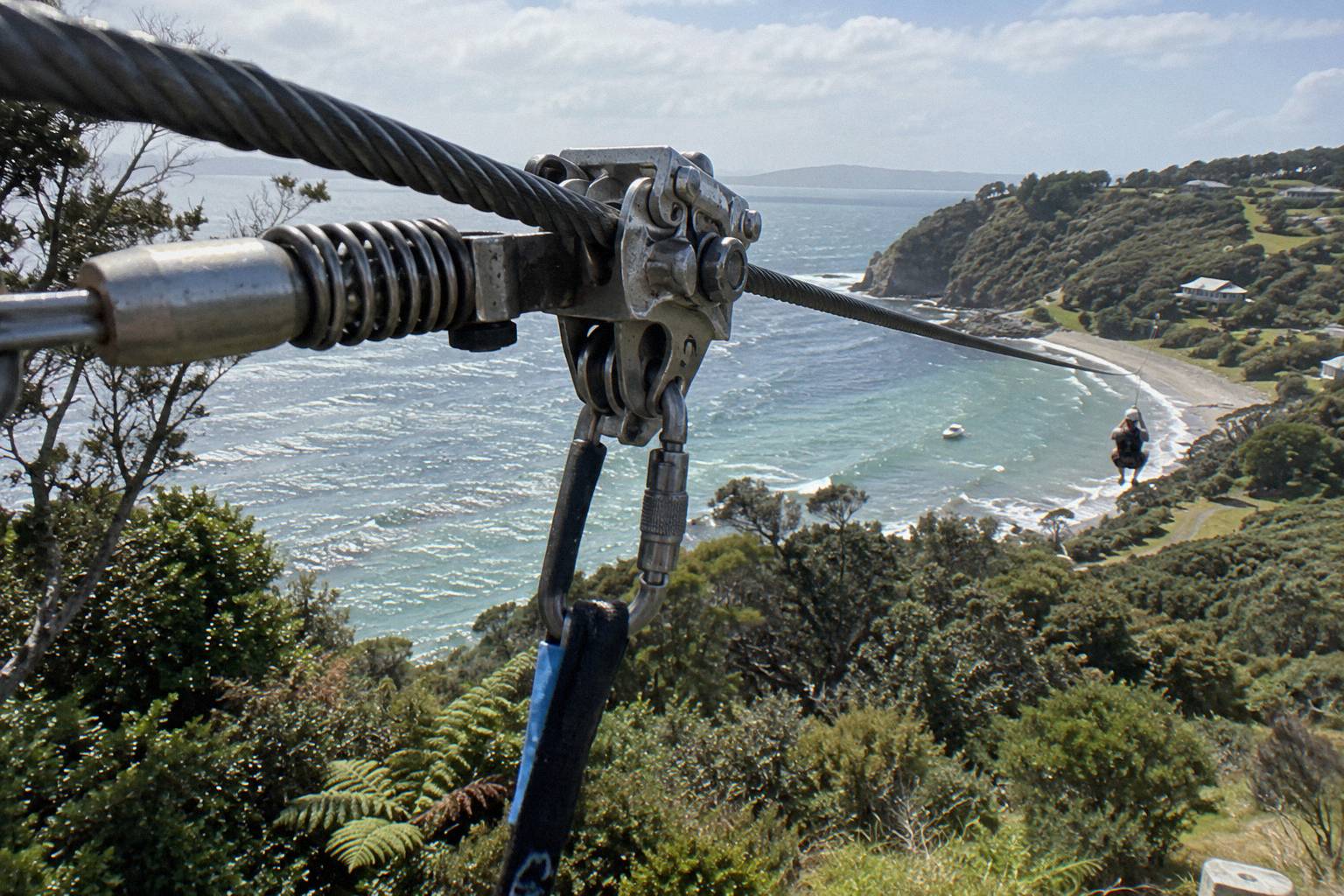
Weight limits are part of the same safety chain, not a commercial nicety. Riders need enough mass to generate the momentum that carries them reliably into the braking zone, and not so much that they overload the harness, cable, trolley or brake ratings. The generic commercial range cited across operators runs roughly 23 to 125 kg as an industry pattern; EcoZip sets its Waiheke range at 30 to 125 kg, weighs everyone discreetly at check-in, and checks harness fit before anyone clips in. For the fuller picture on the weighing process and the limits, the guide to Waiheke zipline weight limits and harness sizing walks through what happens at check-in and what to do if you fall near a boundary.
The remaining risk, once hardware and audits are handled, is human, which is why briefings matter so much. Operators instruct riders never to grab the cable with their hands, to use designated hand positions, and to follow specific braking and leg-positioning cues. Look back at the US injury table: falls and upper extremity injuries dominate precisely because the dangerous moments are the improvised ones, a hand reaching for a moving cable, a panicked stop on a platform. The safety system you control most directly is your own attention during the briefing.
Who Should Not Go Zip Lining?
Operators commonly advise against ziplining during pregnancy, and list heart conditions, epilepsy, recent surgery, neck, back or spinal injuries, high blood pressure and certain medications as contraindications that require medical advice or exclusion. EcoZip's own terms list these conditions and reserve the right to refuse anyone affected by alcohol or drugs. Age itself is rarely the barrier: NZ operators have hosted guests over 90, and Waiheke has no age limit, only a 30 to 125 kg weight range.
The pregnancy position is consistent across New Zealand: Zipline Christchurch and Ziptrek Ecotours in Queenstown do not permit pregnant participants, and Rotorua Canopy Tours draws the line at 15 weeks. The reasoning is mechanical rather than statistical: standard harnesses are not designed for a pregnant body, and the risk of abdominal trauma from harness pressure and sudden stops is not worth carrying. EcoZip includes pregnancy in its listed conditions on the Waiheke terms.
| Condition or factor | What operators typically say | Waiheke specifics |
|---|---|---|
| Pregnancy | Commonly excluded; Rotorua Canopy Tours cuts off at 15 weeks | Listed among EcoZip conditions requiring disclosure |
| Back, neck or spinal injury | Consult a doctor; recent injuries often exclude participation | Listed in EcoZip terms |
| Heart conditions, epilepsy, high blood pressure | Commonly listed contraindications | Listed in EcoZip terms |
| Alcohol or drugs | Grounds for refusal | EcoZip may refuse affected riders |
| Age | Often no upper limit; NZ operators report guests in their 90s | No age limit; under-18s need a guardian's agreement |
| Weight | Common commercial range roughly 23-125 kg industry-wide | 30-125 kg at EcoZip, weighed discreetly at check-in |
Fear of heights deserves its own note. Guidance for acrophobic riders is candid: operators advise consulting a doctor or reconsidering altogether if the fear is severe, because a panicked rider on a platform is a genuine safety risk to themselves and others. Mild nervousness is common and manageable, and a guide talks most first-timers through it, but panic at height is different in kind. If that is you, read the guide on Waiheke ziplining for nervous first-timers before deciding, not after booking.
How Do The Waiheke Courses Handle Weather And Cancellations?
EcoZip Waiheke runs in rain and only cancels when wind is consistently above 35 knots, offering a date or time change or a full refund when it does. That threshold is a safety decision, not a comfort one, and it matters because wind, not rain, is the environmental variable that genuinely changes zipline risk by altering arrival speed at the braking zone.
The 35-knot wind rule illustrates how a well-run operation manages residual risk in real time. Rain makes the forest walk muddy and the views grey, so it affects enjoyment, but the cable, trolley and brake system handle wet conditions within their design envelope. Consistent high wind is different: it pushes riders toward the top of their arrival-speed range, which is precisely the scenario brakes are designed and tested for at the extremes, but which operators prefer not to run at all. Cancelling and refunding is cheaper than testing the margin.
What you wear feeds into the same picture. Closed, laced or buckled shoes are required on the EcoZip course, no jandals, because the forest walk covers about 1.4 km of uneven, switchbacked track with a few steady uphill stretches and it can be muddy. Phones and cameras must be strapped to clothing or the harness, with free phone bungees at check-in, which addresses the dropped-object hazard to people below. The guide on what to wear ziplining on Waiheke covers the full kit list.
One cancellation nuance deserves a flag here because it affects risk-adjacent planning. Bookings made directly with EcoZip carry stricter terms than many platform listings suggest: cancelling inside 48 hours is non-refundable, and even beyond 48 hours a direct cancellation carries a charge per person. If you are matching a zipline slot to a ferry timetable on a tight day, the guide on catching the ferry to Matiatia for a morning slot is worth reading alongside the operator's own terms before you commit.
What Should You Ask Any Zipline Operator Before Booking?
Ask four things: whether the operator is registered and safety-audited under New Zealand's adventure activity regulations, what braking system and backup they run, what their weight and health limits are, and what happens if weather cancels your slot. On Waiheke, the answers are verifiable: EcoZip is AdventureMark accredited, runs ZipStop braking with backups, sets 30 to 125 kg with discreet check-in weighing, and refunds or reschedules wind cancellations.
Anywhere in the world, those four questions separate an audited commercial operation from the backyard-cable end of the US injury data. A registered New Zealand operator can point to its audit certification; a serious one will talk openly about its braking redundancy rather than glossing it; a transparent one prints its weight range and health contraindications in its booking terms; and a fair one has a written weather policy with a refund or reschedule, not a shrug. None of this guarantees safety, but operators who answer all four readily are the ones whose practices line up with how the rare zipline injuries actually happen.
| Question to ask | Good answer | Waiheke status |
|---|---|---|
| Are you registered and safety-audited? | Yes, under the Adventure Activities Regulations 2016 | EcoZip: AdventureMark accredited, registered since 2012 |
| What braking and backup do you run? | Named primary brake plus independent emergency arrest | EcoZip: ZipStop with backup systems, scheduled hardware inspections |
| Weight and health limits? | Stated plainly, weighed discreetly, health conditions listed | EcoZip: 30-125 kg, conditions in the terms |
| What if weather cancels? | Reschedule or full refund | EcoZip: change or full refund when wind is consistently above 35 knots |
If your day on the island is bigger than a single zipline flight, the natural pairings are well trodden. The Waiheke Island: Zipline And Forest Walk is the flagship three-hour format: three dual ziplines, the guided forest walk, and a commentated island highlights shuttle from Matiatia, with free drop-offs at several vineyards afterwards. Plenty of visitors bolt a tasting or a vineyard lunch onto the back of it, and the longer zipline and wine tasting day tours from Auckland bundle the ferry, the flight and the cellar doors into one booking.
The Honest Bottom Line For A Waiheke Visitor
The fatality rate question has no honest numerical answer, and the responsible version of the question is about injury patterns and regulation, where the answers are solid: US injuries cluster in falls on platforms, New Zealand operators are audited by law, and EcoZip Waiheke is accredited with redundant braking and a clear 30 to 125 kg range. The activity is not risk-free, and no operator claims it is.
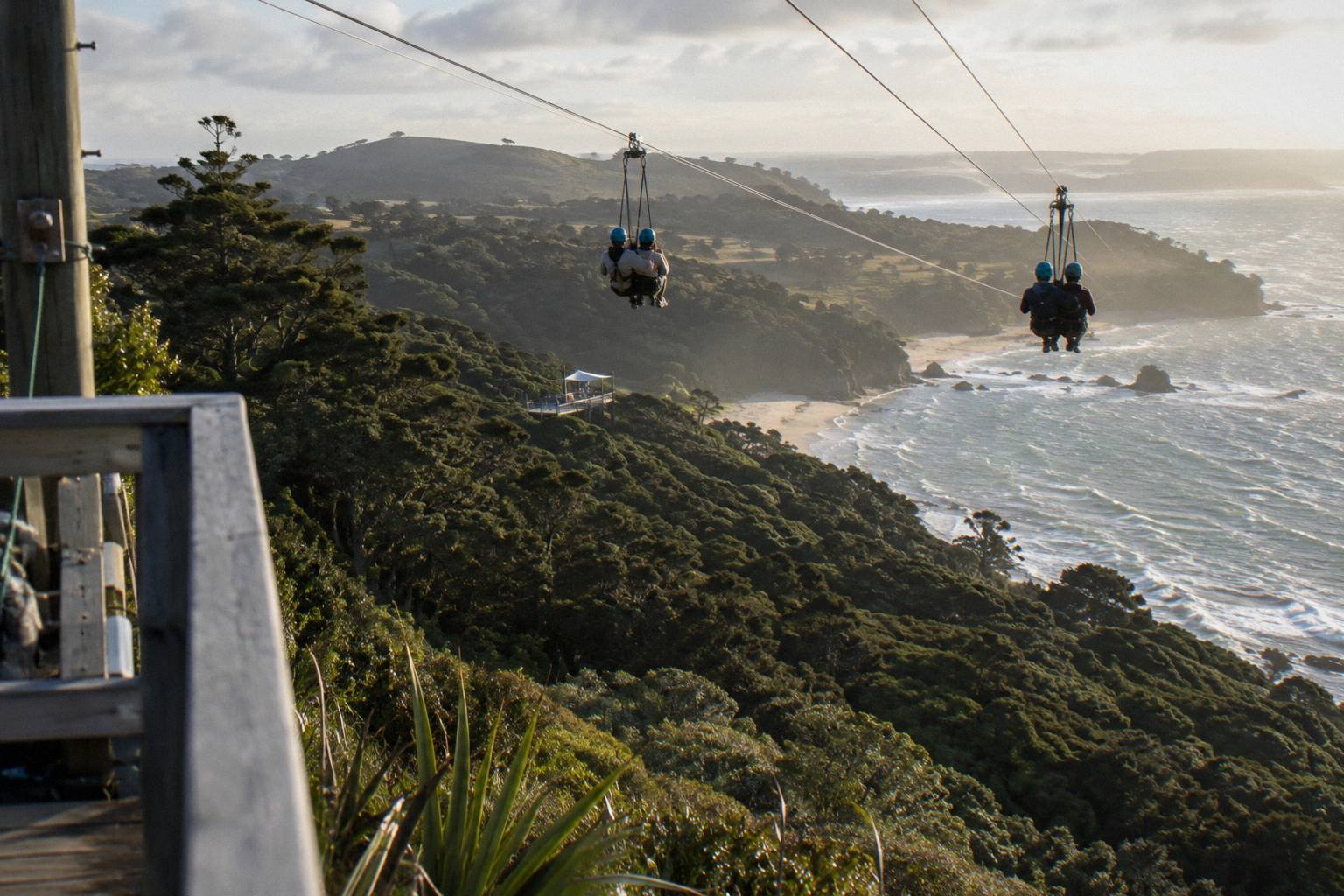
Here at Waiheke Zipline Tours, the position is that you should book with your eyes open. The fear that dominates most people's hesitation, a catastrophic mid-cable failure, is the scenario least supported by the injury data. The scenarios the data does support, a fall at a platform, a hand reaching for a cable, a braced landing, are the ones addressed by the briefing you receive before your first flight and by the guide ratios the regulations enforce. Listen to the briefing, wear the right shoes, disclose the health conditions, and the residual risk you carry is small and mostly in your own hands.
For visitors whose real worry is a family member, the same logic applies with numbers attached. There is no age limit on the Waiheke course, under-18s need a guardian to sign the risk disclosure, and New Zealand operators elsewhere have flown guests in their nineties. The gate that matters is the weight range and honest health disclosure, not a birthday. If a member of your group falls outside the range or the health list, the island still offers the hop-on hop-off Explorer bus, e-bike hire and around twenty cellar doors, so nobody's day is written off.
Common Questions About Ziplining Safety
What Is The Fatality Rate For Ziplining?
No verified fatality rate exists in the published research. The best available dataset is a US emergency department study covering 1997 to 2012, which counted roughly 16,850 zipline injuries over 16 years and did not establish a fatality denominator. Any precise death rate you see quoted is an estimate, not a sourced figure, and no New Zealand fatality figure has been published.
Is Ziplining Safer In New Zealand Than In The United States?
The US injury figures come from a large, mixed market that included lightly regulated and homemade courses during its boom years. New Zealand requires commercial zipline operators to pass a safety audit and register with WorkSafe NZ under the Adventure Activities Regulations 2016, so the regulatory floor is higher. That difference cannot be converted into a comparison rate, because no matching NZ injury dataset exists.
What Causes Most Zipline Injuries?
Falls, accounting for 77.3 percent of injuries in the US emergency department study, typically at launch, landing or on platforms. Fractures made up 46.7 percent of cases and the upper extremities were the most injured region at 44.1 percent, a pattern of impact and bracing rather than equipment failure.
Has Anyone Died On The Waiheke Zipline?
No fatality figure for the Waiheke courses is published, so nothing can responsibly be printed either way. What is verifiable is the regulatory framework: EcoZip is AdventureMark accredited, registered since 2012, and runs ZipStop braking with backup systems on scheduled inspection cycles.
Does The Zipline Run In The Rain On Waiheke?
Yes. EcoZip runs in rain and cancels only when wind is consistently above 35 knots, in which case you get a date or time change or a full refund. Wear closed, laced or buckled shoes, because the guided forest walk covers about 1.4 km of uneven, sometimes muddy track.
Who Should Not Go Zip Lining?
Operators commonly exclude or advise against participation during pregnancy, and list heart conditions, epilepsy, recent surgery, neck, back or spinal injuries, high blood pressure and certain medications as requiring medical advice or exclusion. EcoZip may also refuse anyone affected by alcohol or drugs. Age is not a limit on Waiheke; the weight range of 30 to 125 kg is the hard gate.