What Is A Zipline Ride? How The Waiheke Version Works
A plain definition of a zipline ride, plus how the Waiheke Island version works: dual cables, braking, the forest walk, and what actually happens over three hours.
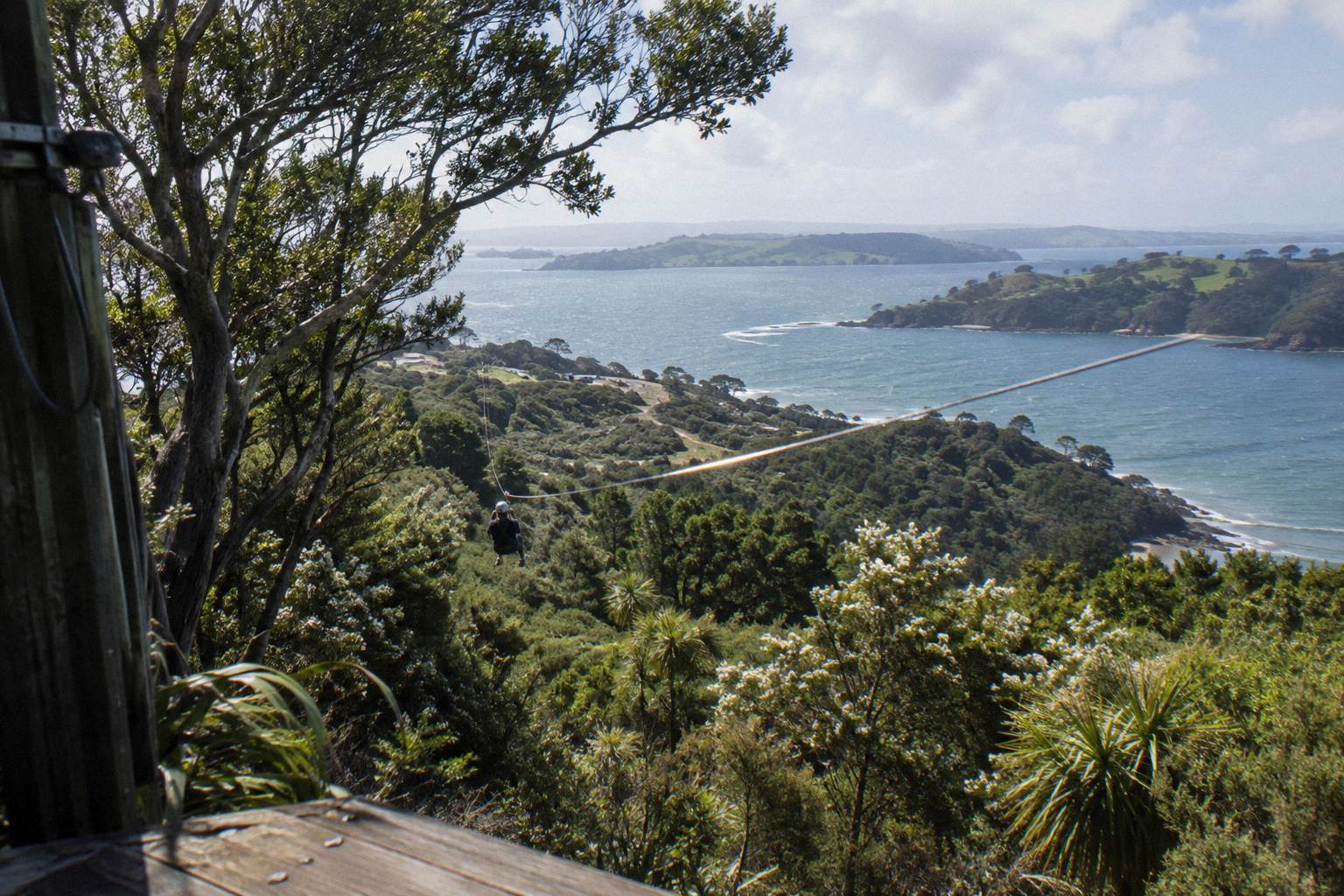
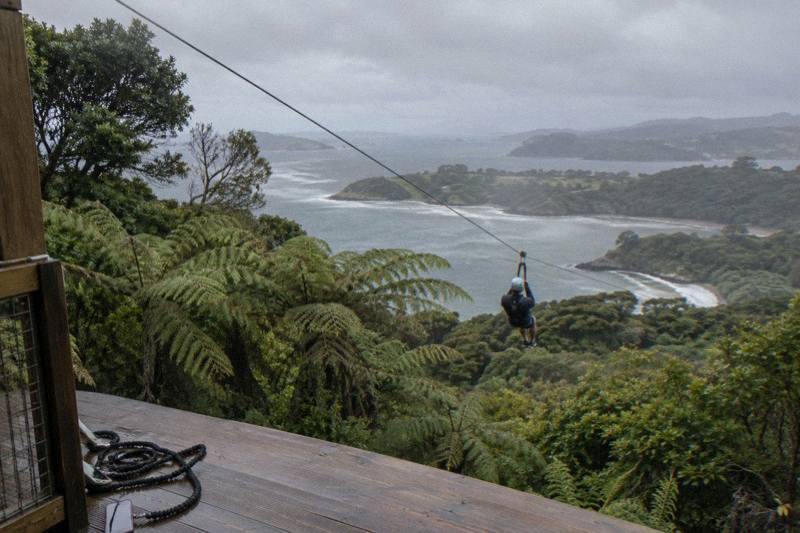
A zipline ride is one of the simplest thrill machines ever built: a cable strung between two points, a pulley on the cable, and a rider clipped in underneath, pulled downhill by nothing but gravity. Waiheke Island's version of that idea adds its own character, three dual-cable flights of roughly 200 m each above native forest, a guided walk back down through the trees, and a minivan loop of island highlights on the way. This article explains the plain mechanics of a zipline ride first, then walks through exactly how the Waiheke format works, line by line.
What Is A Zipline Ride?
A zipline ride is a descent along a suspended steel cable, with the rider hanging from a pulley and harness and gravity supplying all the power. The cable is anchored high at the launch platform and lower at the landing end, so the rider accelerates downhill, then decelerates as the gradient flattens or a brake engages. No motor, no engine, just slope.
The basic concept is old and was never invented for tourism. People have used inclined cables to move goods and people across ravines for well over a century, and the general history is covered plainly in the encyclopedia entry on zip-lines. Modern commercial ziplining takes that working idea and dresses it in safety systems: a full-body harness, a trolley that runs on the cable, a backup lanyard, helmets, and a braking arrangement at the far end.
What surprises many first-timers is how controlled the whole thing feels. Movies suggest free fall; the reality is closer to a fast, smooth glide with wind noise. Riders on well-designed courses reach a terminal speed set by the cable's slope, the rider's weight, and friction, and the arrival is managed either by the cable rising toward its end, by a gravity or spring brake, or by an operator-operated or self-activating braking system.
Rides vary enormously in scale. Some courses run single lines of 50 m between backyard trees; others string multiple lines into tours kilometres long. New Zealand's longest zipline, for context, is the 1.1 km Long Ride at Christchurch Adventure Park, while a typical Waiheke line sits around 200 m, a length chosen so almost anyone can ride it comfortably and still finish wanting more.
If the definition has you curious about the local version, these are the three Waiheke products compared most often:
How Does The Waiheke Zipline Format Work?
The Waiheke format pairs three zipline flights of roughly 200 m each with a guided walk back through native forest, all wrapped in about three hours from ferry-terminal pick-up to drop-off. Riders fly on dual cables, two side by side, so pairs can launch together, and speeds reach over 50 km/h on the longest line before an active braking system slows the arrival.
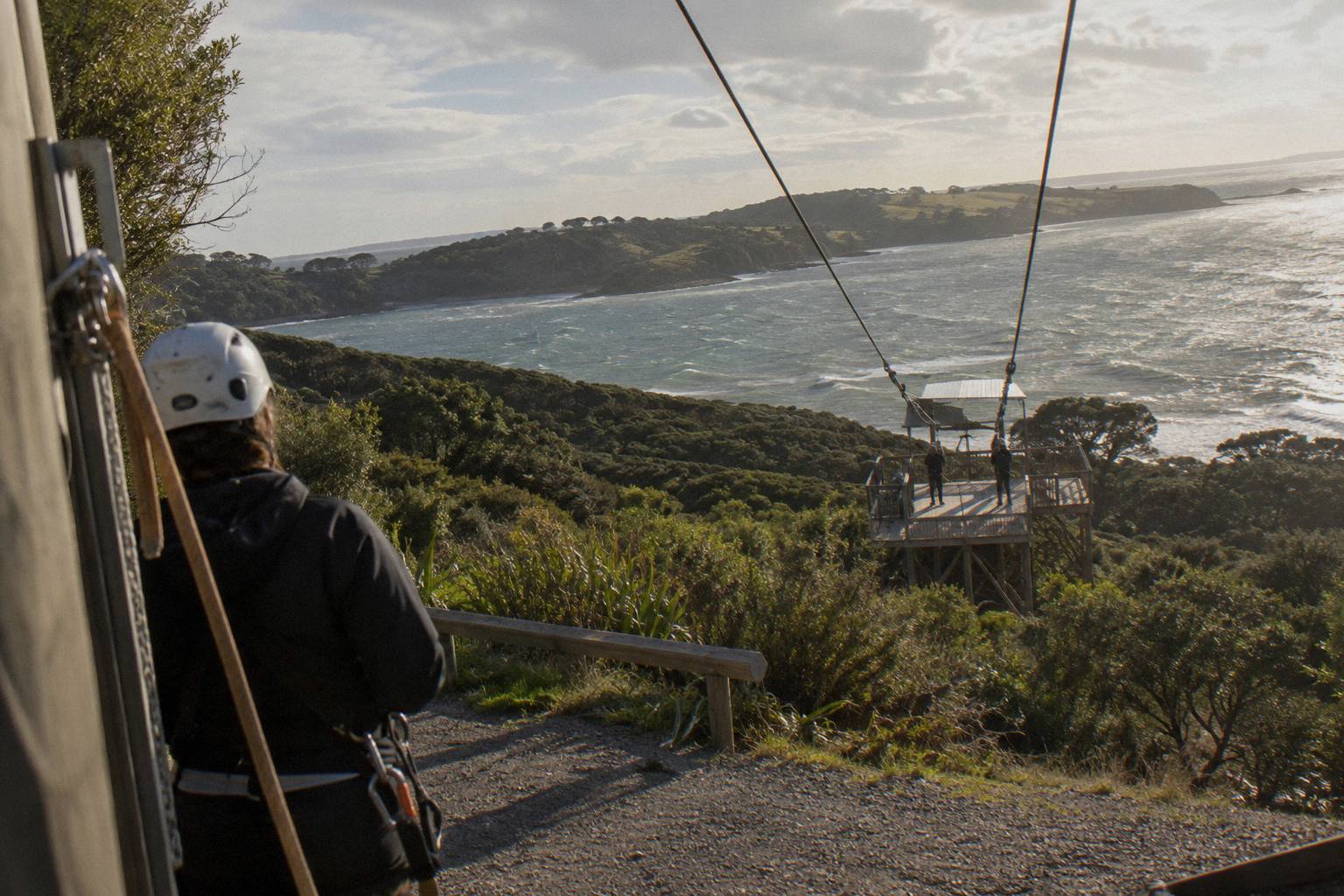
EcoZip Adventures, the operator behind the main Waiheke course on Trig Hill, runs three dual-cable ziplines known as the Vineyard Cruise, City View, and Kurinui. The Kurinui line is the headline act at 220 m, and riders hit speeds over 50 km/h on it. Dual means exactly what it sounds like: two parallel cables about a metre apart, so two riders launch at the same moment and race each other to the bottom. For families and nervous first-timers this is a genuine design kindness, because flying next to someone you know feels very different from flying alone.
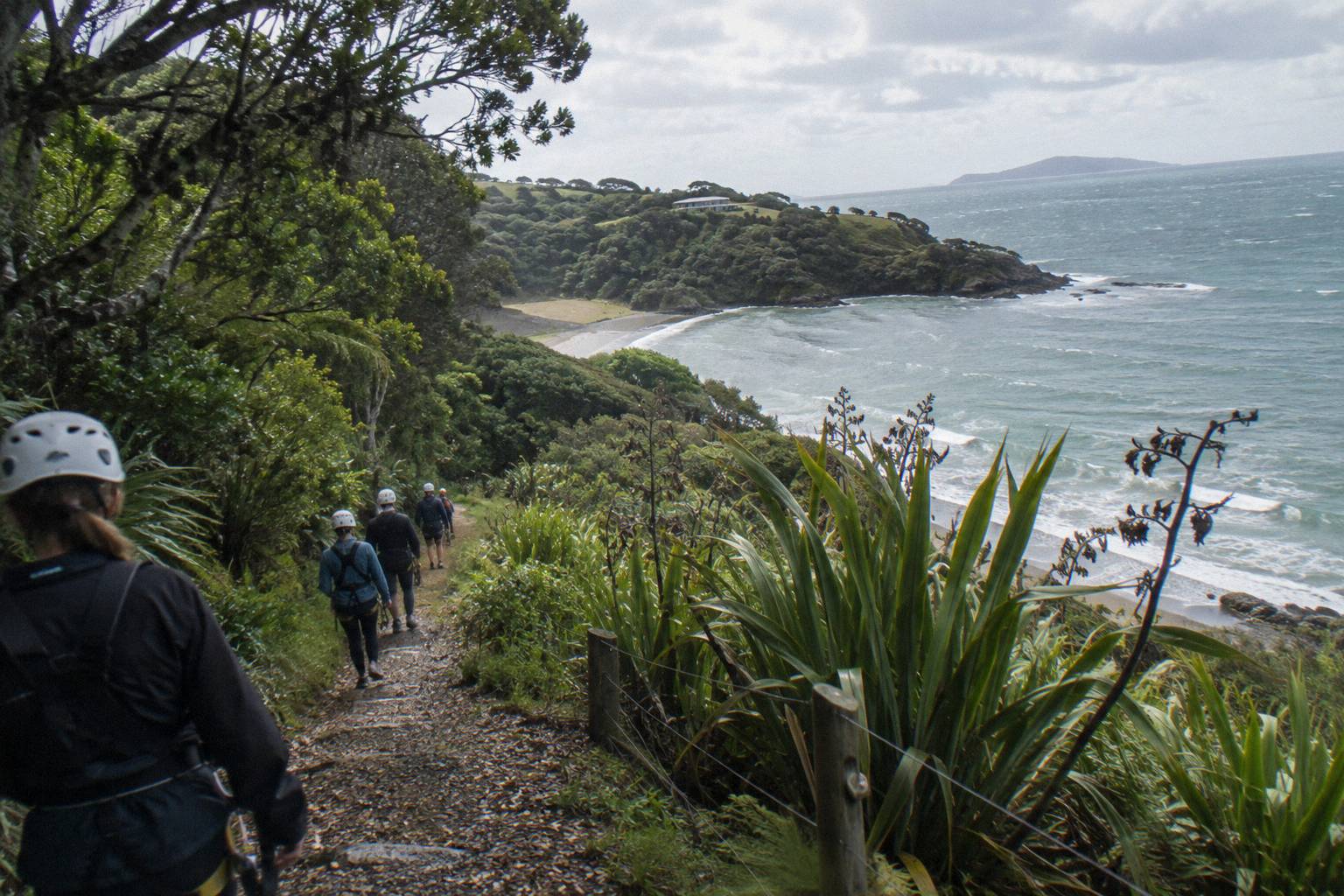
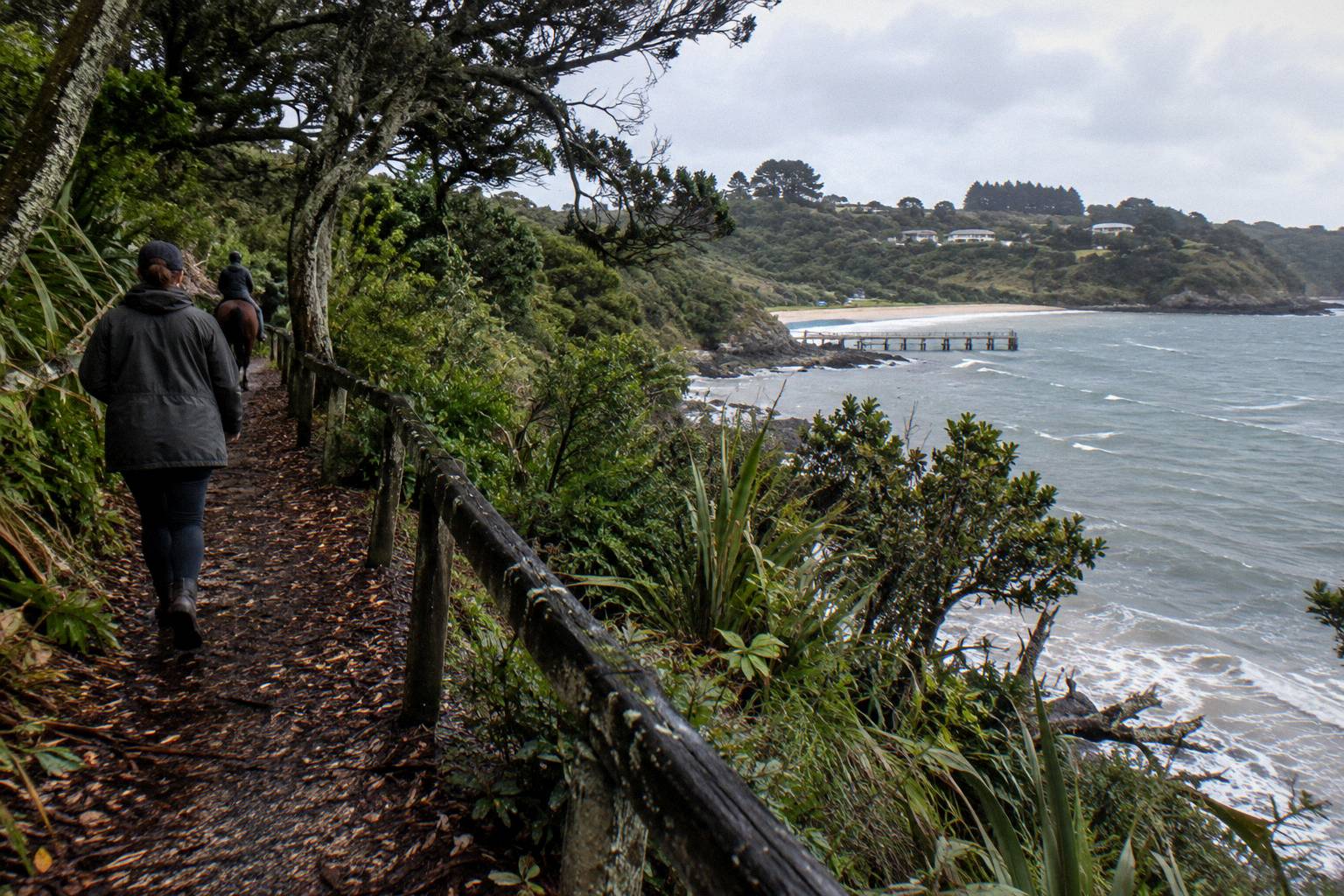
Between flights, and this is the part that separates the Waiheke product from a bare adrenaline circuit, riders walk back down through native forest on a guided track of roughly 1.4 to 1.5 km. The track is uneven in places, with switchbacks and a few steady uphill stretches, and it can be muddy after rain. The guided commentary is optional; the walk itself is not, so reasonable fitness is part of the deal.
The whole outing is bookended by logistics that matter if you're arriving by ferry. A commentated Waiheke Highlights shuttle ride of about 20 minutes carries riders from Matiatia to Trig Hill, with the drive doubling as a mini island tour, and the site sits about 15 minutes from the ferry terminal. Drop-off afterwards can be to Matiatia, or free to a list of vineyards and restaurants including Stonyridge, Te Motu, and Wild Estate, which is how many riders fold lunch into the same day.
Here is how the two Waiheke zipline experiences differ in shape:
| Feature | EcoZip Waiheke (Zipline And Forest Walk) | Man O' War Forest Flight |
|---|---|---|
| Lines | 3 dual-cable ziplines, each about 200-220 m | 3 tandem ziplines, over 900 m total |
| Flight style | Two riders side by side on parallel cables | Pairs riding tandem on shared lines |
| Forest section | Guided walk of about 1.4-1.5 km | 660 m elevated boardwalk through kauri forest |
| Duration | About 3 h door to door | About 2 h |
| Starts from | Matiatia ferry terminal with shuttle | Man O' War Experiences Centre, scenic drive to a 210 m viewpoint |
| Ends at | Shuttle drop-off or vineyard | Steps from a beachfront tasting room |
The Waiheke Island: Zipline And Forest Walk is the version most ferry day-trippers end up on, and the one Waiheke Zipline Tours treats as the island's default zipline ride. For a fuller comparison of the two courses, see how Man O' War's Forest Flight stacks up against EcoZip.
What Actually Happens On A Zipline Ride, Step By Step?
A zipline ride runs through a fixed sequence: check-in and weighing, gear-up with harness and helmet, a safety briefing, a guided walk or shuttle to the first platform, clipping onto the cable, launching, flying, braking, and unclipping at the far platform. On Waiheke this repeats three times, with forest track between the lines, and the whole loop takes roughly two hours on site.
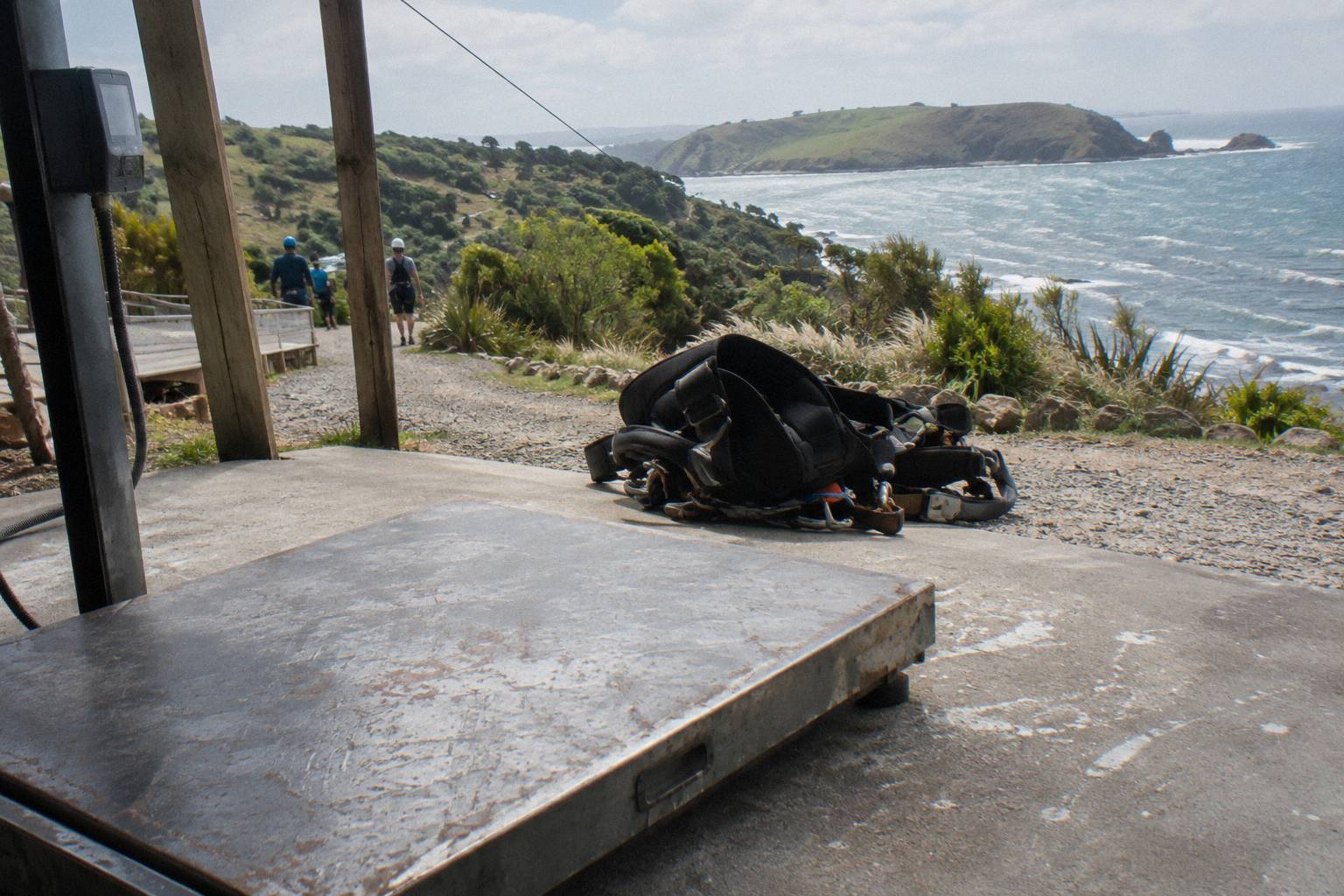
Check-in comes first, and on Waiheke it includes a discreet weigh-in. Riders must sit between 30 kg and 125 kg, and everyone is weighed at check-in because trolley and brake systems are rated for that range; being outside it is not automatically refunded, so it's worth knowing your weight honestly before booking. Harness fit is checked next, then helmet, then the briefing.
The briefing matters more than most people expect. Riders learn the launch posture, where to keep their hands (never on the cable itself, always on the harness or designated holds), how to position their legs for arrival, and how the braking works on that particular line. Then comes the flying itself: clipped on, a step off the platform, and gravity takes over within a second.
Between the Waiheke lines, the forest walk stitches the experience together. Guides point out native trees and regenerating bush, and the pace is conversational rather than forced. After the third line, riders rejoin the shuttle for the drop-off leg. If you want this sequence broken down in even finer grain, with timings, the step-by-step walkthrough of the Waiheke zipline tour covers every stage.
Curious whether you can ride it this trip? Check availability on the live listing before locking in your ferry sailings, since morning slots go first.
How Do You Stop? Dual Cables And Braking Explained
Riders stop because the course's braking system does the work: Waiheke's lines use an active ZipStop-style magnetic or eddy-current brake plus independent backup systems, so the primary brake slows the trolley at the end of the line and a secondary arrest device engages automatically if it fails. Riders keep their legs forward and let the equipment finish the ride.
Braking is where commercial zipline engineering earns its keep. A well-designed tour brakes for the extremes: the lightest rider arriving slowly, the heaviest arriving fast, and everything in between. Industry standards, including ASTM F2959, the standard practice for aerial adventure courses, set criteria for the design, operation, and auditing of ziplines, and require braking designed and tested for the full range of rider weights and arrival speeds.
EcoZip's Waiheke course is AdventureMark accredited and has been registered under New Zealand's adventure activity safety regime since 2012. Hardware is inspected on daily, weekly, and monthly cycles, and the weight range enforced at check-in is part of the same safety picture, since a rider outside the tested range can arrive too fast or too slow for the brake to manage cleanly. That regulatory backdrop matters: under the Health and Safety at Work (Adventure Activities) Regulations 2016, commercial zipline operators in New Zealand must pass a safety audit and register with WorkSafe NZ before taking paying customers.
For the rider, the practical takeaway is simple: you don't grab anything, you don't try to brake with your hands, and you arrive with legs forward as briefed. The equipment does the stopping.
Who Can Ride A Zipline On Waiheke?
Waiheke's EcoZip course has no age limit at all, but it enforces a weight window of 30 kg to 125 kg, and riders under 18 need a parent or guardian to agree to the booking terms and sign the risk disclosure form. Groups run at up to 12 people with two guides, and child pricing applies to ages 15 and under.
The absence of an age limit is unusual and worth dwelling on, because many people assume ziplining has a hard cut-off. Operators elsewhere in New Zealand report guests well into their nineties taking part; what matters is physical capability rather than the number on your birth certificate. On Waiheke the two real gates are weight and the forest walk: you need to be inside the harness and brake ratings, and able to manage an uneven 1.4 km track with some uphill stretches.
Health conditions listed by the operator as potentially impairing safety include pregnancy, heart conditions, high blood pressure, and back or neck injuries. Anyone affected by alcohol or drugs can be refused. None of this is exotic; it is the same screening logic every commercial zipline in the country applies.
Here is the eligibility picture in one view:
| Requirement | EcoZip Waiheke rule | What it means in practice |
|---|---|---|
| Minimum weight | 30 kg | Most children reach this around age 7-9; everyone is weighed at check-in |
| Maximum weight | 125 kg | Set by trolley, harness, and brake ratings |
| Minimum age | None | Capability and the forest walk matter more than age |
| Under-18s | Guardian must agree to terms and sign the risk form | A parent books or signs, kids ride |
| Fitness | Reasonable; 1.4-1.5 km uneven walk | Switchbacks, some uphill, possible mud |
| Health screening | Conditions such as pregnancy, cardiac, back or neck injury flagged | Disclose at booking; the operator can refuse |
Families get a specific pricing structure worth knowing: the family rate covers two adults and two children, or one adult and three children, all aged 15 and under. If your group includes someone worried about the height rather than the walk, the guide to ziplining on Waiheke as a nervous first-timer goes deeper on that.
How Does A Zipline Ride Feel Compared To Other Waiheke Days?
A zipline ride feels like a fast, seated glide with wind rush and forest rushing past, closer to a scenic flying fox than a roller coaster, and on Waiheke it sits midway in intensity between a hop-on hop-off bus tour and a full wine day. The three flights last seconds each, but the forest walk and shuttle make the whole thing a genuine half-day outing.
This is the honest framing most first-timers need. The flying portions of a Waiheke zipline tour total perhaps two minutes of actual airtime. What you are actually buying is a three-hour structure: shuttle, gearing up, three flights, a guided forest walk, and island sightseeing folded in. Riders who arrive expecting an hour of continuous adrenaline recalibrate quickly, and most end up preferring the fuller shape of the day.
Compared with Waiheke's other big drawcards, the zipline holds its own differently. A wine tour is slower and longer, a beach day is free and horizontal, and the Explorer bus covers ground without leaving the ground. The zipline is the island's main structured adventure, and pairing it with vineyard stops is common enough that a combined zipline and wine tasting day tour exists as a single booked product, with a vineyard lunch included.
| Waiheke day option | Time needed | Physical demand | Who it suits |
|---|---|---|---|
| Zipline and forest walk | About 3 h | Moderate: 1.4 km walk, flights | Families, first-timers, thrill-seekers on a schedule |
| Wine tour (boutique, max 11) | About 5.5 h | Light | Adults, food and wine focus |
| Hop-on hop-off Explorer bus | 1 day | Very light | Independent explorers, beach hoppers |
| eBike hire | About 4.5 h to full day | Moderate: hills, though pedal-assisted | Active travellers who like self-guiding |
| Zipline plus wine combo | About 9 h | Moderate | Visitors wanting the whole island in one day |
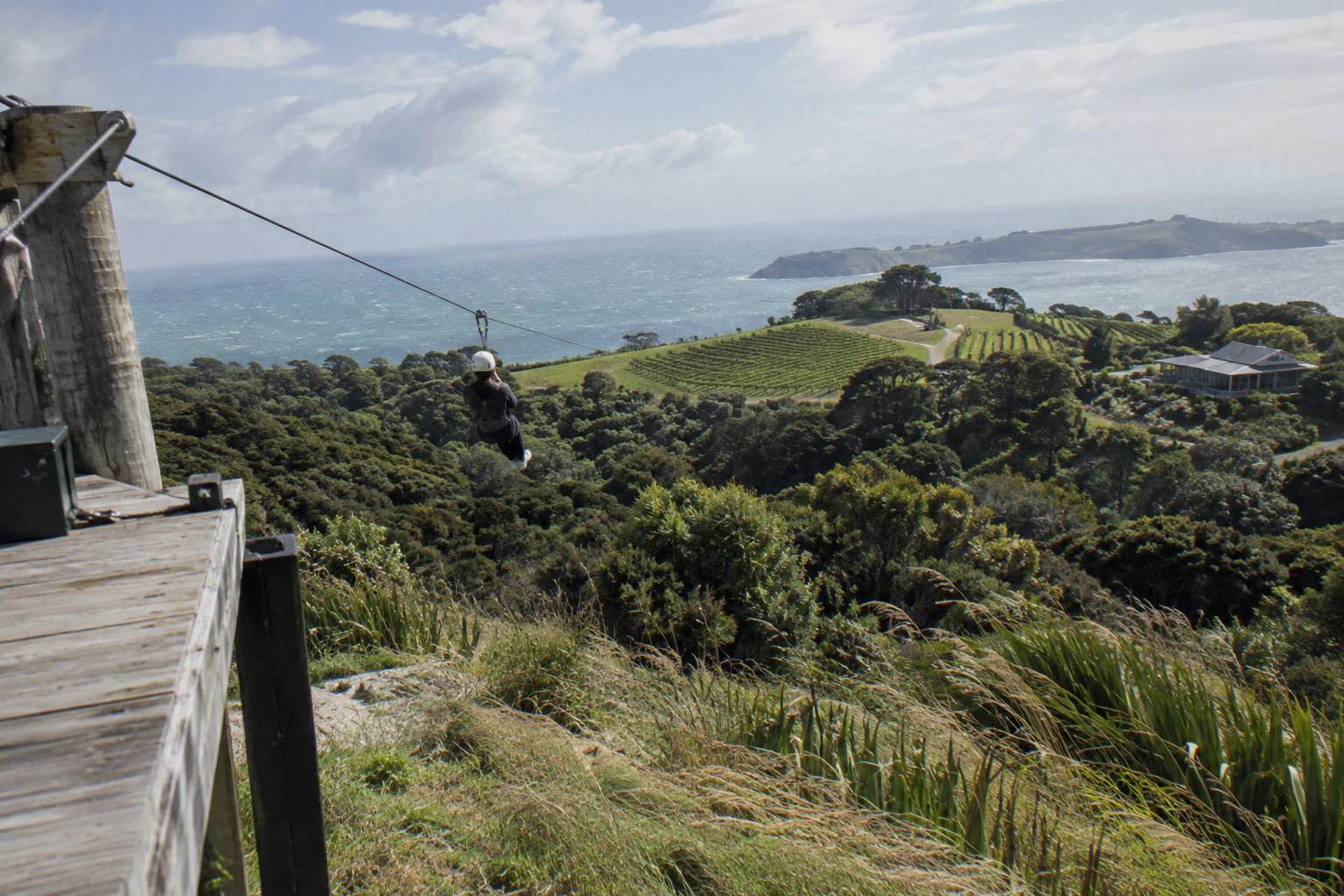
The Man O' War Forest Flight makes an interesting contrast for a second look, since it leans harder into the vineyard integration, three tandem lines totalling over 900 m connected by a 660 m boardwalk through kauri forest, finishing steps from a beachfront tasting room, and all inside about two hours.
For visitors who want the zipline plus the island's wine story without assembling it themselves, the full-day combination that bundles the flights, a two-course vineyard lunch, and tastings at two vineyards runs about nine hours from Auckland.
What Should You Know Before Booking A Zipline Ride On Waiheke?
Before booking, you need closed laced or buckled shoes, clothing to match the weather, and a ferry plan, since the ferry ticket is not included in the zipline price. The course runs in rain and cancels only for sustained wind above 35 knots, in which case you get a date or time change or a full refund. Cancellation terms differ between direct bookings and platform listings, so read the policy attached to whichever listing you book.
Footwear is the most common day-of problem. Jandals are not allowed, and closed shoes that lace or buckle keep you safe on platforms and on the forest track. Weather-appropriate clothing, sunscreen, and a hat that fits under a helmet round out the list, plus a warm layer outside summer. Phones and cameras must be strapped to you, with free phone bungees available at check-in, and a small stock of loan wet-weather gear exists if you get caught out.
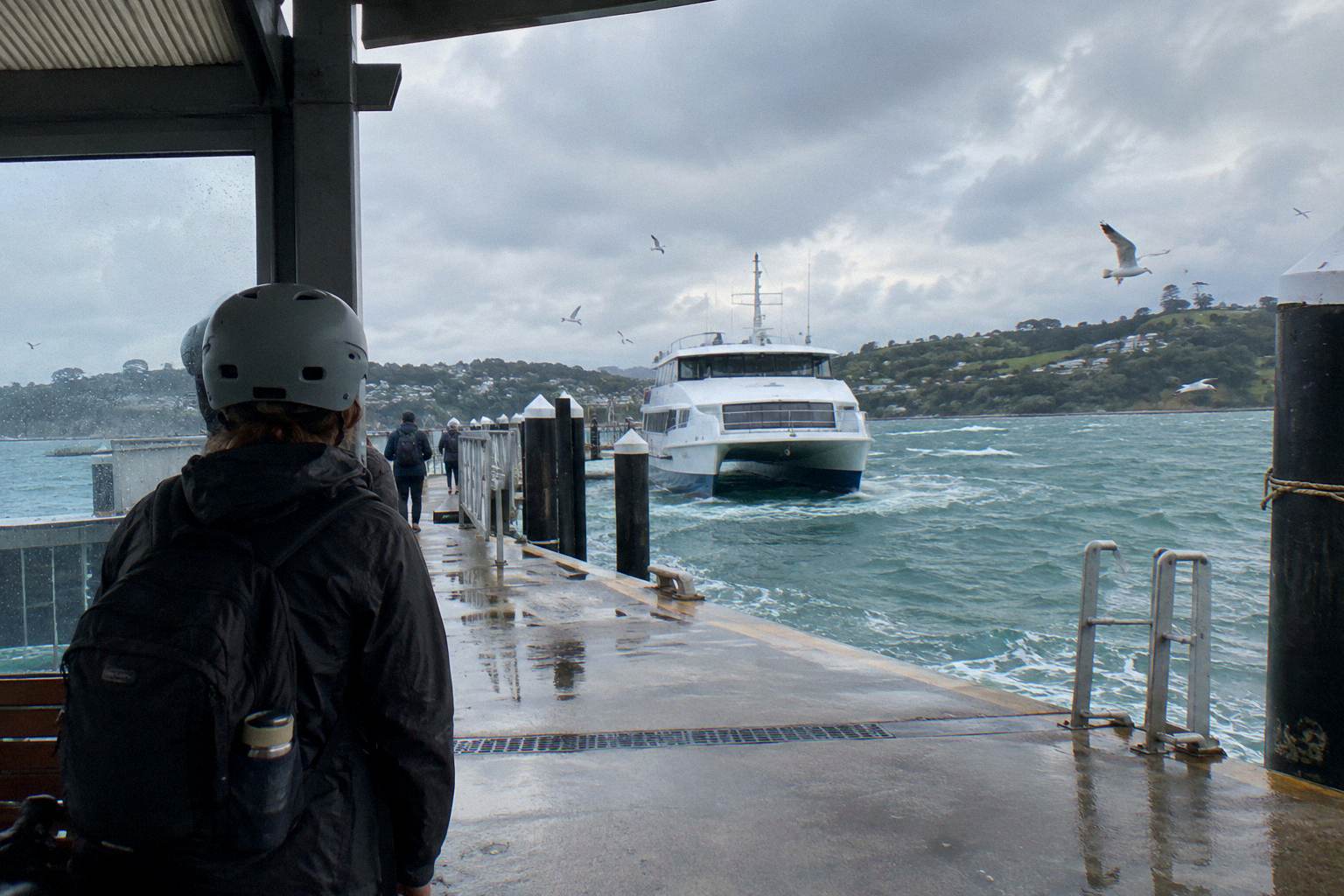
The ferry logistics deserve a paragraph of their own. Fullers360 runs the passenger ferry from Downtown Auckland to Matiatia in about 40 minutes, with services every 30 to 60 minutes typically and more at peaks. Sailings are seasonal, so check the timetable rather than assuming a slot, and build buffer into any morning zipline booking. The vehicle ferry from Half Moon Bay is a separate SeaLink service and irrelevant to most zipline day-trippers.
Weather policy is refreshingly clear: rain does not stop the tour, only wind consistently above 35 knots does, and that triggers a free change or full refund. Cancellation is where care is needed. Book direct and the terms are stricter than they look on third-party listings; the operator's own policy charges for changes inside 48 hours, while platform listings commonly state free cancellation up to 24 hours. Whichever listing you book through, its own cancellation text governs that booking.
Common Questions About A Zipline Ride
What Is A Zipline Ride?
A zipline ride is a gravity-powered descent along a suspended cable, with the rider hanging from a pulley and harness between a high launch point and a lower landing. On Waiheke it means three dual-cable flights of roughly 200 m each, plus a guided native forest walk and an island shuttle, all inside about three hours.
How Fast Do You Go On A Zipline Ride?
Speed depends on the slope, your weight, and the cable length. On Waiheke's longest line, the 220 m Kurinui, riders reach speeds over 50 km/h before the braking system slows the arrival.
Is A Zipline Ride Scary?
Most riders describe it as a fast glide rather than a drop. The Waiheke format helps nervous first-timers by flying two people side by side on dual cables, so you launch next to a friend or family member rather than alone.
Do You Need To Walk Between The Ziplines On Waiheke?
Yes. The guided native forest walk is about 1.4 to 1.5 km, uneven in places with switchbacks and some steady uphill, and it can be muddy after rain. The commentary is optional, the walk is not, so reasonable fitness is needed.
Is There An Age Limit For A Zipline Ride On Waiheke?
No. EcoZip Waiheke has no age limit; riders under 18 need a parent or guardian to agree to the booking terms and sign the risk disclosure form. The real gates are the 30 to 125 kg weight range and the ability to manage the forest walk.
Does Rain Cancel A Zipline Ride?
On Waiheke, no. The course runs in rain, and it cancels only when wind is consistently above 35 knots, in which case the operator offers a date or time change or a full refund.
Still weighing which version of the island's flying fox suits your day? These are the three most-booked ways to do it: