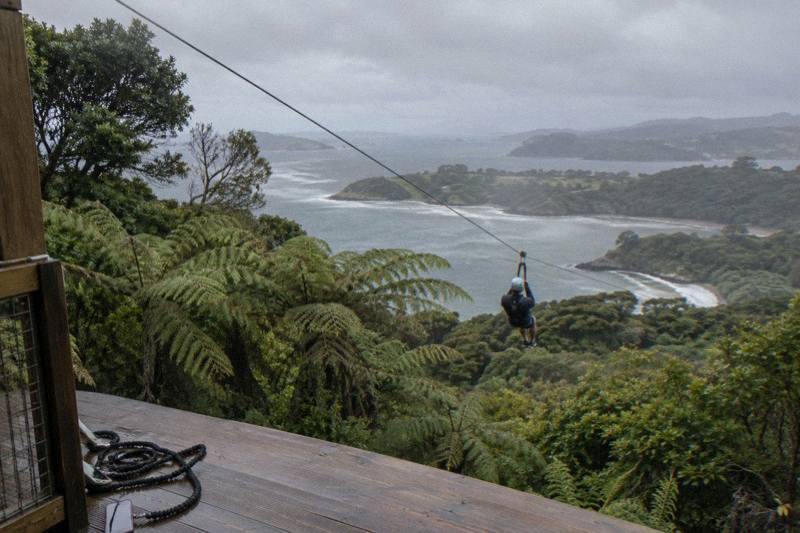
How Heavy Is Too Heavy For A Zipline? The 125 Kg Line At Waiheke
The honest answer to how heavy is too heavy for a zipline, with Waiheke's 125 kg limit explained, why the range exists, and what happens at check-in.
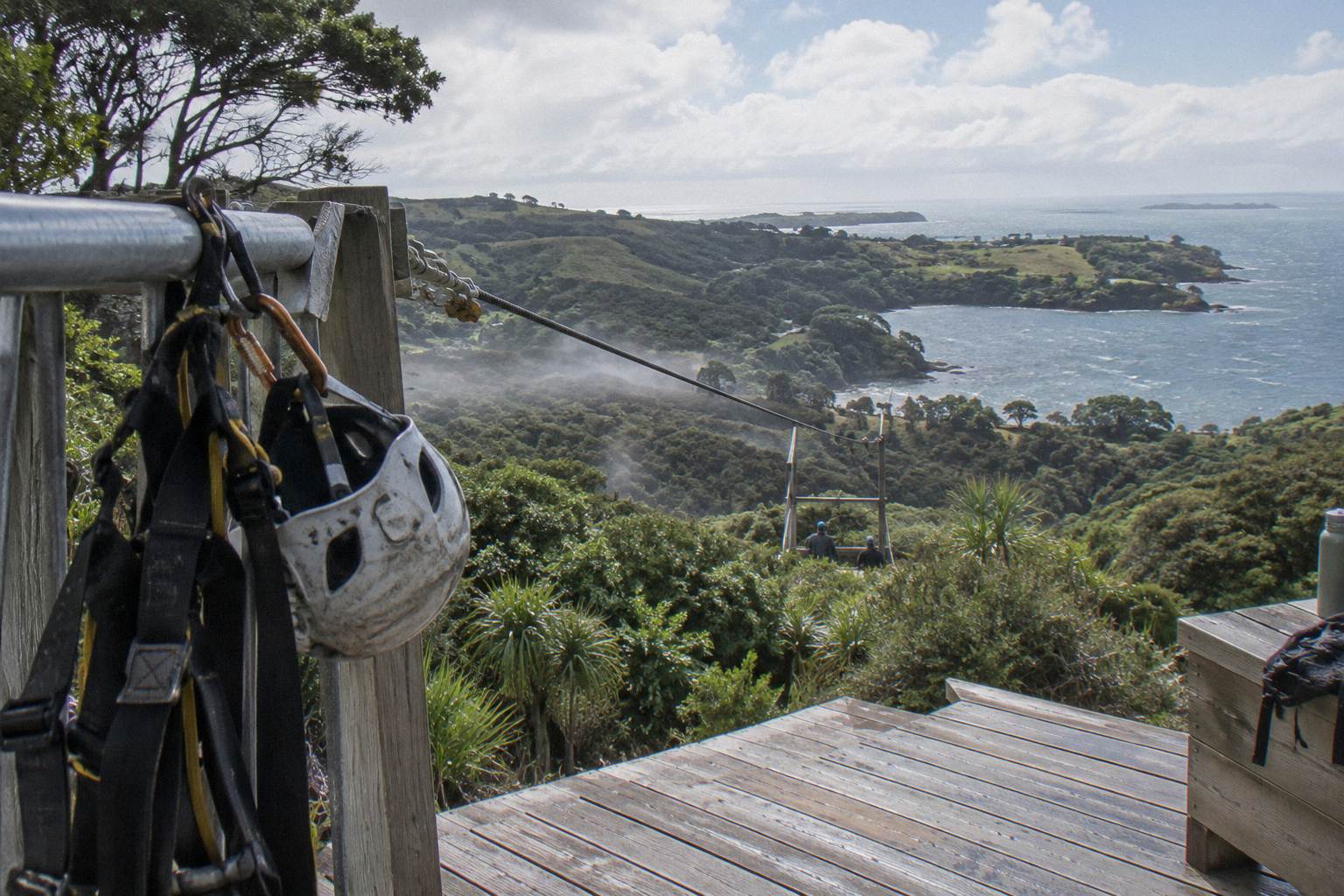
Every commercial zipline in New Zealand operates between two numbers, a floor and a ceiling, and most people asking how heavy is too heavy for a zipline are really asking whether they fall inside that band. On Waiheke Island the answer is straightforward: EcoZip Adventures flies riders between 30 kg and 125 kg, weighed discreetly at check-in. The other island course, Man O' War's Forest Flight, does not publish its limits, so the numbers have to be read on its live listing before you book. This article walks through the Waiheke range, the engineering behind it, what happens at the weigh-in itself, and what to do if you sit near either edge of the envelope.
The subject deserves more than a one-line answer, because the numbers carry consequences. A guest who arrives at Trig Hill outside the range does not fly, and depending on how they booked, they may not get their money back either. Understanding why the limits exist, how they are enforced, and how they compare across New Zealand's courses turns an abstract figure into a decision you can make from your living room, before any money changes hands.
How Heavy Is Too Heavy For A Zipline?
On Waiheke, too heavy means more than 125 kg. EcoZip Adventures sets a participant range of 30 kg to 125 kg and weighs every guest discreetly at check-in, so the ceiling is enforced rather than theoretical. Riders over 125 kg cannot fly and are not automatically refunded, which is why the number matters before you pay, not after.
That single figure answers the question for the two EcoZip-operated products here, the Waiheke Island Zipline and Forest Walk and its sibling native forest adventure. Both run the same three dual-cable flights of roughly 200 m each above the Trig Hill canopy, followed by a guided walk through the native forest below. Both publish the same participant rules: weight between 30 and 125 kg, no age limit, and a guardian's signature for anyone under 18.
There is a lower edge to the range as well, and it is not a technicality. A rider lighter than 30 kg can stall partway along a cable, because there is not enough mass to carry the trolley through the sag in the middle of the line and into the braking zone. The upper edge exists for the opposite reason: too much mass arriving too fast, loading harnesses, trolleys and brakes beyond the ratings they were certified against. Neither number is about appearance or judgement; both are load calculations.
If your weight is close to either number, the practical move is simple. Check the range on the operator's live listing before booking, and if you are within a few kilograms of the limit, read the cancellation terms carefully, because EcoZip's direct policy does not automatically refund guests who arrive outside the range. The three Waiheke options below all fly from the same island, and each listing states its own participant rules.
Why Ziplines Have Weight Limits At All
Weight limits protect the braking system and the equipment ratings, not the cable alone. A rider must be heavy enough to reach the brake zone reliably, and light enough that the primary brake, the backup emergency arrest device, the harness and the trolley all stay inside the loads they were designed and certified to stop.
The physics is unforgiving in both directions. A zipline trolley loses energy to friction and to the sag of the cable, so a very light rider can grind to a stop short of the landing platform, leaving them stranded mid-line. A very heavy rider arrives at the far end with more kinetic energy than the brake was sized to dissipate, which risks a hard stop, damage to the trolley, or in the worst case a collision at the platform. Industry practice, codified in standards such as ASTM F2959 for aerial adventure courses, requires brake systems to be designed for the extreme ends of the declared participant weight range, with a primary brake plus an independent emergency arrest device that engages on its own if the first system fails.
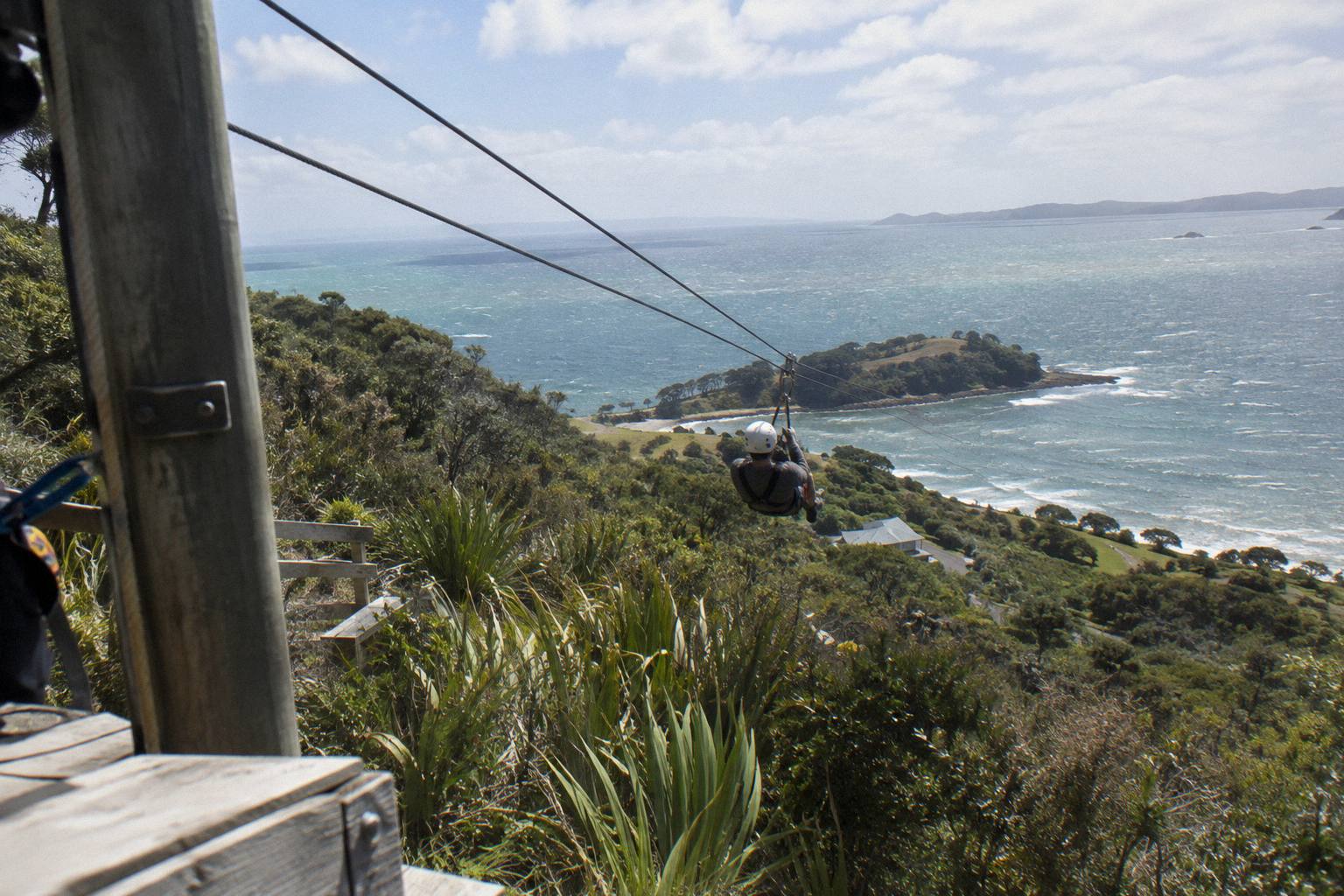
The design logic extends beyond the brake. Every component in the chain between the rider and the cable, meaning the harness, the lanyard, the trolley and the anchorage hardware, carries its own rated load, and a course is certified as a system. Change the mass of the rider at either extreme and you change the loads on every link in that chain simultaneously. That is why operators do not negotiate: the range is not a policy preference, it is the envelope the whole course was audited against.
| Rider weight | What happens on the line | Why the limit exists |
|---|---|---|
| Under the minimum | Risk of stalling mid-cable, manual rescue | Not enough momentum to clear the cable sag and reach the brake |
| Inside the range | Predictable arrival speed, controlled stop | Equipment operating inside certified load ratings |
| Over the maximum | Excessive arrival speed, overload risk | Brake, trolley, lanyard and harness ratings can be exceeded |
The harness is the other half of the story. A zipline harness is rated to a maximum load, and it must also fit correctly to do its job: a harness that is too small puts webbing across the wrong bones, and one adjusted wrong can ride up under a sudden stop. Operators check fit as carefully as weight, which is why EcoZip's stated range is a harness-fit range as much as a number on a scale. New Zealand operators are also audited against this framework: commercial zipline operators must pass a safety audit and register with WorkSafe NZ under the Adventure Activities Regulations 2016, and audit standard version 2.0 took effect on 1 April 2024. EcoZip itself holds AdventureMark accreditation and has been registered since 2012.
Is the EcoZip Waiheke zipline safe for your build? The short version is that the 30 to 125 kg range is the operator's audited envelope, and anyone inside it flies on equipment inspected daily, weekly and monthly, with ZipStop braking plus independent backup systems.
The Waiheke Range: EcoZip's 30 To 125 Kg Explained
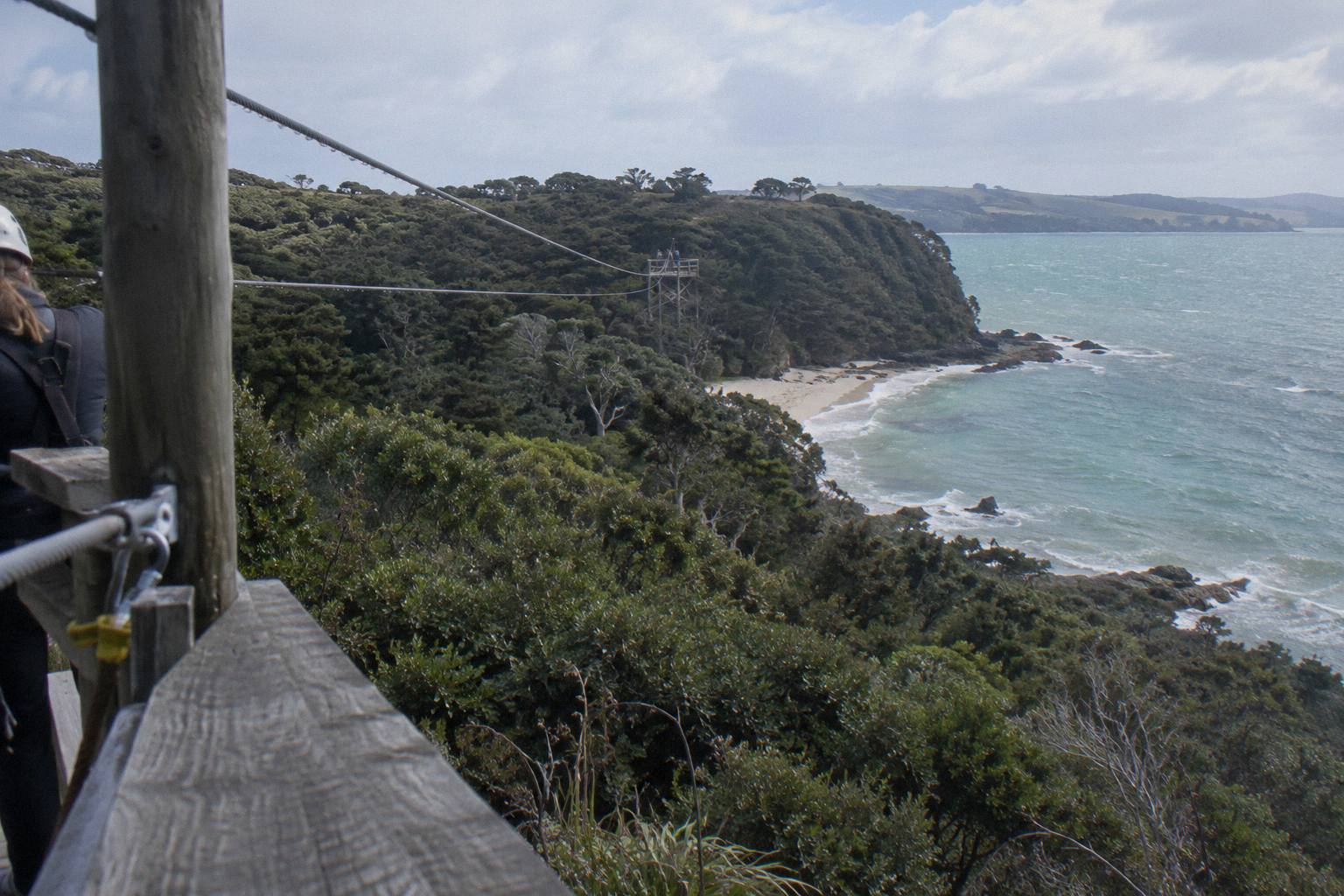
EcoZip Adventures flies guests from 30 kg to 125 kg, with no age limit at either end. Everyone is weighed discreetly at check-in, under-18s need a guardian to sign the risk disclosure, and guests outside the range are not automatically refunded, so the numbers belong in your planning, not your surprise.
The range is wide enough to cover most families in one booking. Children aged 15 and under pay the child price, and the family ticket is defined as two adults plus two children, or one adult plus three children, all 15 or under. Grandparents are explicitly welcome: New Zealand zipline operators generally prioritise fitness and mobility over age, and operators elsewhere in the country have flown guests over 90 years old, as Ziptrek Ecotours states on its own safety page.
| EcoZip rule | Detail |
|---|---|
| Minimum weight | 30 kg (66 lb) |
| Maximum weight | 125 kg (275 lb) |
| Weigh-in | Discreet, at check-in |
| Age limit | None; under-18s need a guardian's signature |
| Over or under the range | No automatic refund |
| Group size | Up to 12 guests with 2 guides |
One point trips people up: the ferry is not included in the EcoZip price, and the experience runs about three hours from the Matiatia pickup to drop-off, roughly two hours on site if you drive yourself to Trig Hill. The 20-minute commentated highlights shuttle ride to the launch site is part of that window, and EcoZip sits about 15 minutes from the ferry terminal. If you are building the day around the numbers, our step-by-step guide to the Waiheke zipline tour covers the timeline from ferry to final flight.
Remember too that the forest walk is part of the product, not an optional extra. The roughly 1.4 km guided walk after the flights is uneven underfoot, with switchbacks and a few steady uphill stretches, and it can be muddy after rain. The commentary is optional; the walk is not. Weight and fitness are therefore two separate gates, and a guest who passes the first should honestly assess the second before booking.
Weight Limits At Other New Zealand Ziplines
Most New Zealand operators cluster between 120 kg and 125 kg for the maximum, with minimums around 25 to 30 kg. Rotorua Canopy Tours and Coromandel Zipline Tours cap at 120 kg, Ziptrek Ecotours in Queenstown at 125 kg, and Zipline Christchurch at 125 kg with a 122 cm height minimum instead of an age minimum.
The pattern is not a coincidence. Equipment makers sell trolleys, brakes and harnesses against common international ratings, and the commercial norm worldwide sits around 23 kg to 125 kg, which is why the NZ numbers bunch where they do. The differences between operators come down to course design: line length, gradient and braking hardware each shift the envelope a few kilograms one way or the other. A 1.1 km mountain line such as Christchurch's Long Ride imposes different arrival-speed mathematics than a 200 m island flight, even when both publish the same ceiling.
| Operator | Location | Published weight range |
|---|---|---|
| EcoZip Adventures | Waiheke Island | 30-125 kg |
| Zipline Christchurch | Port Hills, Christchurch | 27-125 kg, height over 122 cm |
| Ziptrek Ecotours | Queenstown | Up to 125 kg |
| Rotorua Canopy Tours | Rotorua | Up to 120 kg |
| Coromandel Zipline Tours | Coromandel | Up to 120 kg |
If you are comparing Waiheke against the mainland options, our comparison of ziplining on Waiheke, Auckland and Coromandel breaks down line counts, durations and how each course handles bigger and smaller riders.
Waiheke's second course deserves its own heading, because its limits are not printed in the same places.
Man O' War's Forest Flight: The Other Waiheke Course
Man O' War's Forest Flight runs three tandem ziplines totalling over 900 m plus a 660 m elevated boardwalk through kauri forest, in about two hours. Its listing gives a 30 to 125 kg weight range; read the participant terms on the live listing for age and cancellation before booking.
The course is genuinely different from EcoZip's. Lines are tandem, built for two riders together, and the experience begins with a scenic drive to a 210 m viewpoint before the first flight. It ends steps from a beachfront tasting room, which makes it a natural pairing with lunch, and the boardwalk between flights keeps you in the canopy rather than returning along the forest floor. The full index of guides sits on Waiheke Zipline Tours.
Because the two courses are engineered differently, their participant envelopes can differ too. Tandem lines change the arithmetic of arrival speed, since two riders share one line, so a course that flies pairs does not necessarily publish the same solo-rider ceiling as a dual-cable course. That is engineering reasoning rather than a confirmed figure, and the honest position is: the number is on the listing, and the listing is where it should be checked.
Too Heavy, Or Just Between Sizes? Harness Fit And Self-Assessment
Being under 125 kg does not automatically mean you fly comfortably, and being slightly over does not always mean you cannot. Harness fit, waist measurement and the operator's discretion all matter, but the scale number is the hard gate: over the published maximum, the answer is no, and no operator will bend it.
Honest self-assessment saves disappointment. Weigh yourself the week before you travel, not the morning of, and if you are within about five kilograms of the ceiling, treat the booking as conditional and read the cancellation terms first. EcoZip's direct-booking terms are stricter than the free-cancellation wording shown on some platform listings: cancelled inside 48 hours it is non-refundable, and outside 48 hours a per-person administration charge applies. Platform-booked guests follow the platform's terms, so the two need to be read separately.
| Situation | What to do |
|---|---|
| Under 30 kg | Wait, or book a course with a lower minimum; a stalled rider needs manual rescue |
| Near the maximum | Weigh yourself, read cancellation terms, message the operator before paying |
| Over 125 kg | EcoZip cannot fly you; consider vineyard, e-bike or hop-on hop-off island days instead |
| Unsure about harness fit | Ask the operator about waist and leg loop sizing when booking |
For bigger riders the island still has plenty. The hop-on hop-off Explorer bus, rated 4.6 from 3,661 reviews, loops 16 to 17 stops from Matiatia, and the island's roughly 20 cellar doors welcome visitors of every size. Our guide to Waiheke zipline accessibility and mobility covers who the forest walk suits as well, since the roughly 1.4 km uneven walk after the flights is a fitness question independent of weight.
Do You Actually Get Weighed At Check-In?
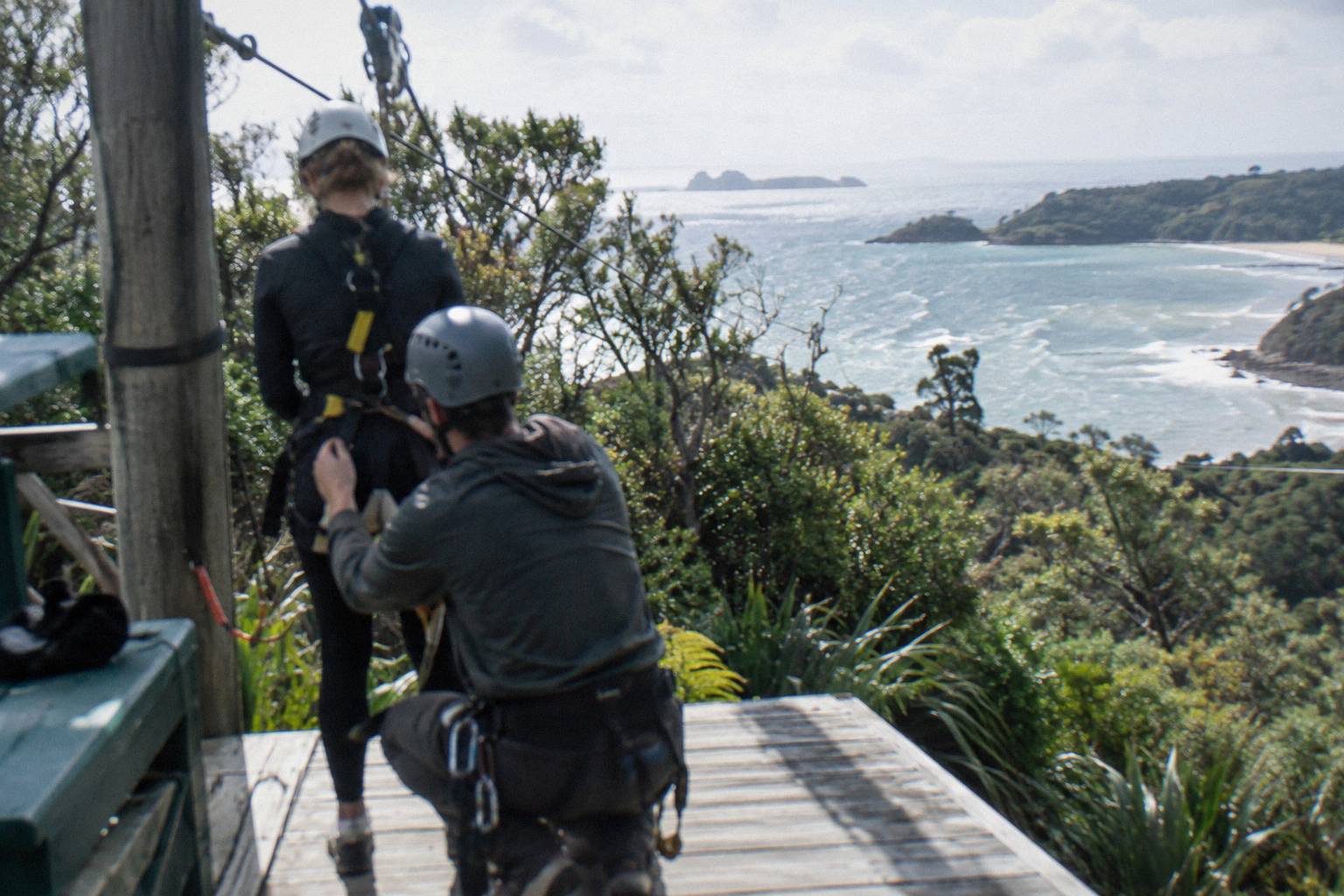
Yes. EcoZip weighs every guest discreetly at check-in before anyone clips into a harness, because the weight range is a safety envelope, not a suggestion. The same check-in covers harness fit and shoe requirements, and guests outside the range are turned away without an automatic refund.
The weighing is private and quick, done at the counter rather than in front of the group, and it exists because arrival speed at the brake depends directly on mass. Guides cannot reliably judge by eye whether a rider sits at the very top of the range or just over it, and the brake cannot tell the difference either, so everyone steps on a scale. Shoes matter at the same moment: closed, laced or buckled footwear only, no jandals, and phones and cameras must be strapped to you, with free phone bungees available at check-in.
What happens next depends on which side of the line you fall. Inside the range, you fly. Outside it, EcoZip's terms are clear that over-weight and under-weight guests are not automatically refunded, though the operator can offer a date or time change in some circumstances. This is exactly why the question whether you get weighed before ziplining on Waiheke is worth reading before you book, and our longer guide to the Waiheke zipline weight limit and harness sizes covers what to do if you are near the line.
Booking Wisely When Your Weight Is Near The Limit
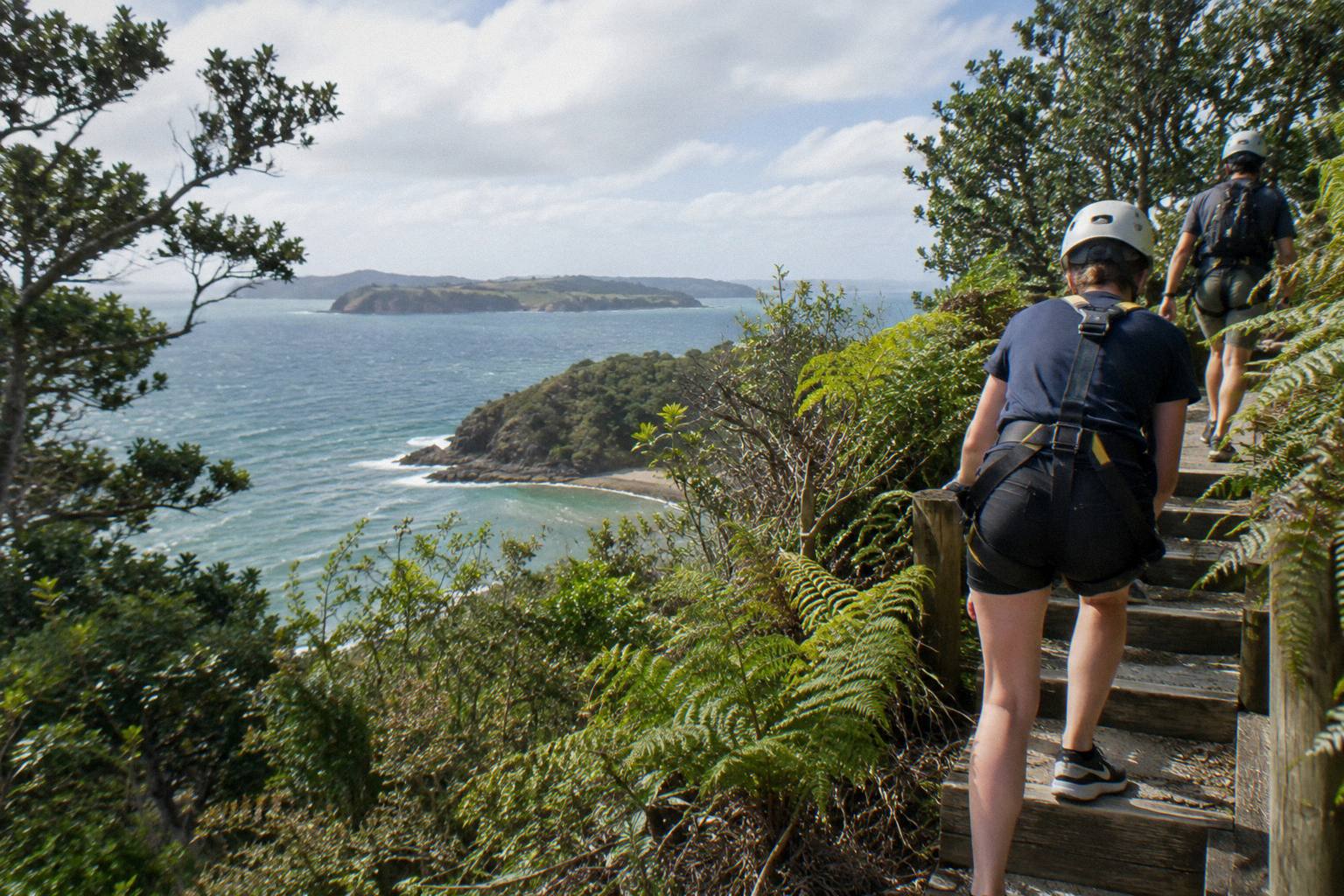
Read the participant terms on the live listing before you pay, weigh yourself honestly a few days out, and book the product whose cancellation rules you can live with. Guests near the top of the range fly regularly at EcoZip; guests over 125 kg do not fly at all, and an island backup plan beats a lost fare.
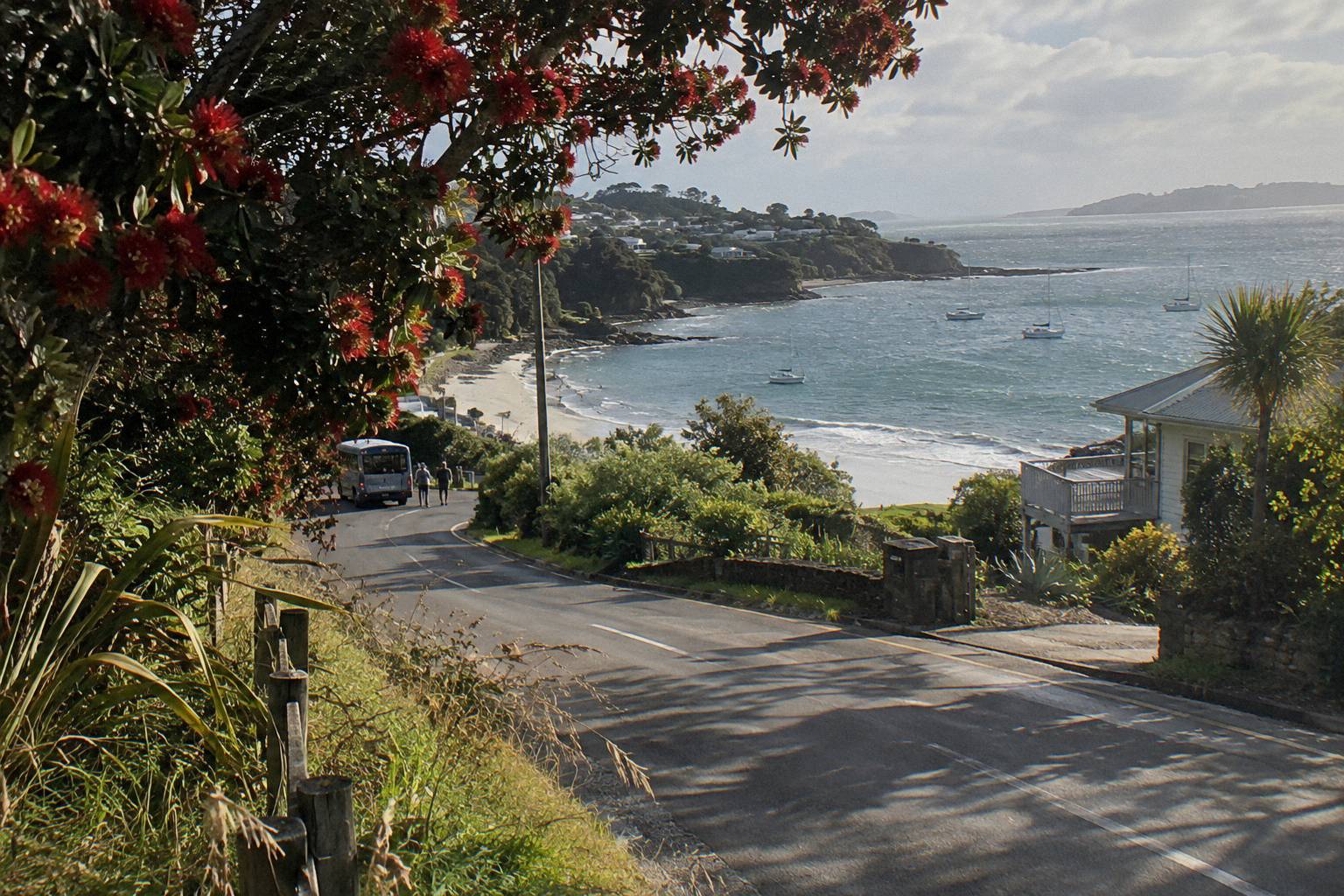
Timing helps too. The EcoZip shuttle picks up at Matiatia, Oneroa village or the Explorer bus interchange at Bus Stop 7, and after the tour the shuttle drops guests free at several vineyards and restaurants, including Stonyridge, Te Motu, Wild Estate and The Heke. That drop-off is worth planning around, since it turns a weight-limit disappointment for one traveller in a group into a still-good day for everyone: the non-flying partner can ride the shuttle loop and meet the flyers at a cellar door afterward.
Waiheke weather rarely changes the picture, but wind can. EcoZip runs in rain and cancels only when wind is consistently above 35 knots, offering a date or time change or a full refund when it does, which is a different category of cancellation from a weight turned away at check-in. Our guide to Waiheke zipline weather, wind and cancellations separates the two.
One last planning note: the ferry crossing from downtown Auckland to Matiatia takes about 40 minutes, and the ferry ticket is separate from the tour price. Booking an early sailing gives you cushion if a check-in surprise ever forces a same-day reschedule, and on an island whose whole product is the outdoors, cushion is cheap insurance.
Common Questions About Zipline Weight Limits
How Heavy Is Too Heavy For A Zipline?
On Waiheke, more than 125 kg is too heavy. EcoZip Adventures flies riders between 30 kg and 125 kg, weighed discreetly at check-in. Other New Zealand operators cap at 120 kg or 125 kg, so check the live listing for the specific course before booking.
What Is The Weight Limit For The Waiheke Zipline?
The EcoZip range is 30 kg to 125 kg. There is no age limit, but under-18s need a parent or guardian to agree to the booking terms and sign the risk disclosure form. Guests outside the weight range are not automatically refunded.
Can A 300 Lb Person Zipline On Waiheke?
No. The EcoZip maximum of 125 kg equals 275 lb, so a 300 lb rider is over the limit and cannot fly on the island's EcoZip course.
Do You Get Weighed Before Ziplining On Waiheke?
Yes. Everyone is weighed discreetly at check-in, before harnessing up. The check exists because rider mass determines arrival speed at the brake, so it applies to every guest without exception.
Is There A Minimum Weight For Ziplining?
Yes, 30 kg on Waiheke. Riders lighter than the minimum risk stalling partway along the cable because there is not enough mass to carry the trolley through the cable sag into the braking zone.