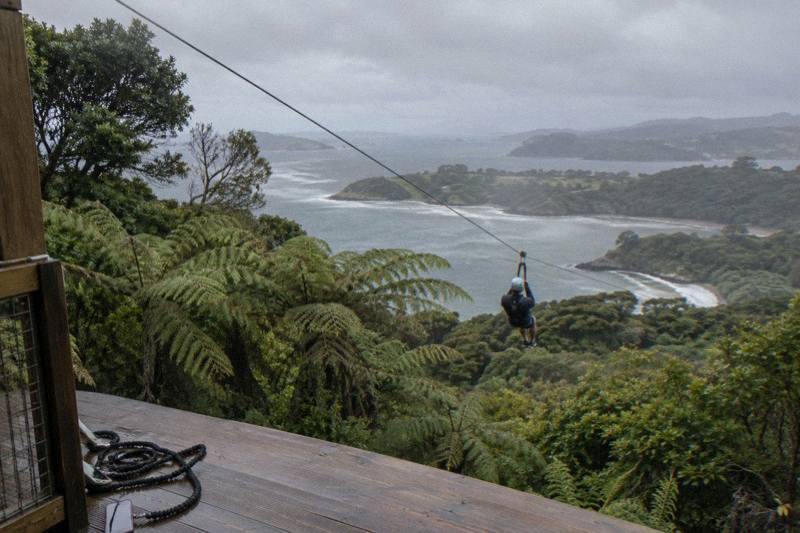
Can Plus-Size People Zipline? What To Check Before You Book On Waiheke
Weight limits, harness fit and comfort checks for plus-size zipline riders, with the specific rules that apply on Waiheke Island.
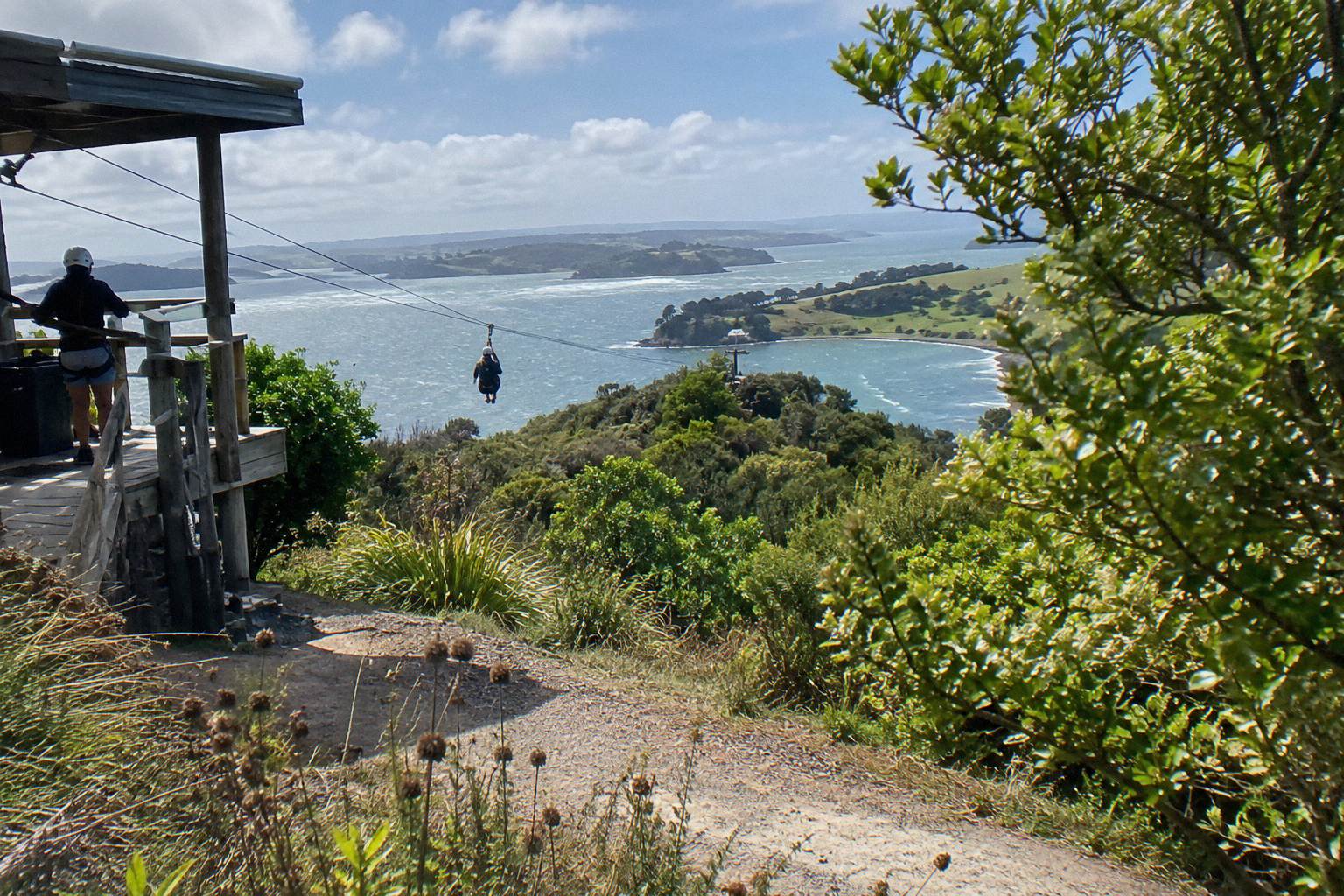
Weight is the single most asked eligibility question in ziplining, and it is also the most misunderstood. Riders above average size regularly fly on commercial courses, including on Waiheke Island, because the equipment is engineered for a broad band of body weights rather than a slim one. What actually decides whether you can ride is not your clothing size, it is a number on a scale, the way a harness sits on your body, and a short list of health factors that apply to riders of every size. This article walks through each of those checks using the published rules of New Zealand operators, with the specific limits that apply on Waiheke.
Can Plus-Size People Zipline?
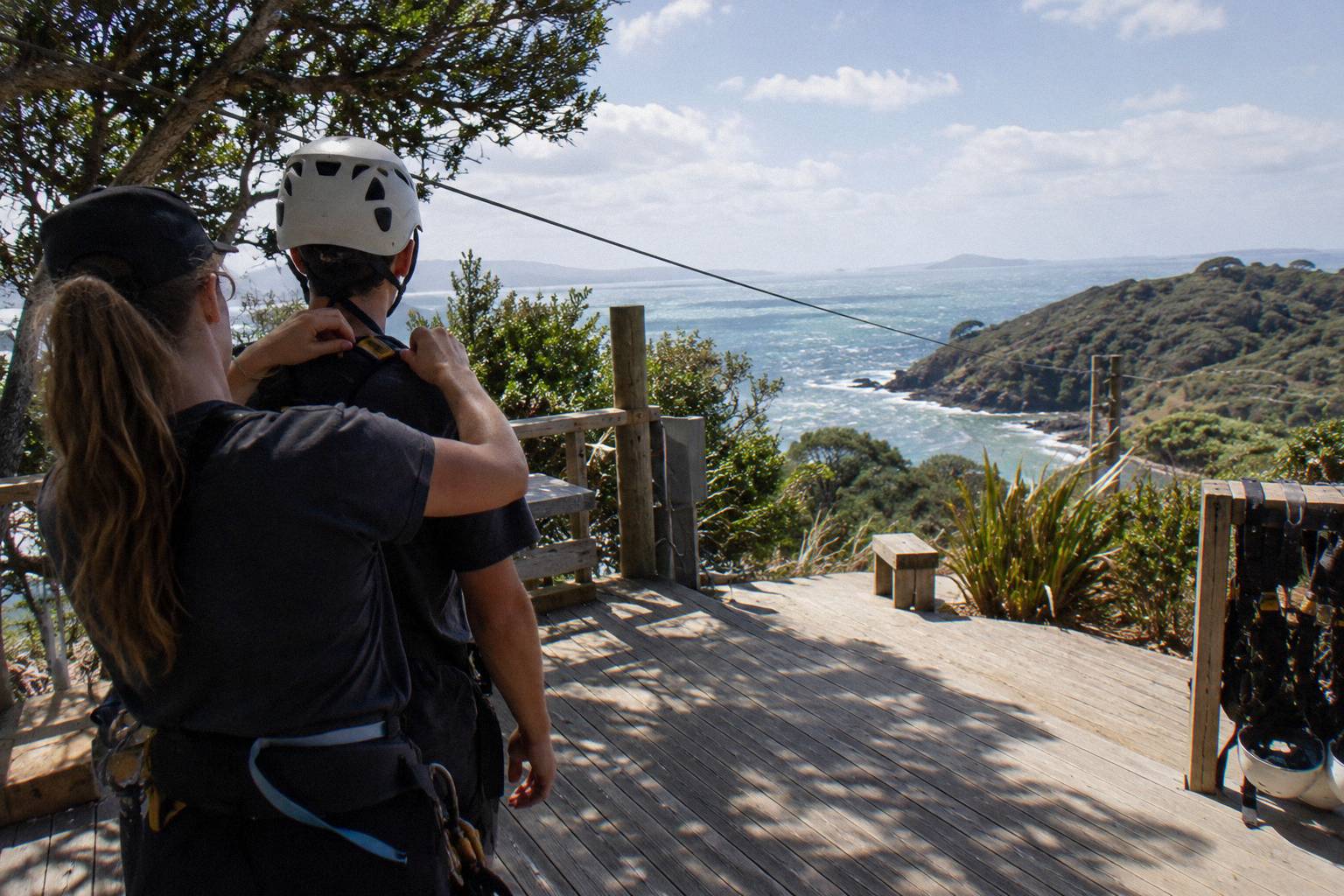
Yes, in the great majority of cases. Commercial ziplines are built around minimum and maximum weights measured in kilograms, not body shape, and on Waiheke the main operator accepts everyone from 30 kg up to 125 kg. A rider who weighs more than that would need a different course, and no such course exists on the island. The limit exists for physics and equipment reasons, not for appearances, and staff check it discreetly at check-in.
The first thing worth saying plainly is that the weight range on Waiheke is wide. EcoZip Adventures, which operates the three dual-cable lines above the vineyards near Oneroa, requires participants to weigh at least 30 kg and no more than 125 kg, with everyone weighed discreetly at check-in before gearing up. There is no upper age limit and no minimum age, so the weight band is effectively the only hard gate a bigger rider faces. That range covers the large majority of adult visitors, and it lines up with what zipline courses publish worldwide: generic commercial limits commonly run to roughly 125 kg, varying by operator and course design.
The second thing worth saying is that "plus-size" is not a category zipline operators use. The rules are written in kilograms because the physics is written in kilograms. Cable tension, trolley bearings and brake systems are all rated for a specific load range, and the operator needs every rider inside that range, heavy or light. A rider under 30 kg can be turned away just as a rider over 125 kg can, and for exactly the same reason: the equipment is calibrated for a window, not a maximum.
If you are planning a Waiheke trip around the zipline, the three products below are the ones to compare, and each listing states its own terms. The featured Waiheke Island: Zipline And Forest Walk is the classic three-hour option, the Zipline and Native Forest Adventure Trip covers similar ground, and the Man O' War Forest Flight zipline on the eastern end is a two-hour vineyard-based alternative.
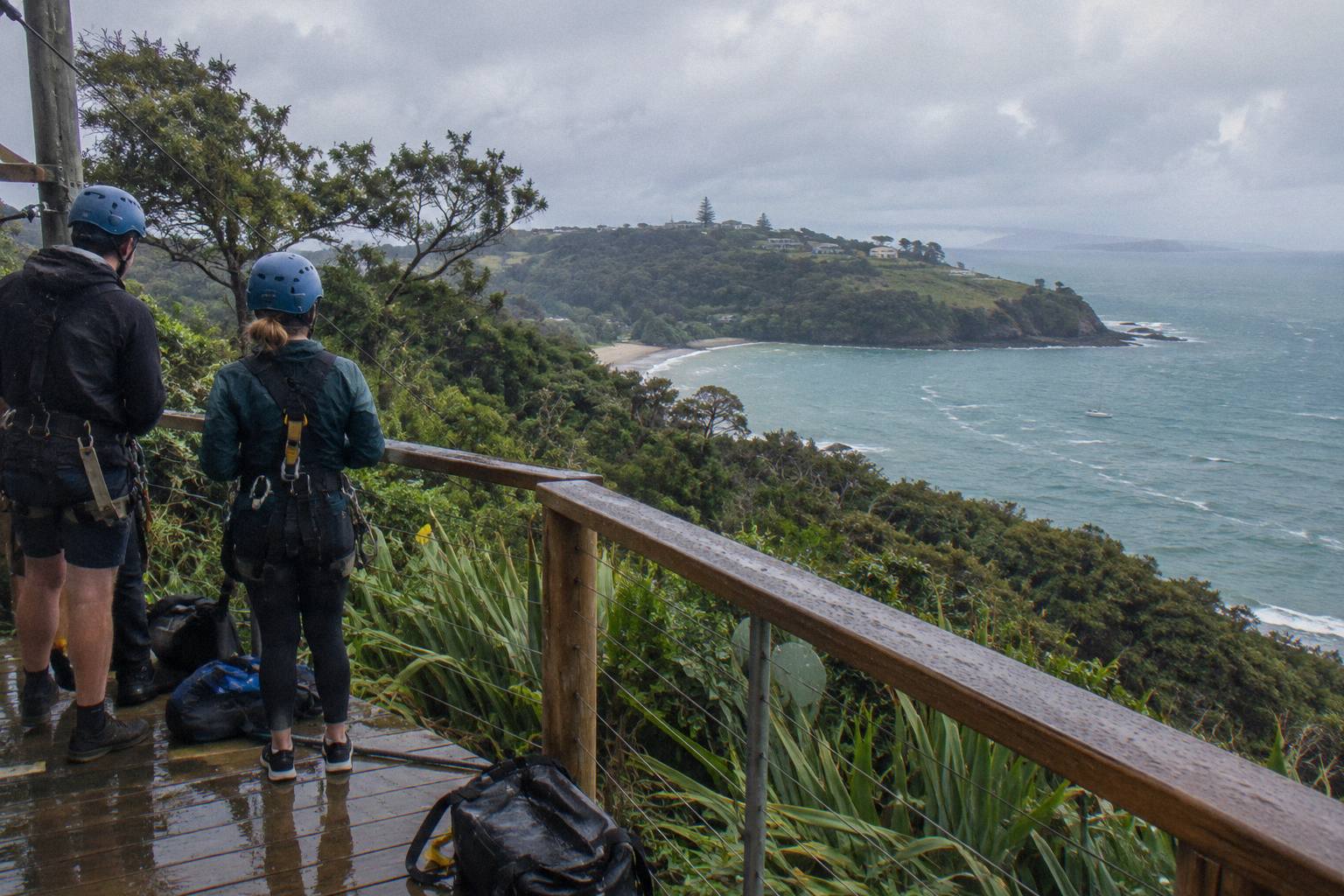
For a fuller picture of the weight rules, including what happens at check-in, our guide to the Waiheke zipline weight limit and harness sizes goes through the fine print. For heavier riders wondering about the imperial numbers, there is also a dedicated piece on whether a 300 lb traveller can zipline on Waiheke.
Why Ziplines Have Weight Limits At All?
Every limit traces back to two engineering facts: a heavier rider arrives at the bottom faster, and every cable, trolley and brake is rated for a maximum load. Riders below the minimum can stall mid-cable because they generate too little momentum. The published range is the window in which braking, speed and landing all work as designed, and it is set by the manufacturer and the safety auditor, not by staff on the day.
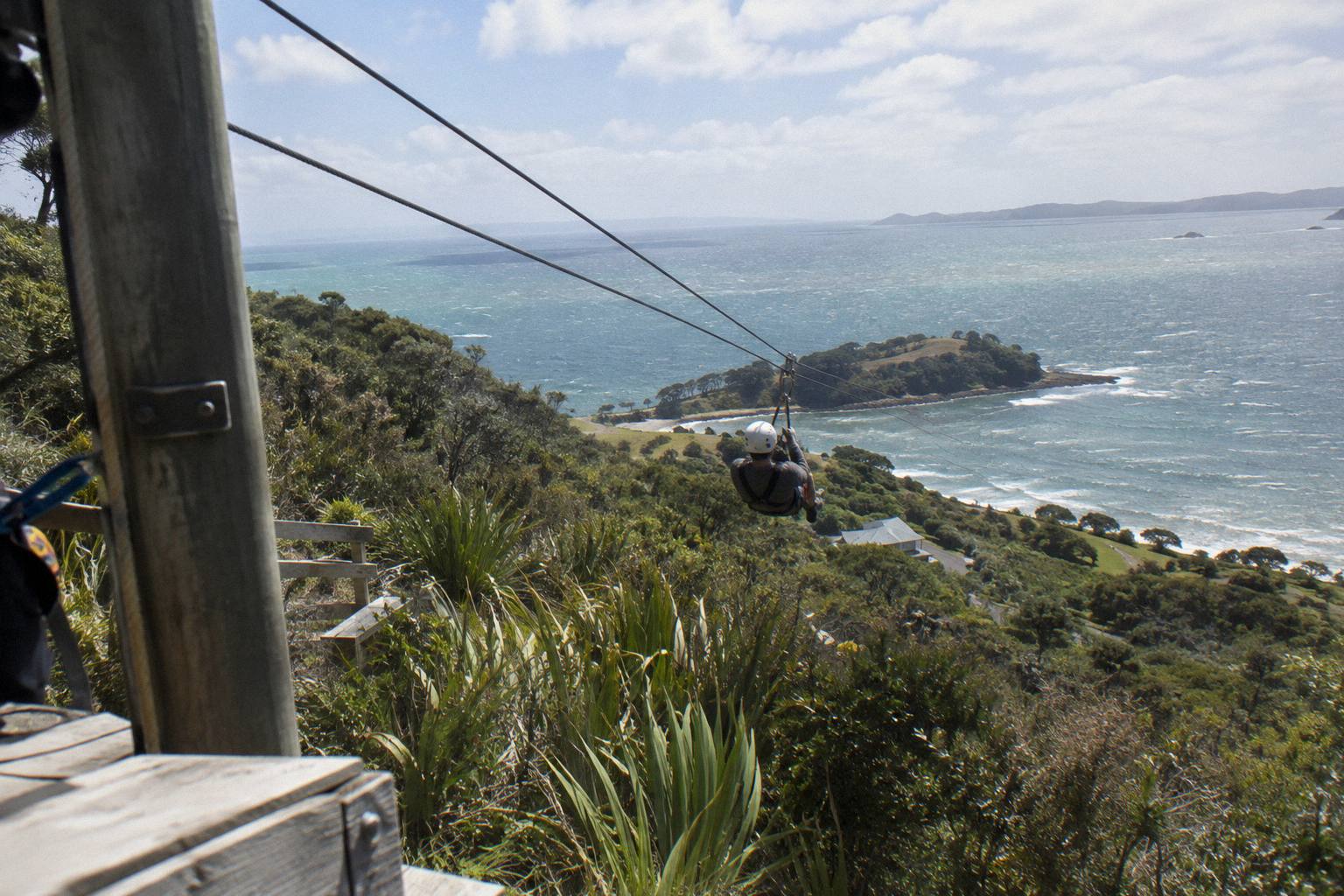
Speed is the part most riders do not think about. A zipline trolley rolling down a cable is a gravity-driven system, and the mass of the rider is one of the inputs. A heavier rider accelerates more readily and carries more energy into the landing zone, which means the brake has to absorb more. A lighter rider has the opposite problem: not enough momentum to reach the platform cleanly. Operators therefore publish a minimum as well as a maximum, and on Waiheke that minimum is 30 kg. Industry guidance explains that weight limits exist so riders generate appropriate speed and momentum for reliable braking and landing while staying within harness, cable, trolley and brake equipment ratings.
The brake itself is the reason the numbers are firm. Modern commercial courses, including Waiheke's, use a primary brake with an independent emergency arrest device that engages automatically if the primary fails. Both systems are specified for a load range, and a rider outside that range is outside the engineering case, full stop. Under New Zealand's adventure activities regulations, commercial zipline operators must pass a safety audit and register with WorkSafe NZ, and the audit covers exactly this kind of equipment rating, which is why the numbers are not negotiable at the counter.
| Operator (NZ) | Minimum weight | Maximum weight | Notes |
|---|---|---|---|
| EcoZip Adventures (Waiheke) | 30 kg | 125 kg | Weighed discreetly at check-in; harness fit checked |
| Ziptrek Ecotours (Queenstown) | Not stated in our sources | 125 kg | Same ceiling across its tours |
| Rotorua Canopy Tours | Not stated in our sources | 120 kg | No upper age limit; fitness prioritised |
| Zipline Christchurch | 27 kg | 125 kg | Also requires height over 122 cm |
| Coromandel Zipline Tours | Not stated in our sources | 120 kg | Minimum age 6 |
The pattern across the country is consistent: a floor in the high twenties or thirties and a ceiling of 120 or 125 kg. Waiheke's EcoZip sits at the common upper end. For a comparison at the question level, our post on how heavy is too heavy for a zipline works through the same numbers from the rider's side, and Waiheke Zipline Tours keeps the island-specific rules in one place.
The Zipline and Native Forest Adventure Trip below runs on the same EcoZip course and therefore the same 30 to 125 kg range, with the same dual-cable side-by-side flights and guided forest walk.
What The Weight Limit Means In Real Numbers?
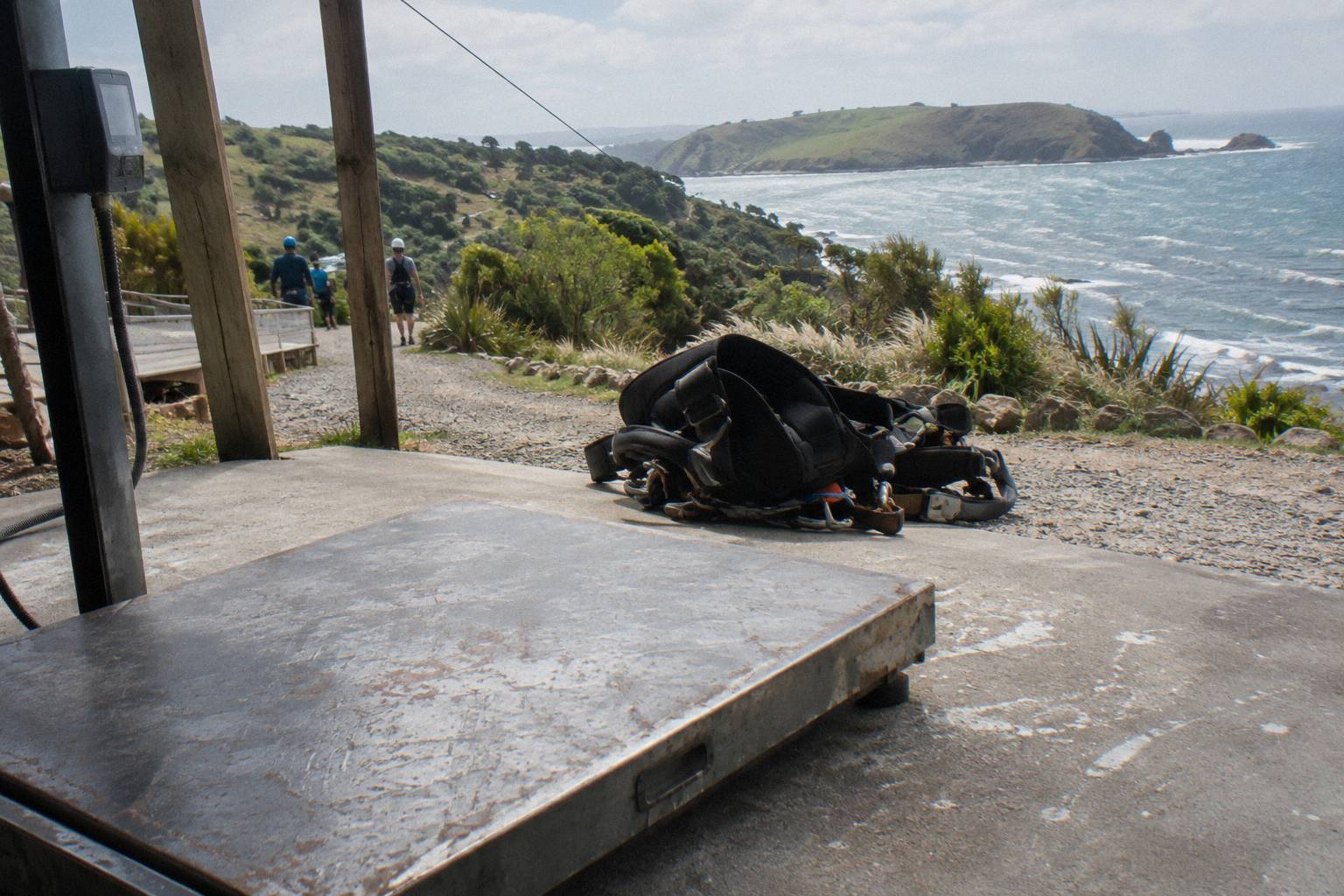
On Waiheke, the ceiling of 125 kg converts to roughly 275 lb, and the floor of 30 kg is about 66 lb. Those two numbers are the entire eligibility test, and they are checked on a scale at check-in, not estimated by eye. If you weigh between them, you can ride; the operator's own terms note that being over or under the limit is not automatically refunded, so it is worth knowing your number before you travel.
The conversion matters because most international visitors think in pounds, while every New Zealand operator publishes kilograms. The two anchor points are the ones EcoZip publishes: 30 kg, which the operator itself lists as 66 lb, and 125 kg, which it lists as 275 lb. Everything between those anchors is eligible, and everything outside them is not. There is no grey zone in the middle, no discretionary band, and no chart of body shapes, just the two numbers and a scale at check-in.
| Check | Published figure | What it means for you |
|---|---|---|
| Minimum weight | 30 kg (66 lb) | Below this, riders can stall mid-cable |
| Maximum weight | 125 kg (275 lb) | Above this, brake and cable ratings are exceeded |
| Where it is checked | Discreet weighing at check-in | Before gearing up, away from the queue |
| If you are outside the range | Not automatically refunded | Know your number before you book |
One practical note on how the check happens. EcoZip weighs every participant discreetly at check-in, so nobody is weighed in front of a queue, and the harness fit is adjusted at the same time. Being over the published limit on the day is not automatically refunded, which is a standard term on adventure activities: the operator has held a seat that could have gone to someone inside the range. Knowing your weight before you book protects your money as much as your plans. If you are near either edge of the range, weigh yourself on a scale you trust in the days before you travel, convert to kilograms if you think in pounds, and book with that number in hand rather than a guess.
Harness Fit And What Gets Checked At Check-In?
Harness fit is the second gate after weight, and it is the one staff can actually work around. Full-body harnesses adjust across shoulders, waist and legs, and guides resize them rider by rider. The genuine risk is a harness that cannot be fitted snugly, which the crew will assess honestly before you fly, and on Waiheke the check happens at check-in where a range of harness sizes and adjustment is available.
A zipline harness is not a fixed garment like a jacket. The shoulder straps, waist belt and leg loops all adjust through a wide span, and commercial operators carry harnesses in multiple sizes precisely because riders come in every shape. The fit matters for control rather than comfort alone: a loose harness lets the rider swing on landing, and a harness that will not tighten correctly cannot be used at all. Guides check fit as a matter of routine for every rider, not only larger ones, and the check is done by trained staff rather than self-assessed.
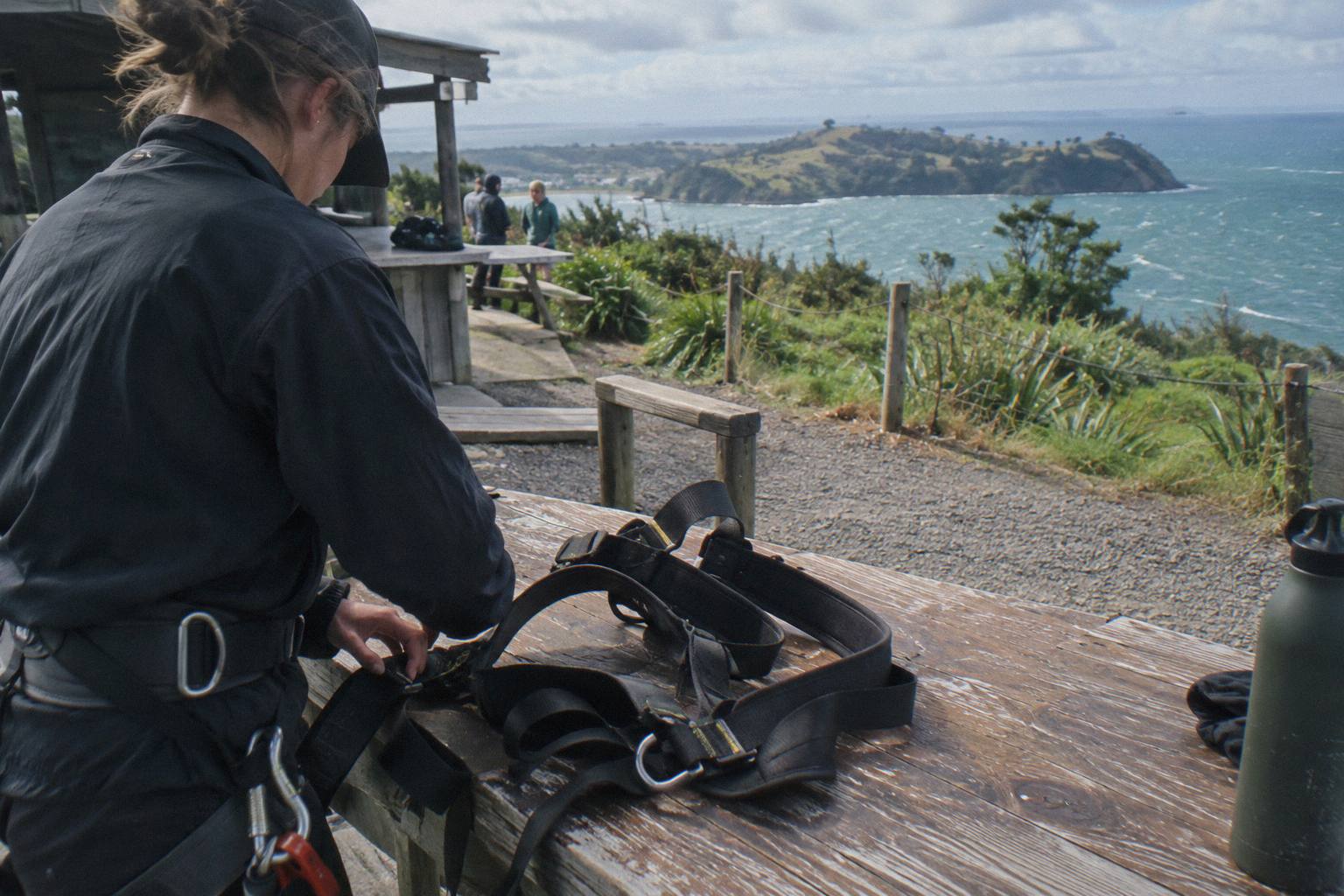
The honest edge case is worth naming. If a harness cannot be adjusted to fit safely, no operator will fly you, whatever the scale says. This is rare, and it cuts both ways, since very slight riders can face the same problem. The useful preparation is simply to wear clothing that lets the harness sit against the body: closed, laced shoes and weather-appropriate layers rather than bulky coats or thick waistbands that fight the straps. Our guide on what to wear ziplining on Waiheke covers the details, and the same rules make the harness check quicker for everyone.
Weight itself is only half the check-in story on Waiheke. EcoZip's published terms list conditions that may impair safety, including high blood pressure, cardiac conditions, pregnancy and back or neck injury, and the operator can refuse anyone affected by alcohol or drugs. None of these are size-related, and all of them apply equally to riders of every build. For nervous first-timers generally, the walkthrough in our piece for nervous first-timers on Waiheke covers what the briefing and first platform feel like.
Do Health Factors Matter More Than Size?
For most riders, yes. The medical list on an operator's terms, covering pregnancy, heart conditions, back and neck injuries and similar, screens out more people than the scale does. Those conditions are not exclusive to larger bodies, and a plus-size rider with none of them is a straightforward yes, while a mid-weight rider recovering from spinal surgery may be a no. Size is one variable among several, and rarely the deciding one.
The evidence base for zipline injuries backs this up. A study of United States emergency department data covering 1997 to 2012 estimated about 16,850 zipline-related injuries in that period, with falls accounting for 77.3% and fractures 46.7%, concentrated in the upper extremities. The relevant point is not the totals, which span every body type across more than a decade, but that injuries cluster around falls and equipment use rather than rider weight as such. Modern courses respond with full-body harnesses, redundant cables and dual brake systems, which is why the regulated New Zealand industry has the safety record it does.
| Check | Who it applies to | Where it sits in the booking |
|---|---|---|
| Weight within range | Every rider, weighed at check-in | Hard rule, printed on the listing |
| Harness fits correctly | Every rider, adjusted by guides | Assessed at check-in |
| No listed medical condition | Every rider, self-declared | Risk disclosure form |
| Closed shoes and suitable clothing | Every rider | Your preparation |
| Alcohol and drug free | Every rider | Operator may refuse |
Pregnancy deserves its own line, because it is the most common surprise in the small print. Most commercial operators, including several New Zealand courses, do not permit pregnant participants, since standard harnesses are not designed for pregnancy and sudden braking puts pressure across the abdomen. Waiheke's EcoZip includes pregnancy in its listed conditions. Back and neck problems are the other common flag, and our post on whether you can hurt your back by ziplining deals with that question directly.
Which Waiheke Zipline Suits A Bigger Rider Best?
All three Waiheke zipline products use the same or similar equipment standards, so the choice comes down to format rather than limits. EcoZip's three dual lines fly two riders side by side on parallel cables, while Man O' War's Forest Flight uses tandem lines where pairs share a flight over about 900 m total. Both formats work identically for riders inside the weight range, so pick by duration, location and what you want afterward.
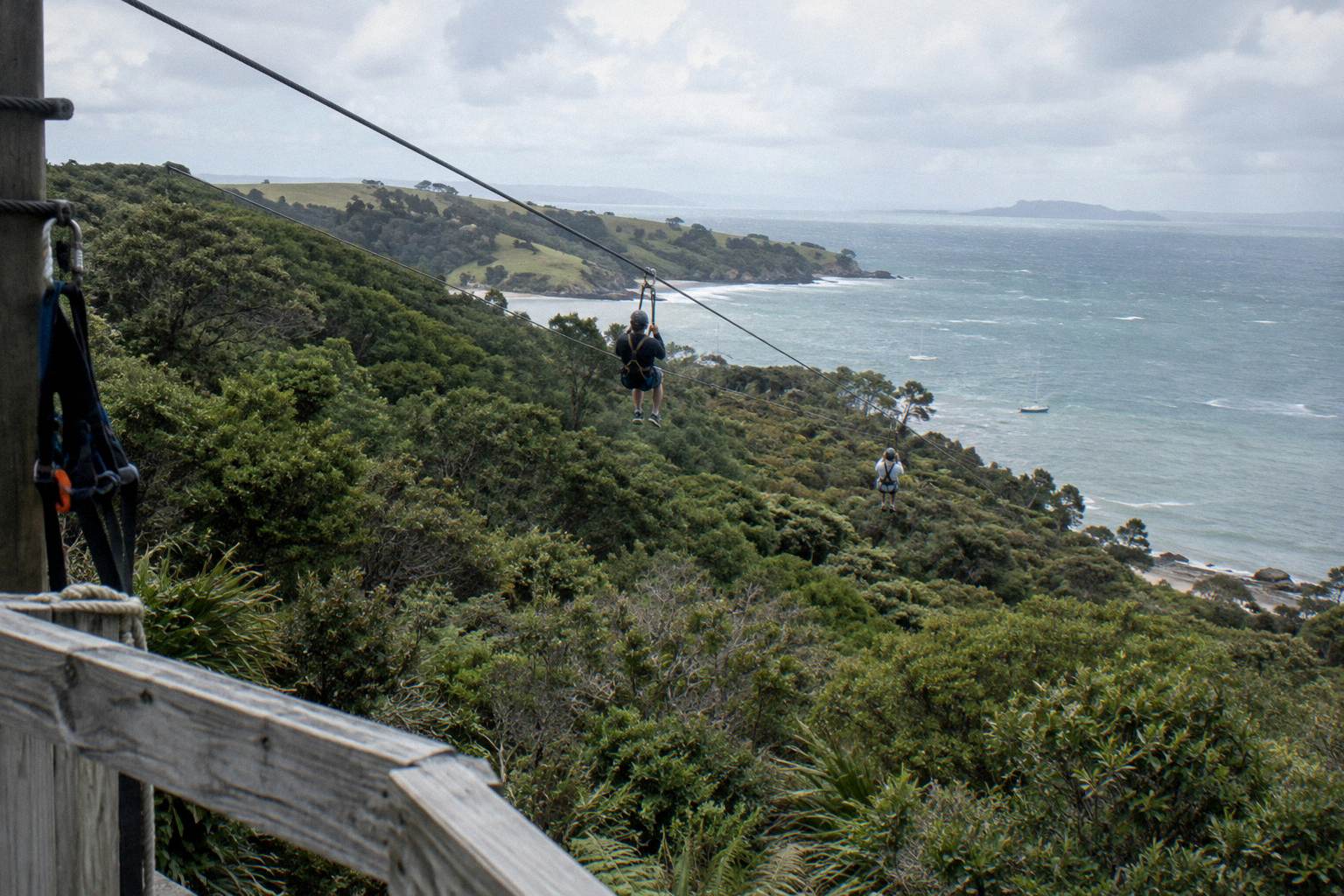
The dual-cable format at EcoZip deserves a short explanation, because it is genuinely relevant to comfort. Side-by-side flying means each rider has their own cable, trolley and harness, so you share the moment with a companion without sharing the load. The Man O' War Forest Flight, over on the eastern end of the island, runs tandem lines and connects them with a 660 m elevated boardwalk through the groves, finishing near the beachfront tasting room. Neither format has weight implications beyond the published limits, and the Man O' War listing leaves its specific weight and age rules unstated in our sources, so check the live listing for that one before booking.
| Product | Format | Duration | Weight rules |
|---|---|---|---|
| Waiheke Island: Zipline And Forest Walk | 3 dual lines plus guided forest walk | about 3 h | 30 to 125 kg |
| Zipline and Native Forest Adventure Trip | 3 dual lines, forest walk, phone bungee | 3 h | 30 to 125 kg |
| Man O' War Forest Flight Zipline | 3 tandem lines plus 660 m boardwalk | 2 h | Stated on the listing |
If you want the fuller comparison, our guide to the Man O' War Forest Flight versus EcoZip sets the two experiences side by side. For a sense of what the EcoZip day actually involves, hour by hour from the Matiatia pickup, the three-hour EcoZip trip explained covers the sequence.
The Man O' War option below is the one to look at if a shorter, vineyard-anchored experience appeals.
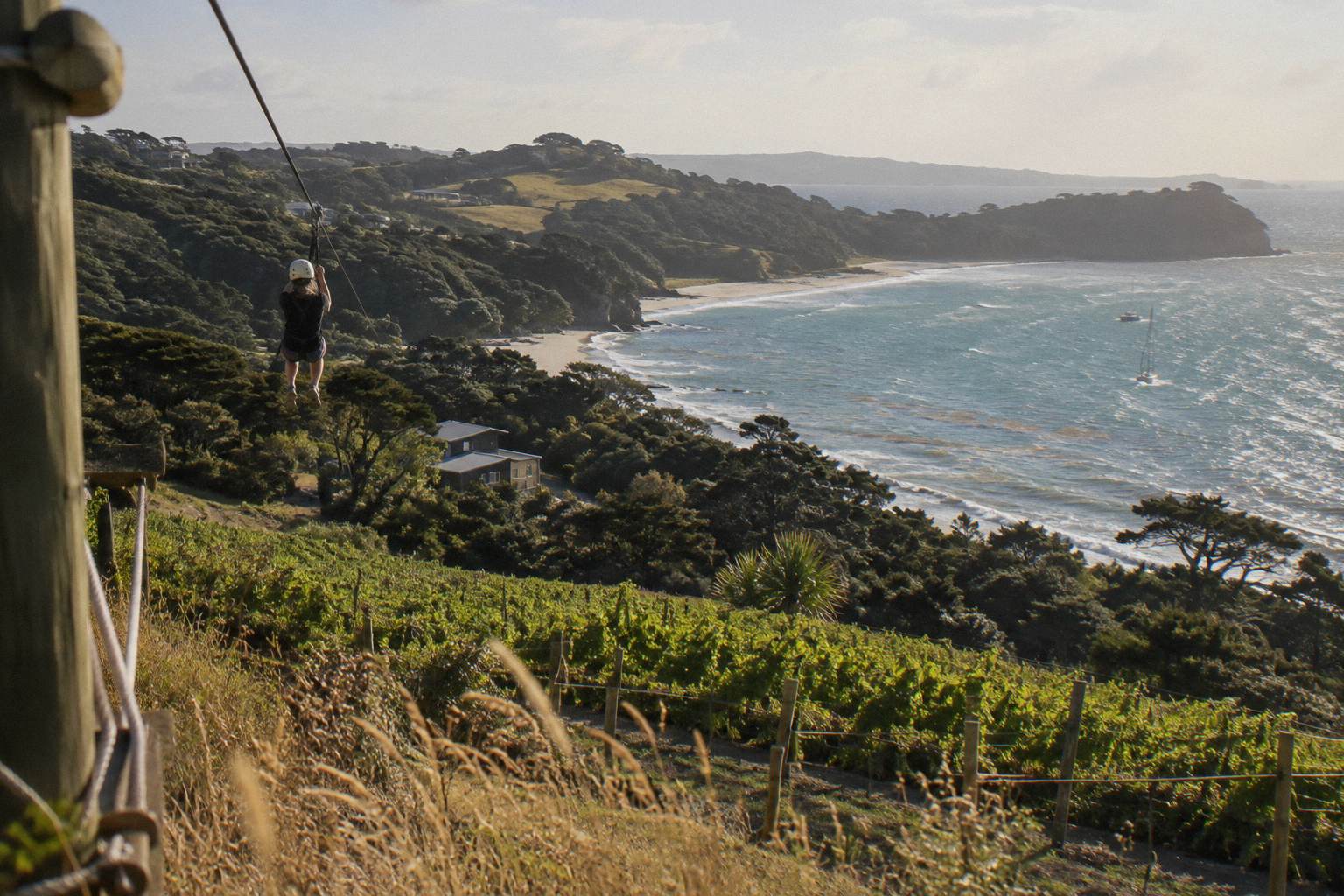
How Should A Plus-Size Rider Prepare For The Day?
Preparation is the same as for any rider, with two additions: know your weight in kilograms before you book, and dress so the harness fits cleanly against your body. Beyond that, closed laced shoes, a hat that fits under a helmet and a wind layer cover it. The walk matters too, since Waiheke's EcoZip experience includes a guided native forest walk of about 1.4 km that is not optional, and reasonable fitness is listed.
The forest walk is the detail bigger riders most often overlook, because the zipline gets all the attention. After the three flights, the experience continues with a guided walk of roughly 1.4 km through native bush, uneven in places, with switchbacks and a few steady uphill stretches that can be muddy after rain. The commentary is optional but the walk is not, since it is how the group returns from the lower forest. It is a gentle walk by tramping standards, but it is not flat pavement, so factor it in honestly when you plan the day.
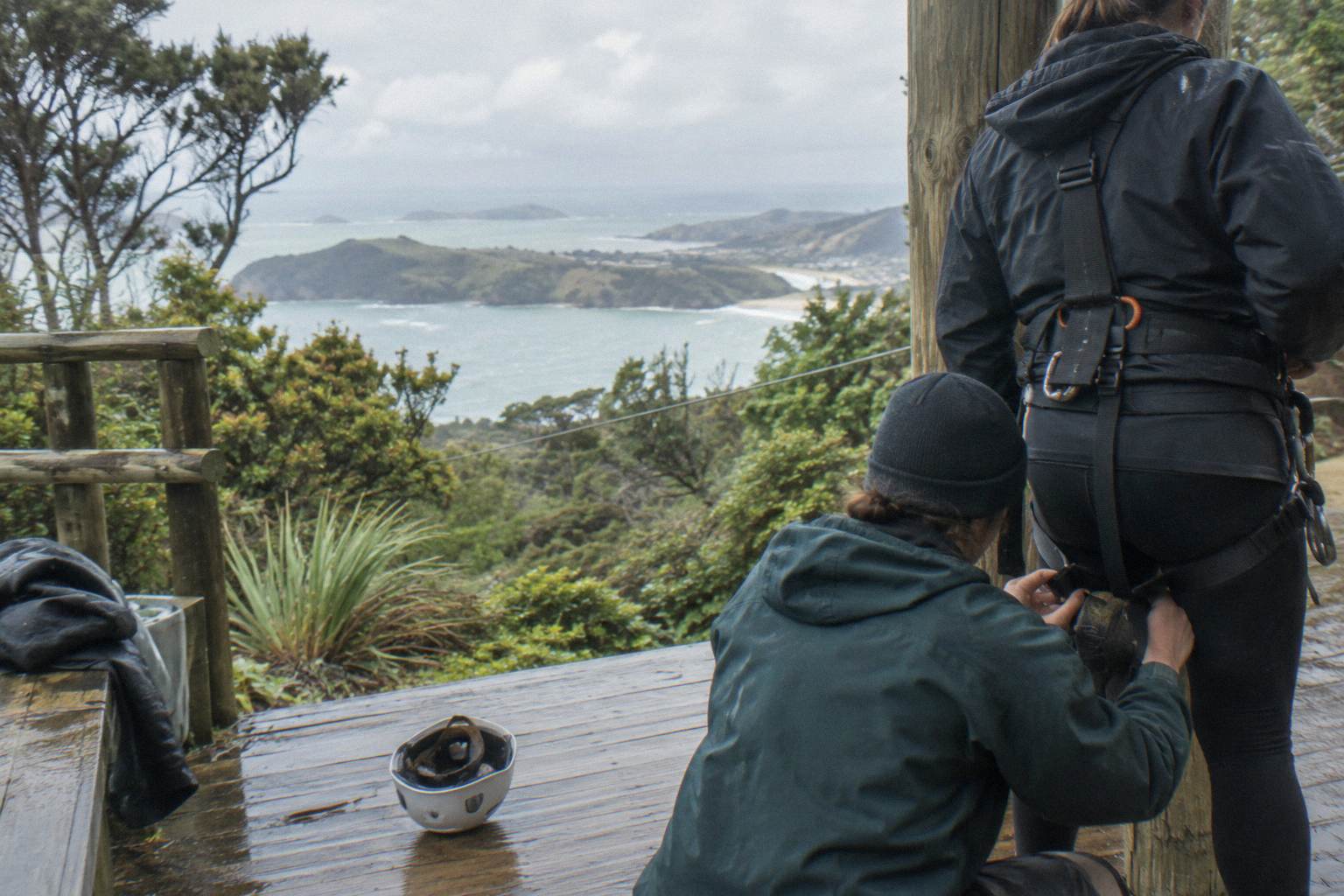
Clothing choices make a bigger difference to comfort than most riders expect. Bulky layers under a harness add bulk the straps then have to squeeze, and thick seams at the waist or legs can chafe over a three-hour experience. Close-fitting layers, a jacket you can shed, and sturdy closed shoes that lace or buckle (no jandals) are the published requirements on Waiheke. Phones and cameras must be strapped to clothing or the harness, with free phone bungees available at check-in, which matters if you want photos from the lines.
A final word on the mindset side. Operators consistently report that the physical checks matter less than the rider's own comfort with height. Advice for acrophobic or nervous guests is to raise it with the crew early, since guides brief every group on hand positions, braking posture and leg positioning, and a rider who asks questions at the briefing flies better than one who stays quiet. The numbers say most plus-size riders are eligible; the experience itself is there to be enjoyed once the paperwork agrees.
Common Questions About Plus-Size Ziplining
Can Plus-Size People Zipline?
Yes, in most cases. On Waiheke, the eligibility range is 30 to 125 kg, which is roughly 66 to 275 lb, and everyone is weighed discreetly at check-in. If you fall inside that band and the harness fits correctly, you can ride; there is no separate clothing-size rule.
Do You Get Weighed Before Ziplining On Waiheke?
Yes. EcoZip weighs every participant discreetly at check-in, before gearing up, regardless of body size. The weight check exists because cables, trolleys and brakes are rated for a specific load range, not because of any assumption about the rider.
What Happens If I Am Over The Weight Limit?
Per the operator's terms, being over or under the limit is not automatically refunded, because the seat was held for you. This is exactly why it pays to know your weight in kilograms before booking rather than discovering it at the counter.
Does Harness Size Ever Stop A Bigger Rider From Flying?
Rarely, but it can. Harnesses adjust across shoulders, waist and legs, and operators carry multiple sizes. If a harness cannot be fitted snugly, the crew will not fly the rider, whatever the scale says; close-fitting clothing on the day makes the fit check easier.
Is There A Weight Difference Between EcoZip And Man O' War On Waiheke?
EcoZip publishes a 30 to 125 kg range. The Man O' War Forest Flight listing leaves its weight and age rules unstated in our sources, so check the live listing before booking that one.
Are There Health Conditions That Matter More Than Size?
Yes. Pregnancy, heart conditions, high blood pressure and back or neck injuries are the common flags in operator terms, and they apply to riders of every build. A plus-size rider with none of them is a straightforward yes.