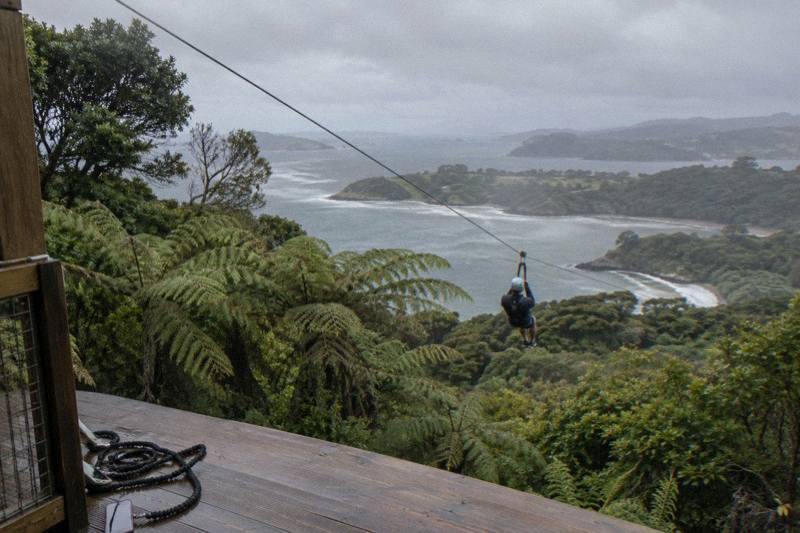
Best Time Of Year For A Waiheke Zipline Trip
Waiheke runs its ziplines all year, so the real question is not whether you can go but which month gives you the weather, the crowds and the ferry connections you want. Here is how the island's seasons actually shake out.
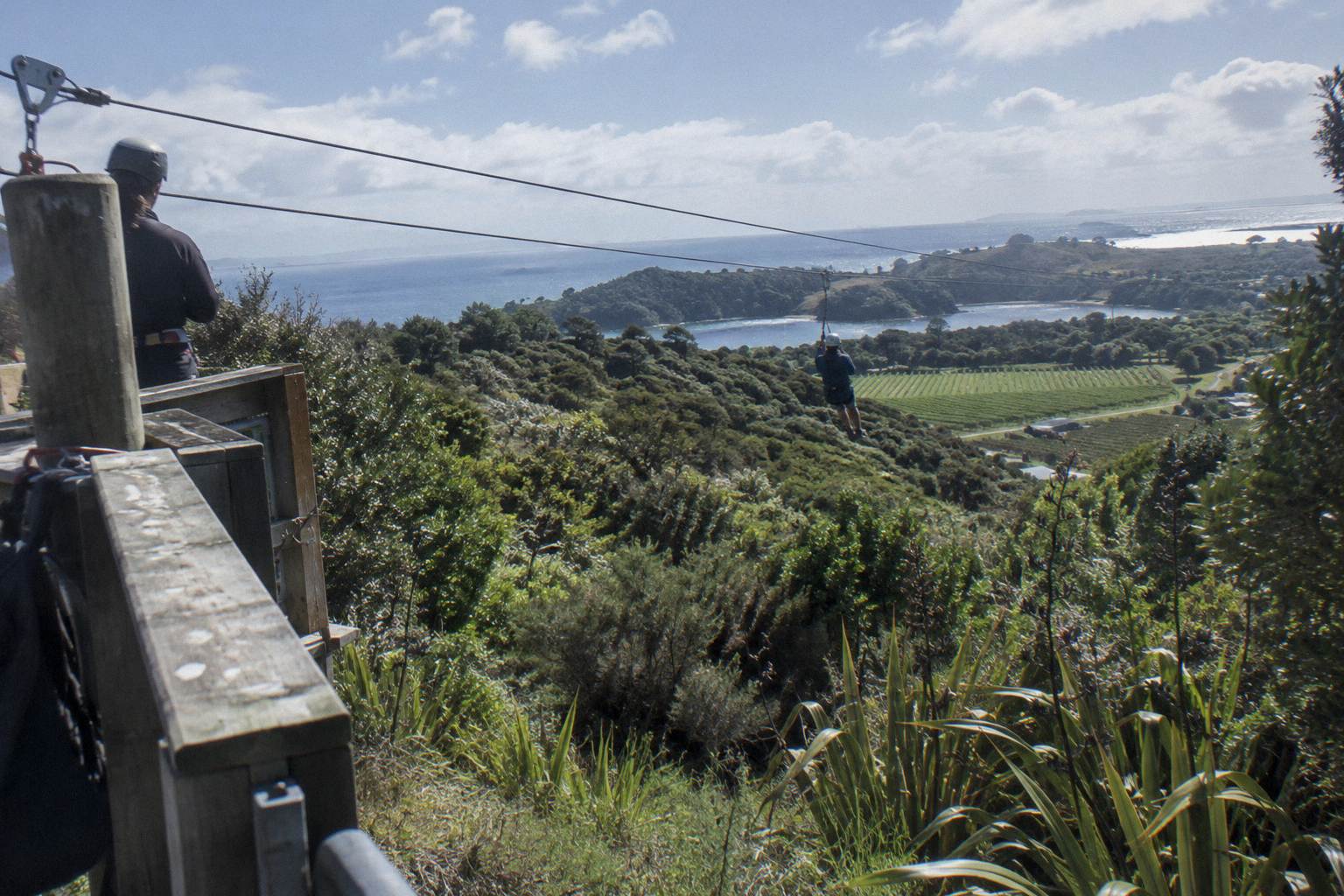
Short answer
The Waiheke zipline runs all year, including in rain. February to April are the strongest months: February is the warmest and driest, while March and April keep most of that warmth with thinner crowds. The only real stopper is wind: EcoZip cancels when it consistently exceeds 35 knots, with a free date change or full refund.
Waiheke sits about 40 minutes by ferry from downtown Auckland, and its ziplines run every month of the year. That makes the timing question less about access and more about comfort, crowds and the odds of a wind cancellation. The island's climate is mild: February averages daytime highs around 23 °C, July sits nearer 15 °C, and the wettest month is roughly July against a drier January. Wind, not rain, is the factor most likely to move your booking.
This guide walks through the whole Waiheke Zipline Tours season question month by month, using the island's published climate averages and the operators' own weather rules, so you can match a booking window to what you actually want from the day: warm air, empty platforms, or a cheap, quiet winter escape.
Which Month Is Best For A Waiheke Zipline?
March, April and February are the strongest months for a Waiheke zipline trip. February delivers the warmest reliable weather with daytime highs near 23 °C and the driest conditions of the year, while March and April keep most of that warmth with noticeably fewer visitors on the island and the ferry. Book a morning slot in any of them and you will rarely be short-changed.
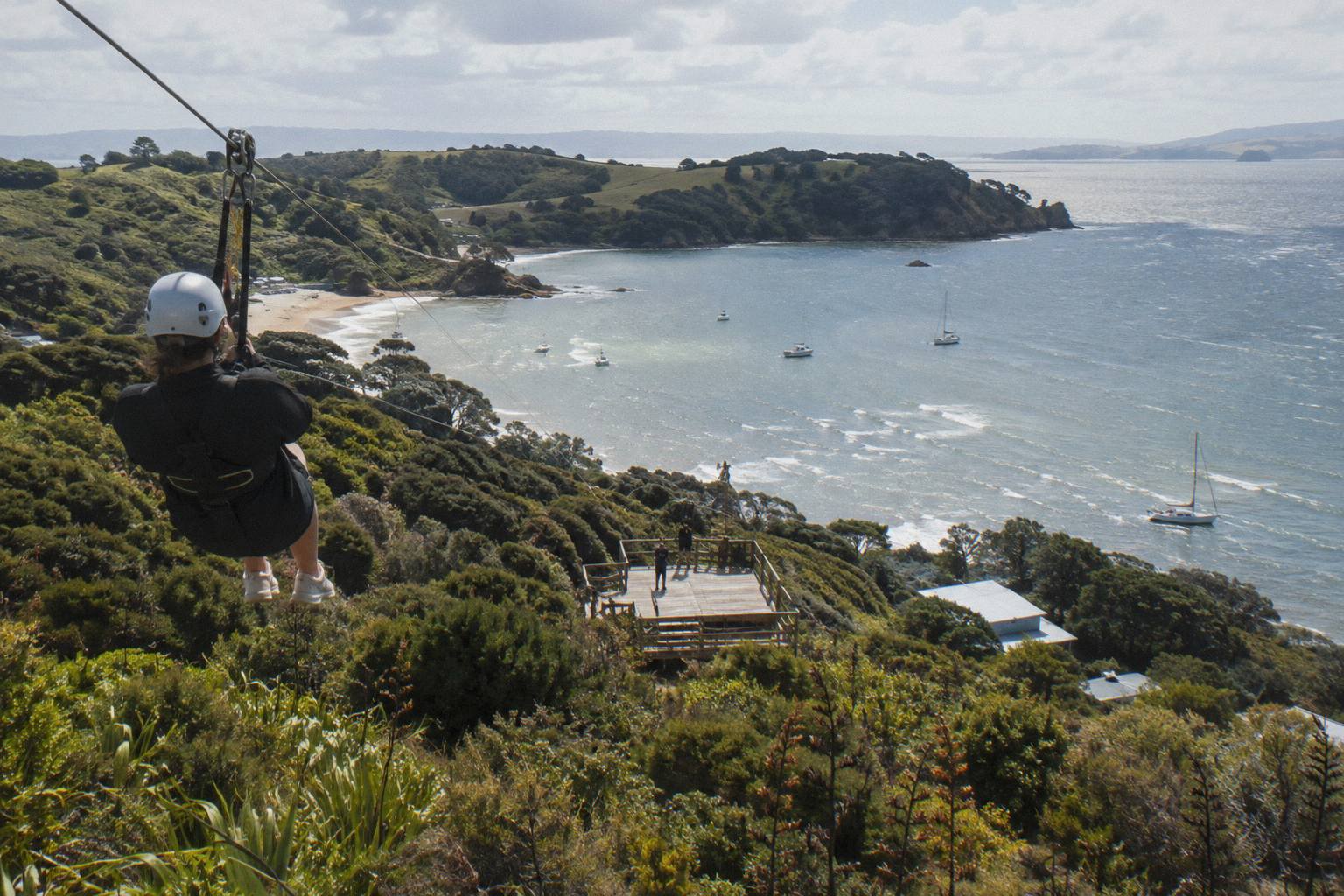
The case for late summer and early autumn is straightforward. The sea is at its warmest, the vineyards that so many zipline visitors pair with the trip are in full swing, and the January holiday crush has gone home. Daylight is still long enough in March for a zipline in the morning and a long lunch afterwards without watching the clock.
Winter is a different proposition, not a write-off. July is the wettest and coolest month, with highs around 15 °C, but the zipline still runs in rain and the forest walk, about 1.4 km of it, is arguably prettier dripping and green than baked dry. The trade-off is mud underfoot and a real chance you finish damp.
If you want the full reasoning behind the flagship experience, the three-hour EcoZip trip explained in detail covers what those hours actually contain, from the shuttle up Trig Hill to the guided forest walk that closes the loop.
Does The Waiheke Zipline Season Ever Close?
No. There is no closed season and no published annual maintenance shutdown for Waiheke's ziplines. EcoZip Adventures runs its three-line experience all year, in rain and in cool weather, and the hop-on hop-off bus and ferry that feed it operate year-round too. The only operational stopper is wind consistently above 35 knots, which triggers a date change or a full refund rather than a seasonal closure.
That wind rule matters more than most visitors expect. Waiheke is an exposed island in the Hauraki Gulf, and a strong westerly can shut a session down even when the sky is blue. Rain almost never does. The operators supply a small stock of loan wet-weather gear, and the dual-cable design means you fly side by side with a companion regardless of a drizzle.
The Man O' War Forest Flight, on the island's eastern end, works the same seasonal logic: three tandem lines over 900 m total, connected by 660 m of elevated boardwalk through kauri forest, running on a two-hour cycle all year. Its setting beside a beachfront tasting room makes it especially attractive in the warmer months, when the beach either side of the operation is worth the ferry on its own.
Timing within the day also shifts with the season. In summer the first ferry from downtown Auckland leaves around 6:00 am on weekdays, and the crossing takes about 40 minutes, so an early slot is easy to reach. In the shoulder season the first weekend sailing slips to about 7:00 am, which still connects comfortably to a mid-morning zipline if you plan the boat.
What Is The Weather Like Month By Month?
Waiheke averages daytime highs of about 23 °C in February, its warmest month, falling to about 15 °C in July, its coolest. January is the driest month at roughly 71 mm of rain and July the wettest at about 123 mm, against an annual total near 1,156 mm. Those are 30-year averages, so treat them as a planning baseline, not a forecast for your specific week.
The table below pulls those averages into one view. Note how moderate the spread is: this is an oceanic climate, so even midwinter days feel brisk rather than bitter, and even peak-summer days rarely bake. The zipline-relevant reading is the rain column and the temperature column together, because the forest walk between flights is where weather is most felt.
| Month | Typical daytime high | Rainfall (monthly avg) | Zipline planning note |
|---|---|---|---|
| January | Warm, near annual peak | About 71 mm, the driest month | Excellent weather, busiest crowds |
| February | About 23 °C, warmest month | Low | Best all-round month, book early |
| March | Warm, easing | Moderate | Warm sea, thinner crowds |
| April | Mild | Moderate | Autumn colours on the forest walk |
| May | Mild to cool | Building | Quiet, pack a layer |
| June | Cool | Higher | Quiet, rain gear advised |
| July | About 15 °C, coolest | About 123 mm, the wettest | Quietest, mud likely on the walk |
| August | Cool | High | Similar to July, first blossom late month |
| September | Cooling to mild | Moderate | Shoulder season begins |
| October | Mild | Moderate | Green island, growing crowds |
| November | Warm | Moderate | Very good value month |
| December | Warm | Lower | Festive period gets busy |
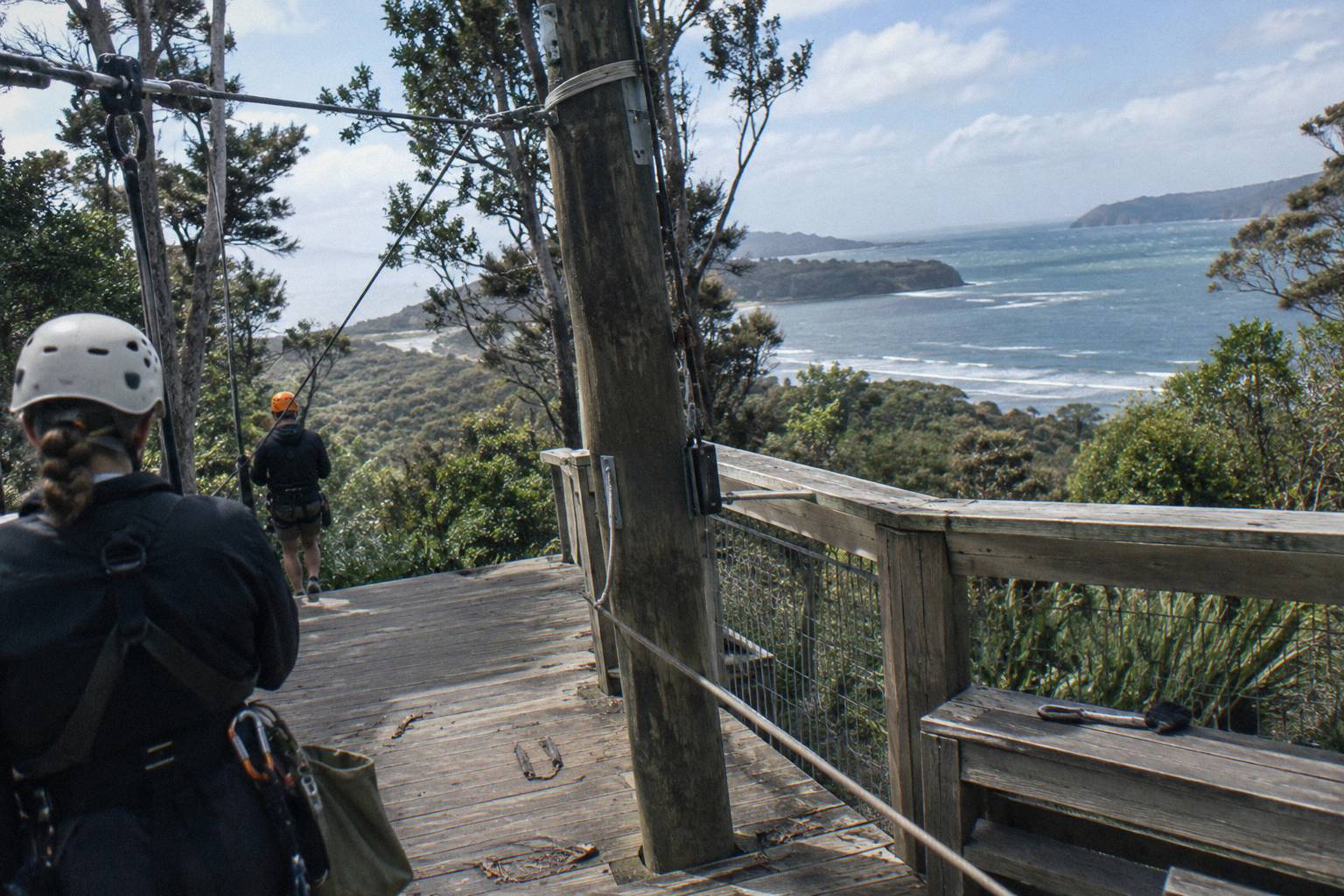
The underlying climate data comes from 30-year averaged records for Waiheke Island, which is why the numbers move so gently from month to month. Real days swing harder than averages, especially in spring, when one week can deliver four seasons.
Summer, Shoulder Or Winter: Which Season Suits You?
Summer, meaning December to February, suits visitors who want warm air, long daylight and swimming after the zipline, at the cost of peak crowds and fuller ferries. The shoulder months of September to November and March to May suit travellers chasing value and space, while June to August suits anyone who wants the island almost to themselves and does not mind a jacket and some mud.
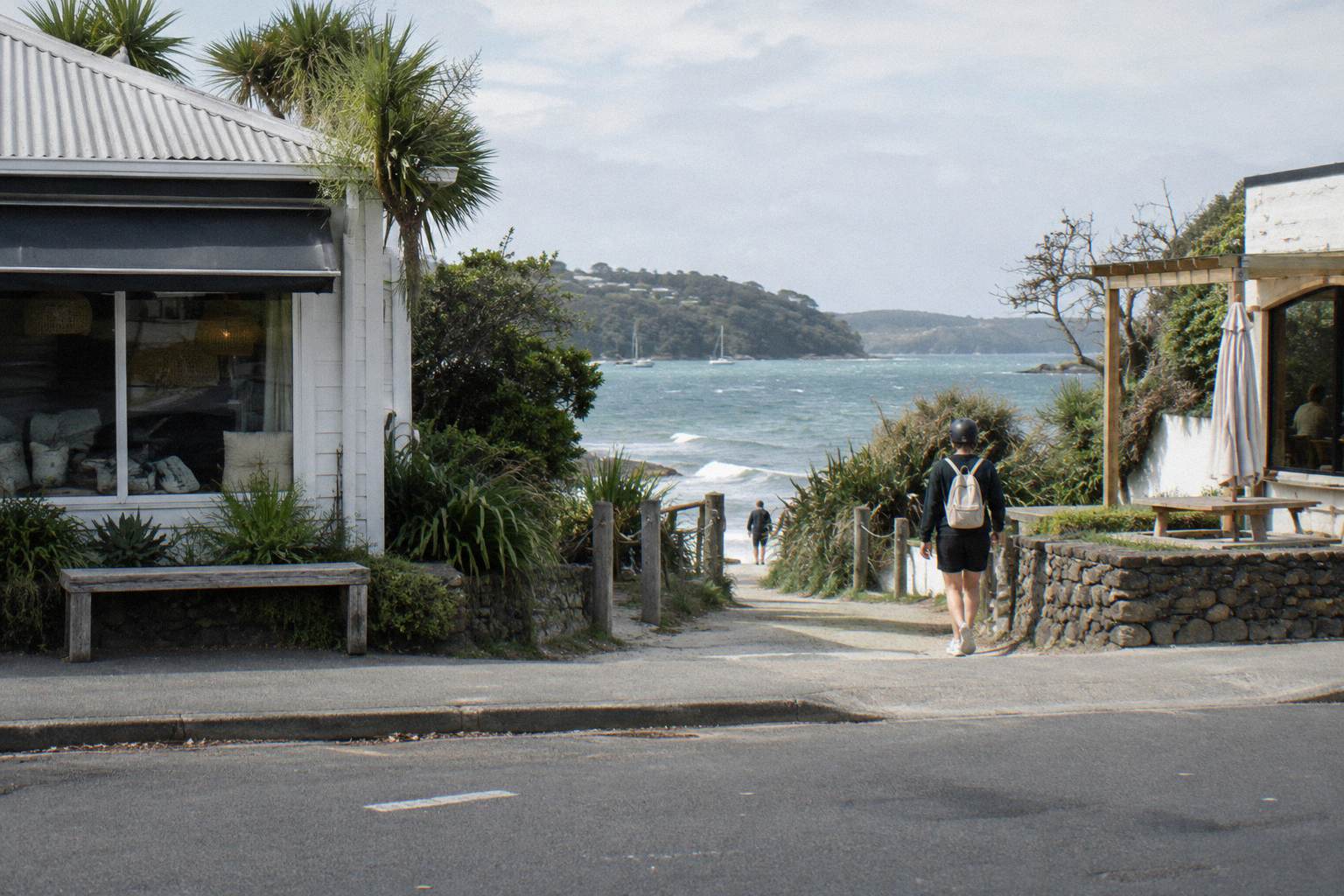
Summer is the season most people picture: the 40-minute ferry packed with day-trippers, Onetangi's roughly 2 km of golden sand at its best, and cellar doors buzzing into the evening. The zipline itself stays civilised, with groups capped at up to 12 people and two guides, but the ferries and vineyards around it get busy, so book both well ahead.
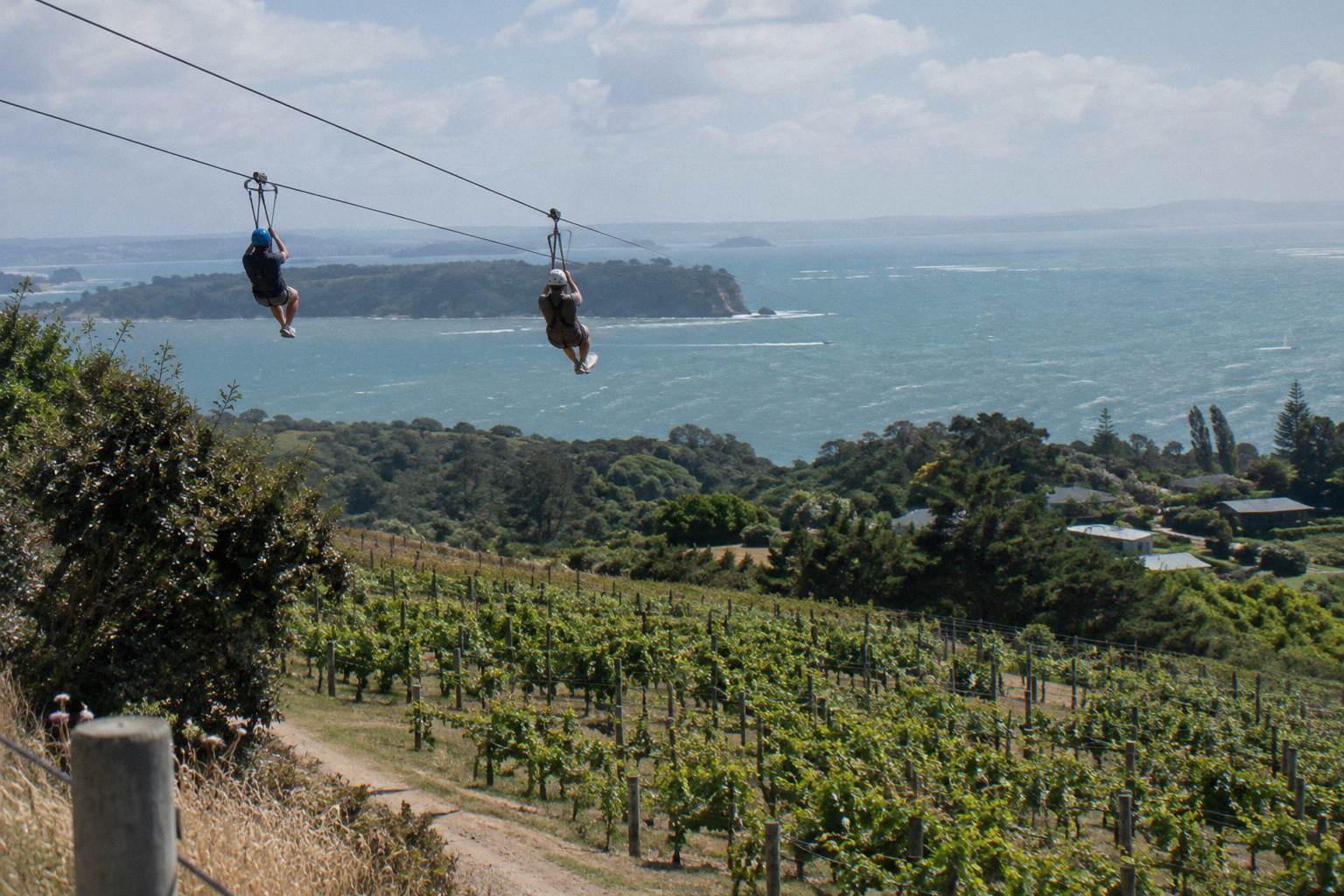
Shoulder season is the connoisseur's pick. March and April retain most of summer's warmth, the water is still swimmable, and the island's accommodation drops in both price and availability pressure. September through November is greener and less predictable, but a fine November day is close to indistinguishable from a mediocre February one, with half the company.
| Season | Months | Weather character | Crowds and ferries | Best for |
|---|---|---|---|---|
| Summer | Dec - Feb | Highs to about 23 °C, driest | Peak crowds, book ahead | Beach plus zipline days, first visits |
| Autumn shoulder | Mar - May | Warm easing to mild, moderate rain | Thinning steadily | Wine-focused trips, value |
| Winter | Jun - Aug | Highs near 15 °C, wettest | Very quiet | Solitude, cheaper stays |
| Spring shoulder | Sep - Nov | Cool to mild, changeable | Building from quiet | Green scenery, flexibility |
Winter deserves a fairer hearing than it gets. The zipline runs, the forest is at its most lush, and EcoZip's free post-tour drop-offs at vineyards and restaurants around the island continue through the cooler months. Rain is likely at some point in a winter week, but the operator supplies loan wet-weather gear and the refund rules protect you if wind intervenes instead.
For the two-line decision on which operation to pick in any season, the Man O' War Forest Flight compared with EcoZip guide breaks down the differences: dual side-by-side cables and a highlights shuttle at EcoZip, tandem lines and a vineyard-integrated finish at Man O' War.
What Time Of Day Is Best In Each Season?
A morning slot is the safe answer in every season. In summer it beats the strongest midday sun and leaves the afternoon for a vineyard lunch, and in winter it maximises daylight before the early dusk. The first ferries from downtown Auckland start around 6:00 am on weekdays in the shoulder timetable, so reaching a late-morning session is easy, but the earliest slots need the first boats.
EcoZip's experience runs about three hours from Matiatia pick-up to drop-off, roughly two hours on site if you drive yourself to Trig Hill, and the operator is only about 15 minutes from the ferry terminal. That geometry means a 10 am ferry comfortably feeds an early afternoon slot, while the first sailings unlock the morning ones.
| Slot | Summer character | Winter character | Who it suits |
|---|---|---|---|
| Early morning | Cool air, calmest winds often | Needs the first ferry, dawn start | Photographers, cruise passengers |
| Late morning | Warmer, busy platforms | Comfortable daylight timing | Ferry day-trippers |
| Afternoon | Peak warmth, cruise rush fades | Daylight shortens quickly | Late arrivals, relaxed trippers |
Cruise passengers should treat the morning ferries as the anchor of the whole plan. The passenger ferries leave from the Downtown Ferry Terminal on Quay Street, the same terminals cruise visitors reach on foot or by short transfer, and the crossing takes about 40 minutes. The cruise-passenger zipline timing guide works through the connection in detail.
Wind also has a daily rhythm worth knowing. Breezes tend to build through the afternoon, which is one reason morning sessions are cancelled for wind slightly less often. If your travel dates are fixed and inflexible, an early slot buys you margin.
What Happens If The Weather Turns On Your Booking?
Rain does not stop the Waiheke zipline: sessions run in wet weather, with a small stock of loan rain gear. Wind does: EcoZip cancels when wind is consistently above 35 knots, offering a date or time change or a full refund. Direct-booking cancellations inside 48 hours are non-refundable, and rescheduling inside that window costs NZ$49 per person, so weather flexibility is worth reading before you book.
That 48-hour window is the practical hinge of the whole decision. Change your own plans more than 48 hours ahead and a NZ$25 per person cancellation charge applies with the balance refunded; inside 48 hours the booking becomes non-refundable. But when the operator cancels for wind, you are looked after with a free change or a full refund, so the risk sits on your schedule, not the weather itself.
| Scenario | What happens | Your options |
|---|---|---|
| Rain on the day | Tour runs as normal | Loan wet-weather gear available |
| Wind over 35 knots consistently | Operator cancels the session | Date/time change or full refund |
| You cancel with 48 h or more notice | Direct policy applies | NZ$25 pp charge, balance refunded |
| You cancel inside 48 h | Non-refundable | Reschedule for NZ$49 pp |
| No-show | Forfeits the booking | None |
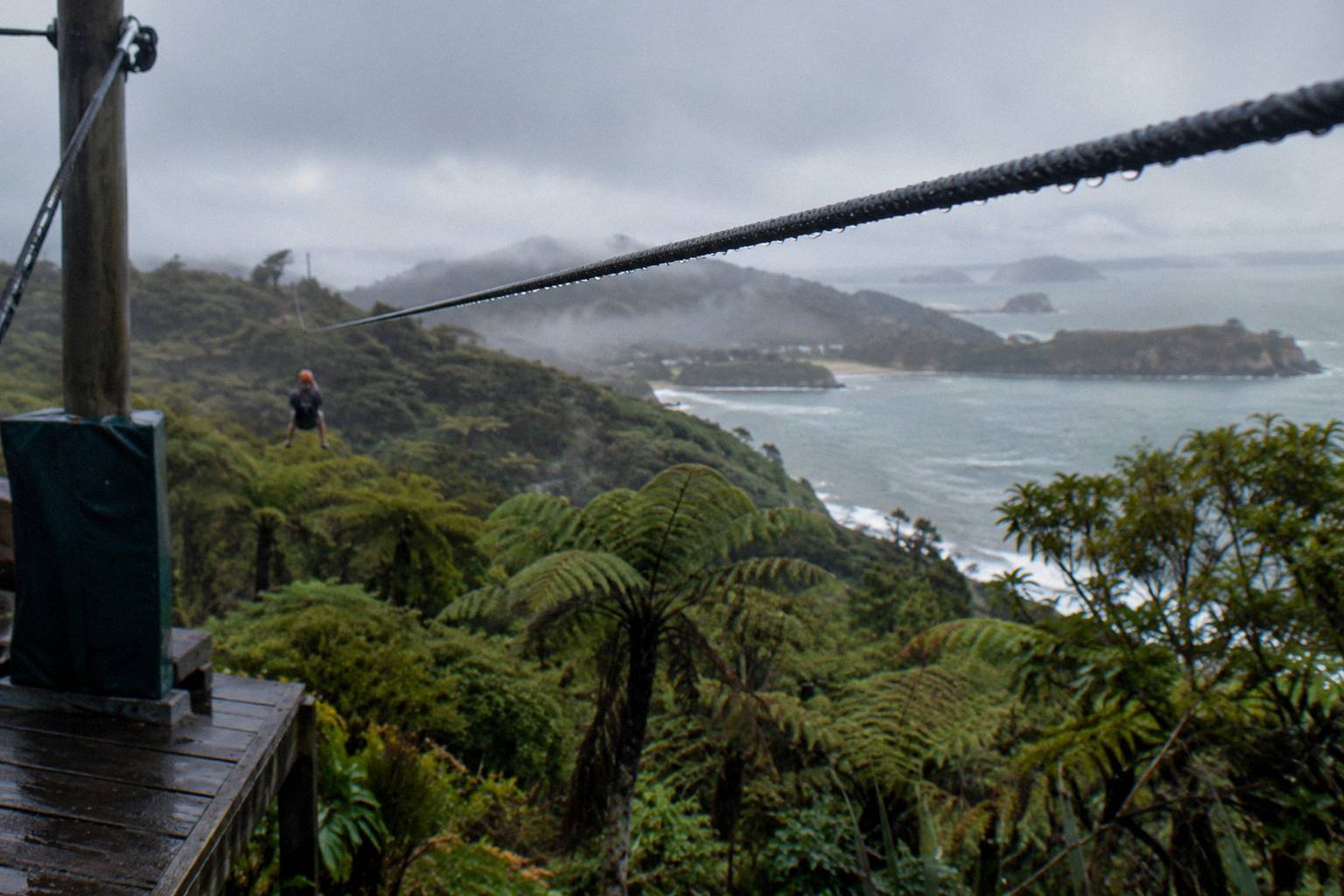
The full weather mechanics, including what the wind limit means in practice and how refunds flow, are covered in the wind, weather and cancellation rules guide. Bookings made through a listing rather than direct carry the listing's own cancellation terms, which the operator notes are more generous than its direct policy, so read the terms attached to whichever route you book.
One seasonal nuance: winter bookings carry a higher statistical chance of a rain-soaked forest walk, about 1.4 km of uneven, switchbacked track that may be muddy. The walk is compulsory, the commentary is optional. Anyone with mobility concerns in wet months should read the accessibility and mobility guide before choosing a date.
When Is Waiheke Quietest For Visitors?
June to August is by far the quietest period on Waiheke, followed by late autumn in May and early spring in September. January is the busiest month, driven by the New Zealand school holidays, with Easter and the warm weekends either side also filling ferries and vineyards. The shoulder months of March, April, October and November split the difference, delivering pleasant island days at a fraction of the peak-season squeeze.
Quiet matters more on Waiheke than on some islands because the infrastructure is finite. There is one main passenger ferry operator from downtown Auckland, a limited pool of accommodation concentrated around Oneroa, Onetangi, Palm Beach and Ostend, and roughly 20 cellar doors open to the public, all of which fill faster in January than at any other time.
A quiet-season trip changes shape rather than shrinking. The Explorer hop-on hop-off bus runs its loop of 16 to 17 stops from Matiatia with departures from about 10 am year-round, and in the cooler months you can often board the next bus rather than queuing for the one after. E-bike hire, with operators at Matiatia and Ostend, is likewise easier to secure midweek in winter.
For visitors weighing whether two wheels or two cables fill the day better, the e-bike versus zipline day on Waiheke comparison is worth a read. Season affects that choice too: the island's hills are more forgiving in a cool autumn tailwind than in the February sun.
What Should You Wear For Each Season's Conditions?
In summer, wear closed, laced shoes, sun protection and a hat that fits under a helmet. In spring and autumn, add a warm layer you can shed, since conditions on Trig Hill change fast. In winter, bring your own rain jacket, warm clothing and footwear with grip for the muddy forest walk. Closed shoes are required in every season, and phones and cameras must be strapped on, with free phone bungees supplied at check-in.
The footwear rule is the one that catches people out. Jandals and loose sandals are not permitted on the zipline, and the forest walk's uneven, sometimes muddy switchbacks make good shoes a kindness to your ankles in any case. A small stock of loan wet-weather gear exists at the site, but the operator's clear advice is to bring your own jacket in the wetter months.
| Season | Clothing essentials | Extra items |
|---|---|---|
| Summer | Closed shoes, light clothing, hat under helmet | Sunscreen, strapped camera |
| Spring | Layers, light rain shell | Sunscreen, grippy shoes |
| Autumn | Warm layer, windproof layer | Rain jacket |
| Winter | Warm clothing, waterproof jacket | Grip-soled shoes for mud |
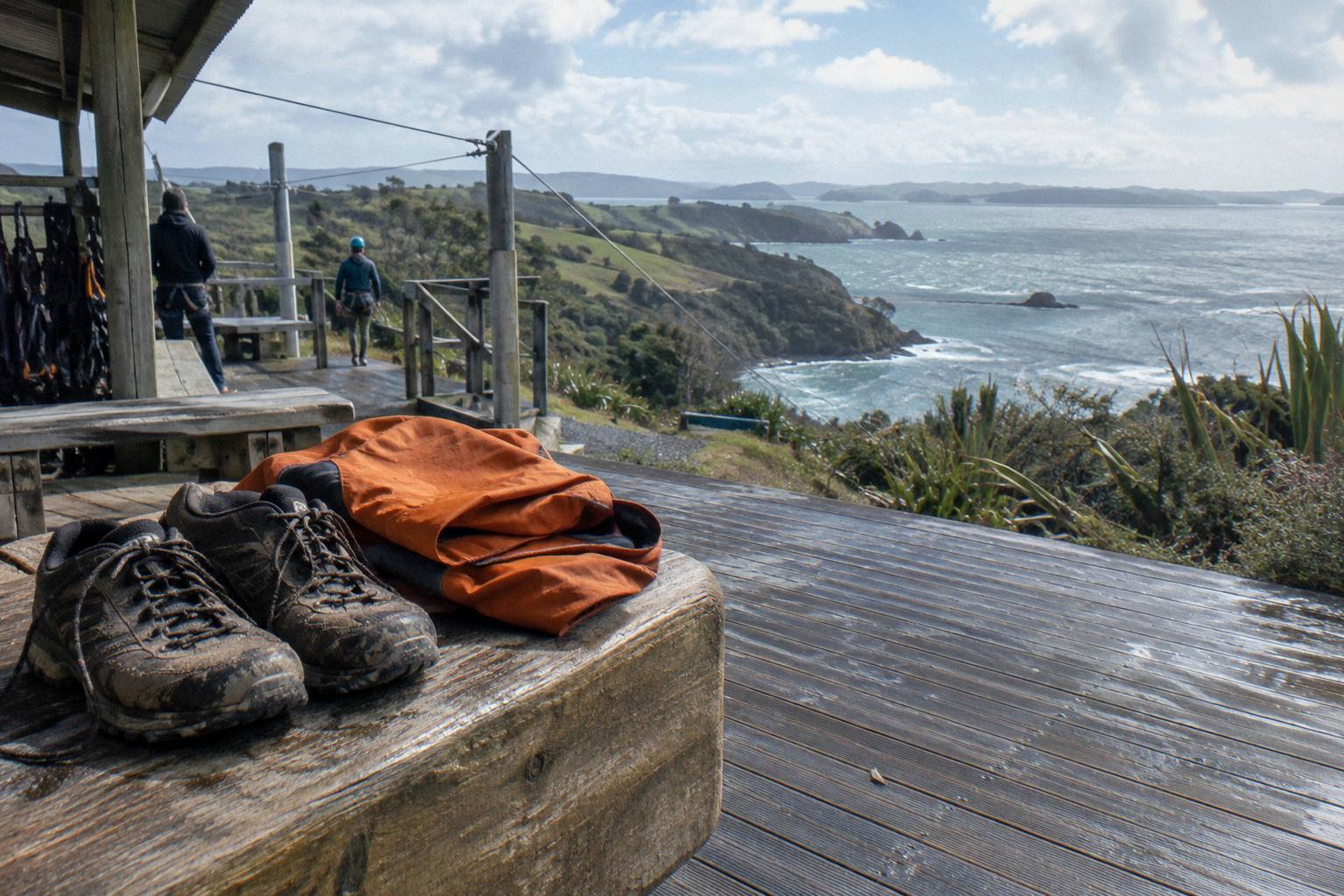
The full kit list, including what happens with hats, glasses and harness fit, is laid out in the what to wear ziplining on Waiheke guide. Weight and age rules are separate from clothing: riders need to weigh between 30 and 125 kg, there is no age limit, and under-18s need a guardian to sign the risk disclosure form.
Should You Book Ahead Or Wait For A Forecast?
Book ahead for any date between late December and late February, for public holidays, and for any cruise-ship day where your window is fixed. In the June to August quiet season, midweek dates can often be booked a few days out, letting you watch the forecast. Booking ahead carries limited weather risk either way, because an operator wind cancellation comes with a free date change or a full refund.
The logic is asymmetrical. If your dates are fixed, an early booking costs you almost nothing in weather risk and guarantees the slot you want, especially the morning sessions that ferry day-trippers favour. If your dates are flexible, waiting 48 hours out trades a small chance of missing out for a much better read on the sky, remembering that inside 48 hours the direct cancellation terms harden considerably.
EcoZip's own FAQ, published at ecozipadventures.co.nz, is the authoritative source on the current wind rule, pick-up points and clothing requirements, and it reflects the operator's own wording rather than a reseller's summary. The ferry timetable is likewise seasonal, with the current pattern published by Fullers360; the shoulder-season timetable shows weekday first sailings near 6:00 am and weekend first sailings near 7:00 am, so exact times shift through the year and should be checked against your travel dates.
The featured trip, the Waiheke Island: Zipline And Forest Walk, bundles the three dual-cable flights with the guided native forest walk and a commentated highlights shuttle from Matiatia, and its price and current rating show on the live listing. It is the natural anchor for a first Waiheke zipline in any season.
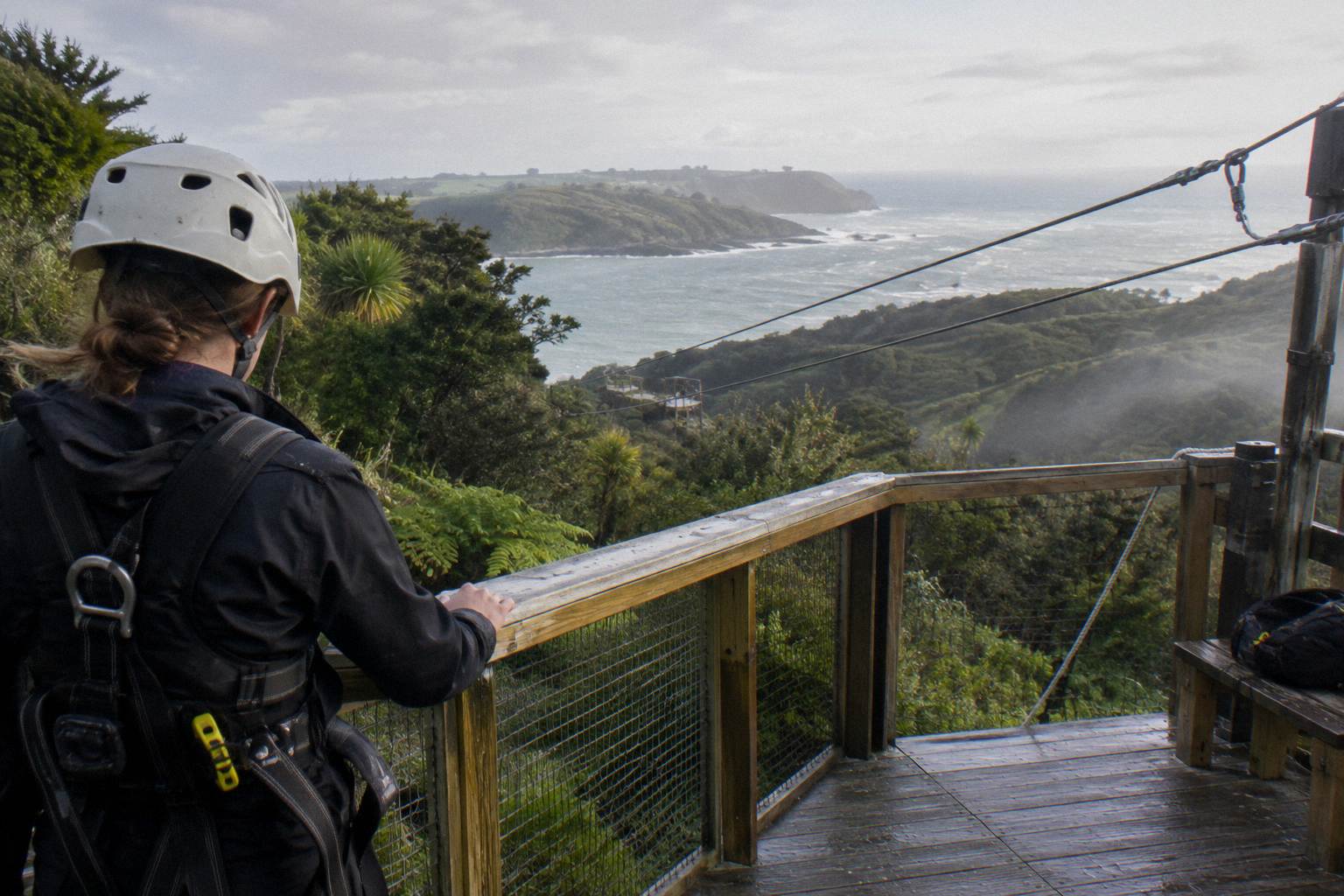
Planning Your Zipline Around The Rest Of The Island
Match the rest of your Waiheke day to the season rather than forcing a summer template onto winter daylight. In the warm months, pair a morning zipline with an afternoon at Onetangi's roughly 2 km beach or a vineyard lunch. In the cooler months, reverse it: a late-morning flight followed by an early indoor lunch, with EcoZip's free post-tour drop-offs at vineyards including Stonyridge, Te Motu and Wild Estate doing the transport work.
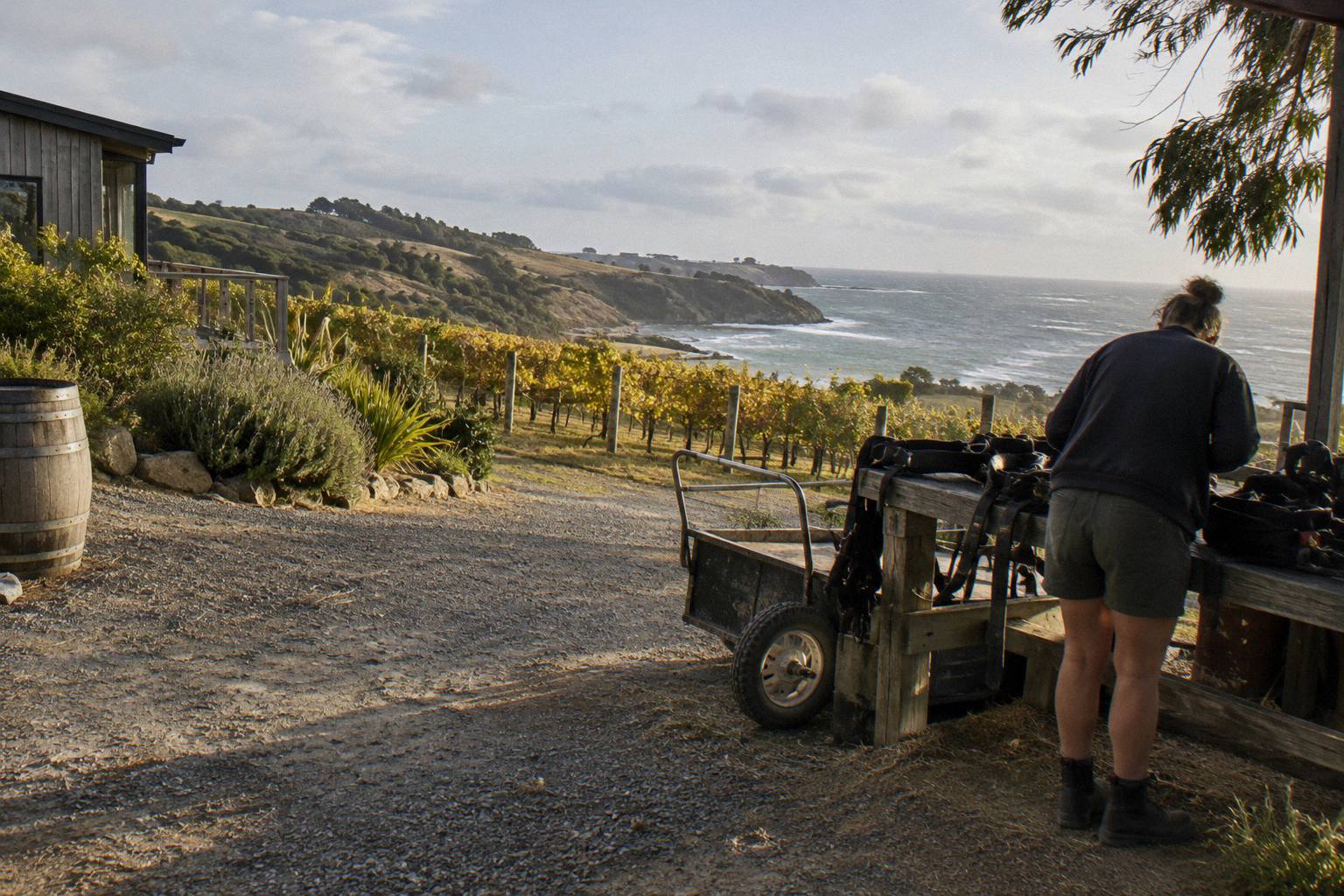
Cellar doors cluster around lunch for a reason: many open from about 11 am, tastings typically run three to five wines, and flights commonly cost in the NZ$20 to NZ$55 range depending on the venue, though check each room for its current pricing. Around 30 wineries and roughly 20 open cellar doors means a winter trip still has plenty of indoor anchors.
If you are building a full day rather than a half, the zipline and wine tasting day tour layout shows how the pieces stack, and the half-day zipline and forest walk plan covers the tighter morning-only version that suits a winter schedule or a short cruise stop.
Season also changes where you would stay. Oneroa, about 2 km from Matiatia, is the practical choice for a first visit; Onetangi suits a beach-and-wine base in summer; Palm Beach and Ostend offer quieter, more local alternatives that come into their own in the off-season when rates soften. The where to stay for a zipline weekend guide sorts the options.
Common Questions About The Best Time Of Year For A Waiheke Zipline
Does The Waiheke Zipline Run In Winter?
Yes. There is no closed season, and sessions run in rain and cool weather. July is the wettest and coolest month, with highs near 15 °C, so expect mud on the forest walk and bring your own rain jacket and warm layers.
What Is The Warmest Month For Ziplining On Waiheke?
February, with average daytime highs of about 23 °C. January is close behind and is also the driest month at roughly 71 mm of rain, though both months carry the busiest crowds.
When Is The Zipline Cancelled For Weather?
Only for wind: EcoZip cancels sessions when wind is consistently above 35 knots, and then offers a date or time change or a full refund. Rain does not cancel a session, and loan wet-weather gear is available.
Which Is The Quietest Month To Visit Waiheke?
July and August are the quietest, followed by June and September. January is the busiest month due to school holidays. Shoulder months like March, April and November balance pleasant weather against thinner crowds.
Should I Book The Zipline In Advance?
Book ahead for late December through February, public holidays and fixed cruise dates. Midweek winter dates can usually be booked a few days out, letting you watch the forecast first.
What Time Of Day Is Best For A Zipline Slot?
Mornings, in every season. In summer they beat the strongest sun and leave the afternoon free; in winter they make the most of daylight; and winds, which cause the only cancellations, tend to build later in the day.