Do You Get Weighed Before Ziplining? How Check-In Works At Matiatia
Yes, EcoZip weighs every rider discreetly at check-in on Waiheke Island. Here is why the 30-125 kg limit exists, how the weigh-in works, and what to do if you sit near the edge of the range.
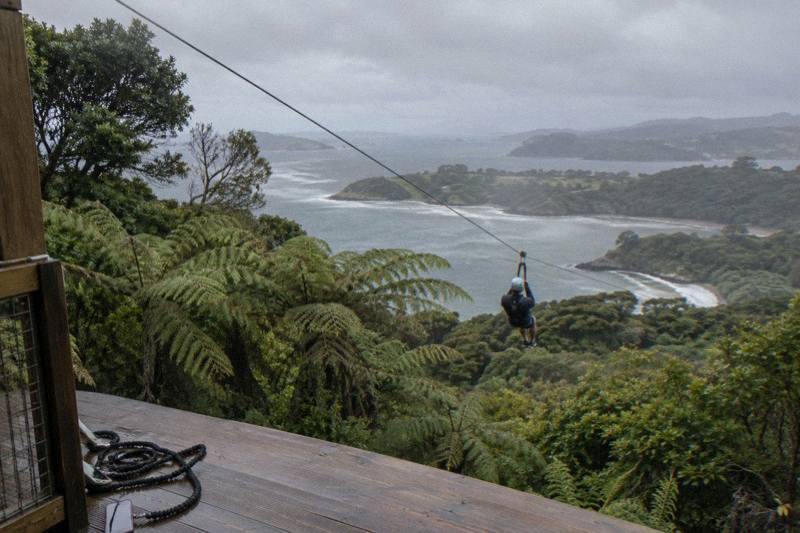
The short answer is yes. On Waiheke Island, EcoZip Adventures weighs every participant discreetly at check-in before anyone clips into a harness, because the braking system, the trolley and the cables are all engineered for a specific weight window. The check-in scales are not there to embarrass anybody, and the number is not announced to the group. It is there so the guides know each rider will arrive at the landing platform at a speed the brake can actually handle. Skip ahead for exactly how the weigh-in runs, what the 30 to 125 kg range means, and what happens if you fall outside it.
Do You Get Weighed Before Ziplining?
Yes. At EcoZip Adventures on Waiheke, every participant is weighed at check-in before flying, using scales that show the number only to staff. The operator's rule is a minimum of 30 kg and a maximum of 125 kg, and everyone, adults and children alike, gets checked. If a rider falls outside that range the booking is not automatically refunded, so it pays to know your approximate weight before you book.
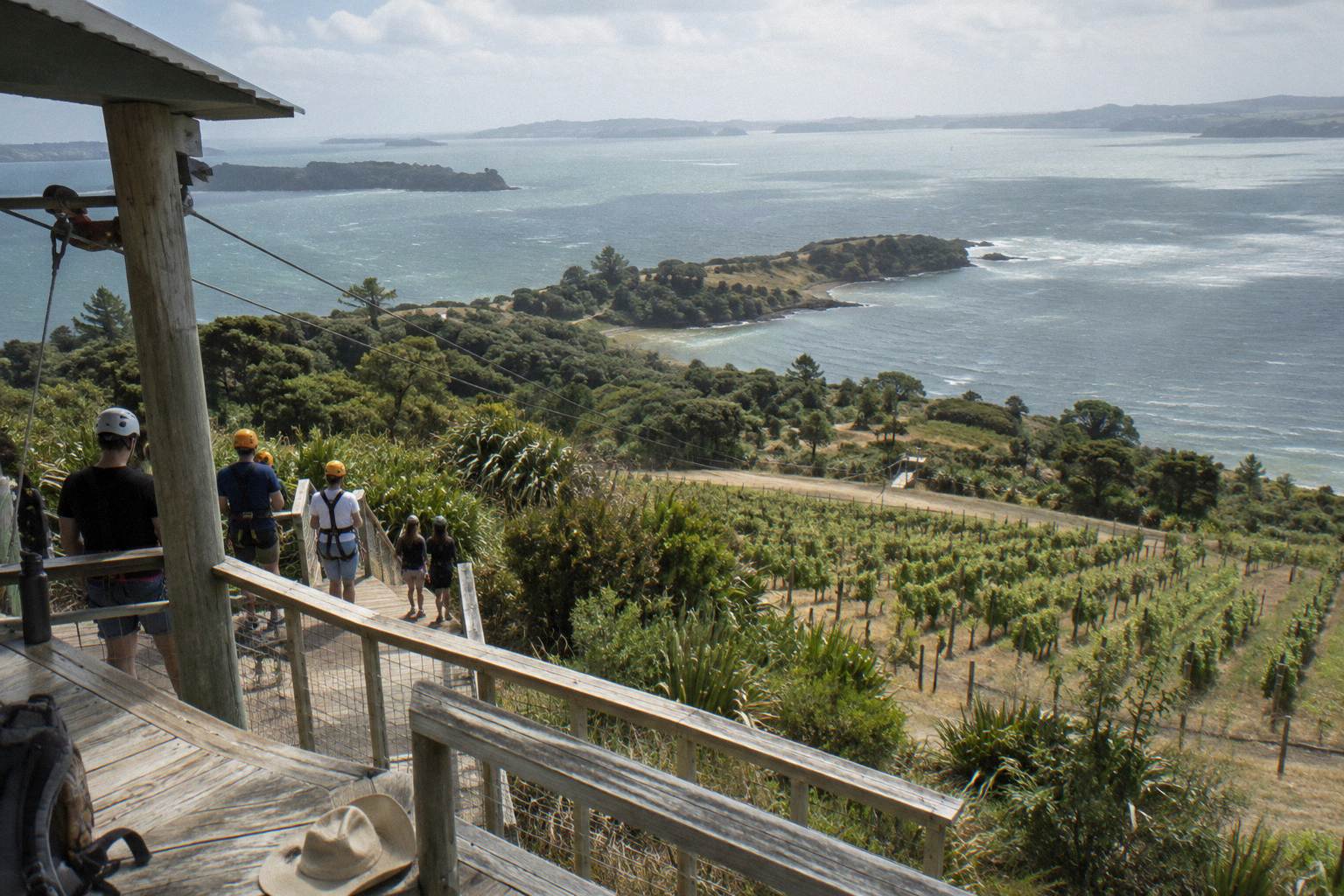
The weigh-in happens on site, not at the ferry terminal. Most riders arrive on the EcoZip shuttle from Matiatia after a roughly 20-minute commentated ride through the island's highlights to the Trig Hill base. Once there, check-in is a sequence: sign the risk disclosure form, get weighed, get fitted for a harness and helmet, and sit through the safety briefing. The whole process is deliberately low-key. The staff member reading the scale sees the number, confirms you are inside the range, and moves on.
The question sounds awkward to first-timers, which is why the operator is careful about how it is done. Nobody reads your weight aloud. Nobody in the queue hears it. The scales sit at the check-in desk rather than in front of the group, and the number functions like a shoe size: a measurement the operator needs to fit you to the right equipment configuration, nothing more.
It is worth understanding the mindset shift here, because it changes how the moment feels. In everyday life a number on a scale carries social weight, and people bring that anxiety to the check-in desk. On a zipline course the number has no social meaning whatsoever. It is an input to a calculation the guides run for every single rider, the same way they check that your harness buckles are threaded and your helmet sits straight. A rider weighing 60 kg and a rider weighing 100 kg get exactly the same welcome, the same briefing and the same view from the lines; the only difference is which trolley and brake settings the crew plans for. Once you have watched two or three riders go through the same quiet step ahead of you, the moment stops feeling like a test and starts feeling like procedure.
If you are booking the flagship product, the Waiheke Island Zipline and Forest Walk, the same check-in applies, since it runs on the same three dual-cable lines above Trig Hill with the guided native forest walk afterwards. The three dual lines each run around 200 m, with the longest, Kurinui, at 220 m and speeds over 50 km/h, and the whole door-to-door experience takes about three hours from Matiatia pickup to drop-off.
Why Zipline Operators Weigh Riders At All
Weight determines speed, and speed determines whether the brake can stop you safely. A rider who is too light may stall mid-cable and need a guide to rescue them; a rider who is too heavy can arrive at the landing platform faster than the brake rating allows. The weigh-in exists so every rider stays inside the window the equipment was engineered and audited for.
The physics is straightforward. On a zipline, gravity pulls you down the cable and your mass decides how much momentum you build. A heavier rider generates more speed and more braking energy at the far end. A lighter rider generates less, and on a long line in still air a very light rider can stop short of the platform. Operators set minimum and maximum weights so that every rider, in ordinary wind, lands within the speed band the trolley, the cable and the brake were designed for.
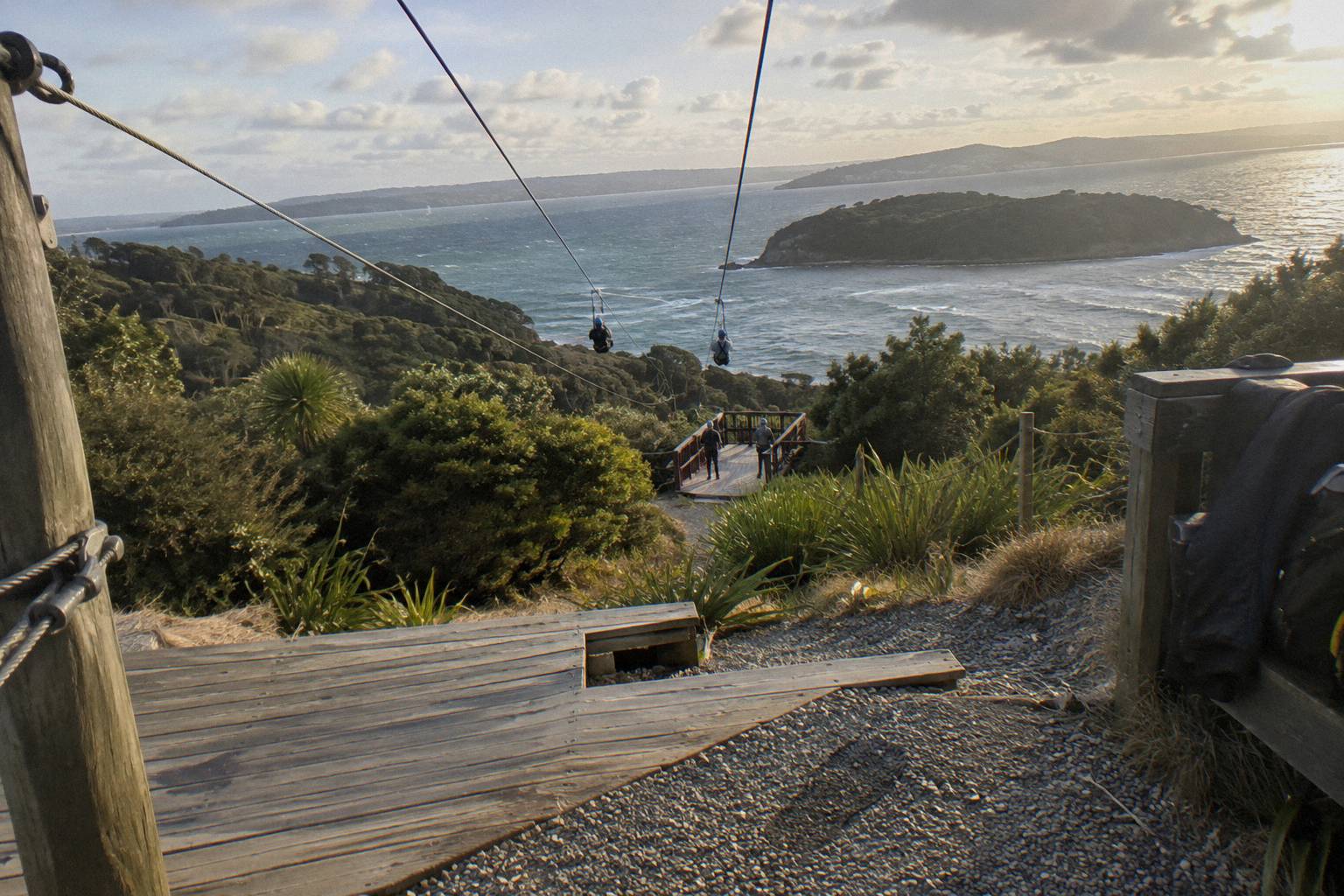
Think of the landing platform as the moment everything has been arranged around. The guides want every rider to glide in at a controlled pace, touch the brake zone and roll to a stop where the crew can reach them. Too much speed turns that arrival into a hard stop the brake was never rated to absorb. Too little speed means a rider parked halfway along the cable, dangling above the bush, waiting for a guide to come out and haul them in. Both failure modes are annoying at best and hazardous at worst, and both are prevented by the same simple act: knowing each rider's weight before they leave the platform.
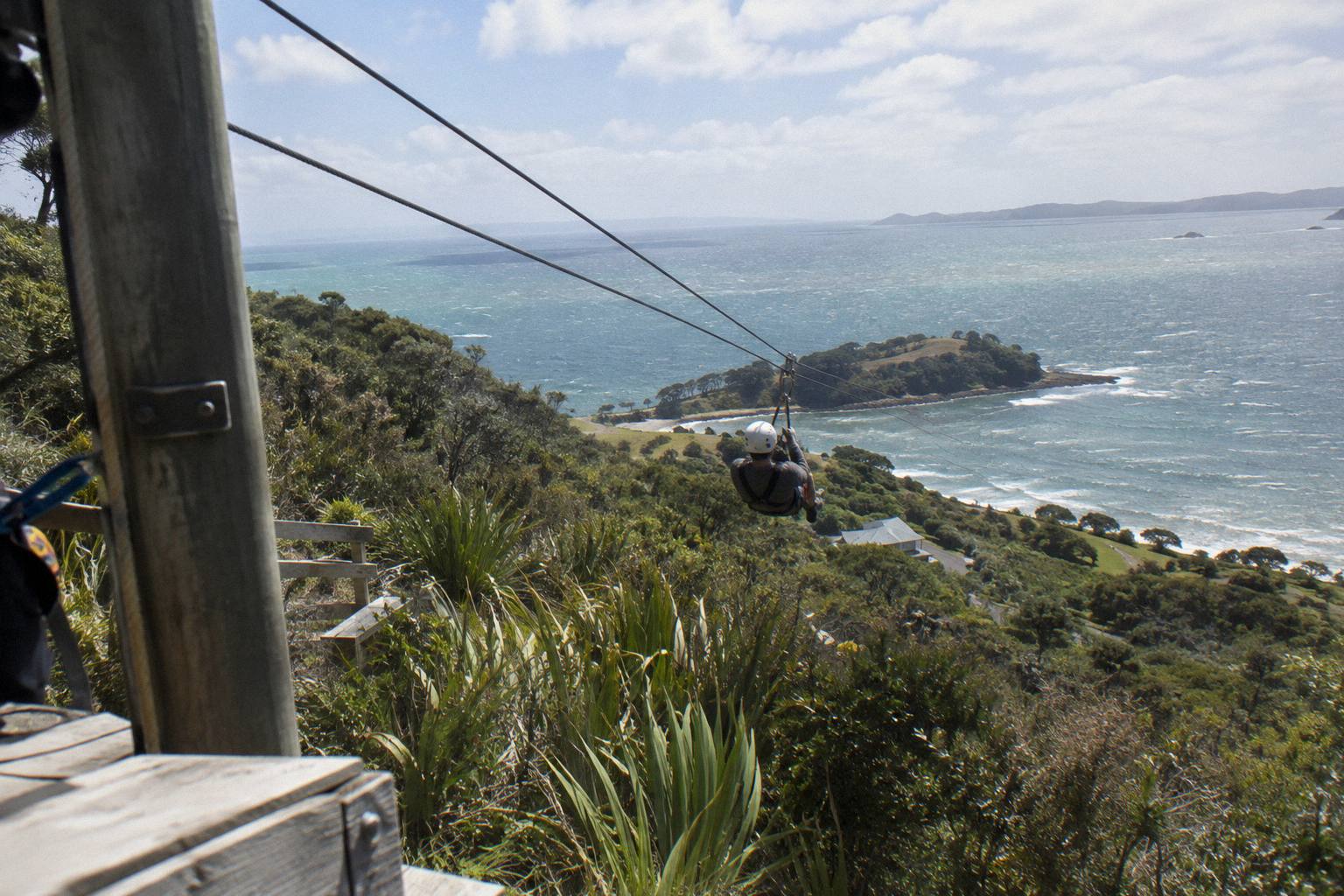
Modern commercial courses build redundancy into this. A dual-cable zipline with a backup brake system typically runs redundant cables plus a primary brake and an independent emergency arrest device that engages automatically if the primary brake fails, and the standards that govern these systems require brakes designed for the extremes of participant weight and arrival speed. That engineering only works if the operator actually knows the weight of the person attached to the trolley, which is the entire reason the scales exist at check-in. The standards themselves spell this out: ASTM F2959 establishes criteria for the design, operation and auditing of ziplines and canopy tours for commercial use, and the ACCT standards require brake systems designed and tested for the weight and arrival speed extremes a course will actually see. Weight verification is where those documents meet a Tuesday morning on Waiheke.
The stakes are real even if they are rare. One US emergency-department study covering 1997 to 2012 counted an estimated 16,850 zipline-related injuries in that period, with falls accounting for 77.3 percent of them and fractures 46.7 percent, and upper extremities the most common body region at 44.1 percent. It is exactly that class of landing and platform event that weight-matched braking is designed to prevent. The study looked at the sector as a whole, not audited New Zealand courses, but it explains why operators worldwide treat the weigh-in as non-negotiable rather than optional.
New Zealand's regulatory layer reinforces the practice. Under the Health and Safety at Work (Adventure Activities) Regulations 2016, commercial zipline operators must pass a safety audit and register with WorkSafe NZ, and WorkSafe's Safety Audit Standard version 2.0 sets out the safety management requirements operators are audited against. EcoZip is AdventureMark accredited under that scheme, with hardware inspected daily, weekly and monthly. The weigh-in is one of the procedural pieces inside that audited safety system, not a house rule invented at the Trig Hill desk.
| Weight outcome on the cable | What physically happens | Why the operator cares |
|---|---|---|
| Under the minimum (under 30 kg) | Rider may travel slowly and stall short of the landing platform | Requires a mid-line rescue, delays the group, risks a stranded rider |
| Inside the range (30-125 kg) | Rider arrives at the platform within the brake's designed speed band | Normal, controlled landing |
| Over the maximum (over 125 kg) | Rider arrives faster, with more braking energy than the rating | Overloads brake and trolley ratings, collision risk at the platform |
How The Discreet Weigh-In Works At EcoZip Check-In
At the Trig Hill base, after the shuttle from Matiatia, staff weigh each rider privately at the check-in desk, fit the harness, and confirm the number is inside the 30-125 kg range without announcing it. Riders near the limit are handled quietly, and the weighing is a formality for the vast majority. The full on-site portion runs about two hours, with the door-to-door experience about three hours from Matiatia.
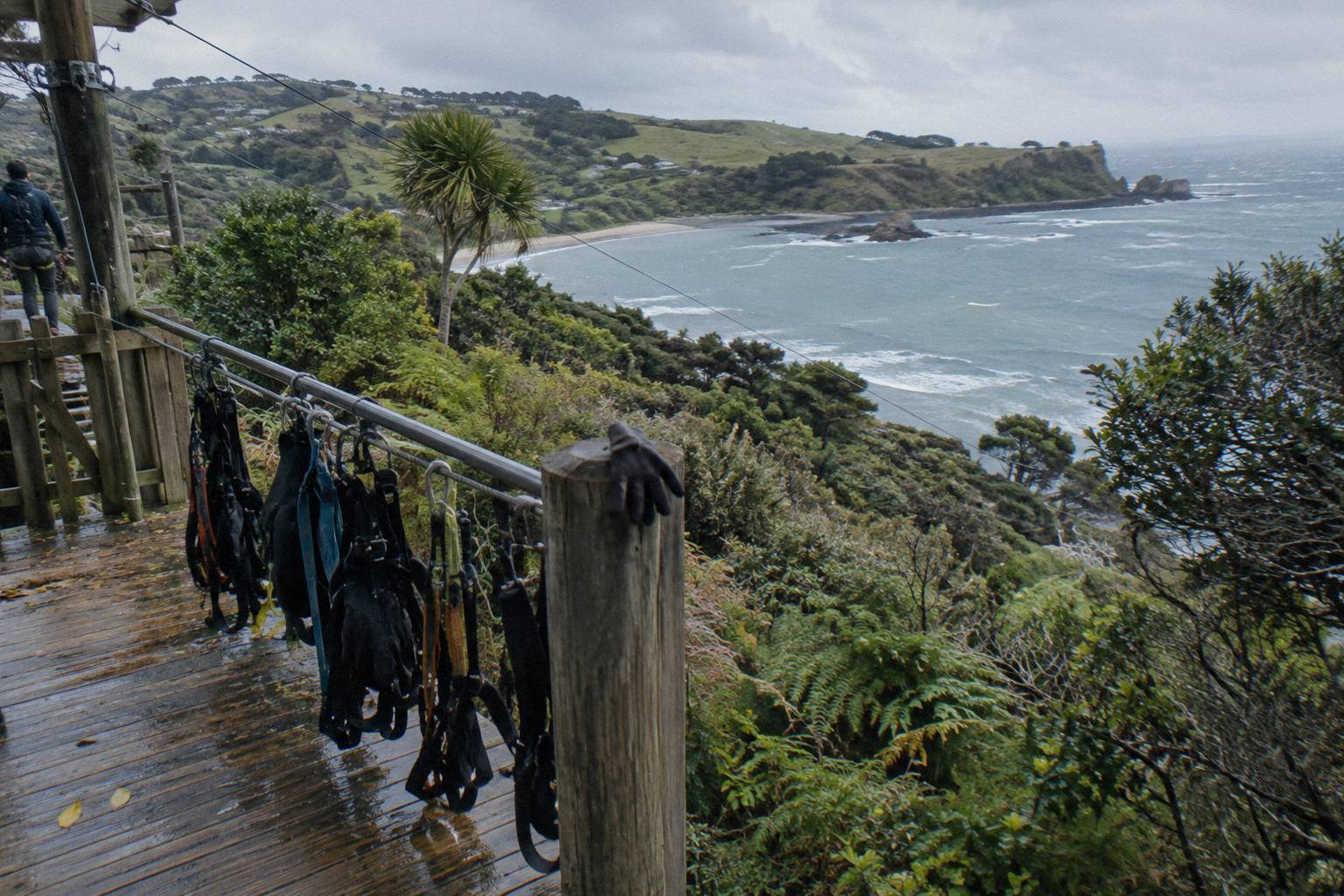
The sequence is consistent. Arrive at the base, sign the risk disclosure form (a parent or guardian signs for anyone under 18), step on the scales, get your harness fitted and checked, then join the briefing where guides cover hand positions, braking posture and what not to do on the line. Phones and cameras must be strapped to clothing or the harness, and free phone bungees are available at check-in. Closed, laced or buckled shoes are required, no jandals, and the operator asks for weather-appropriate clothing because the course runs in rain. Wind is the one element that stops the day: consistently strong wind above about 35 knots can see a session shifted or refunded in full.
Knowing all this before you arrive makes check-in faster and calmer, especially for nervous first-timers who have read the practical walkthrough in our step-by-step Waiheke zipline tour guide. Arriving with the right shoes, a hat that fits under a helmet and your phone already secured saves you fumbling at the desk, and it means the weighing is the only unfamiliar step left. If you prefer a version of the day with an optional pickup and a phone bungee thrown in, the Waiheke Island Zipline and Native Forest Adventure Trip covers the same three 200 m dual lines, the guided forest walk and the island mini-tour in about three hours, with the same 30 to 125 kg weight rules at the same check-in.
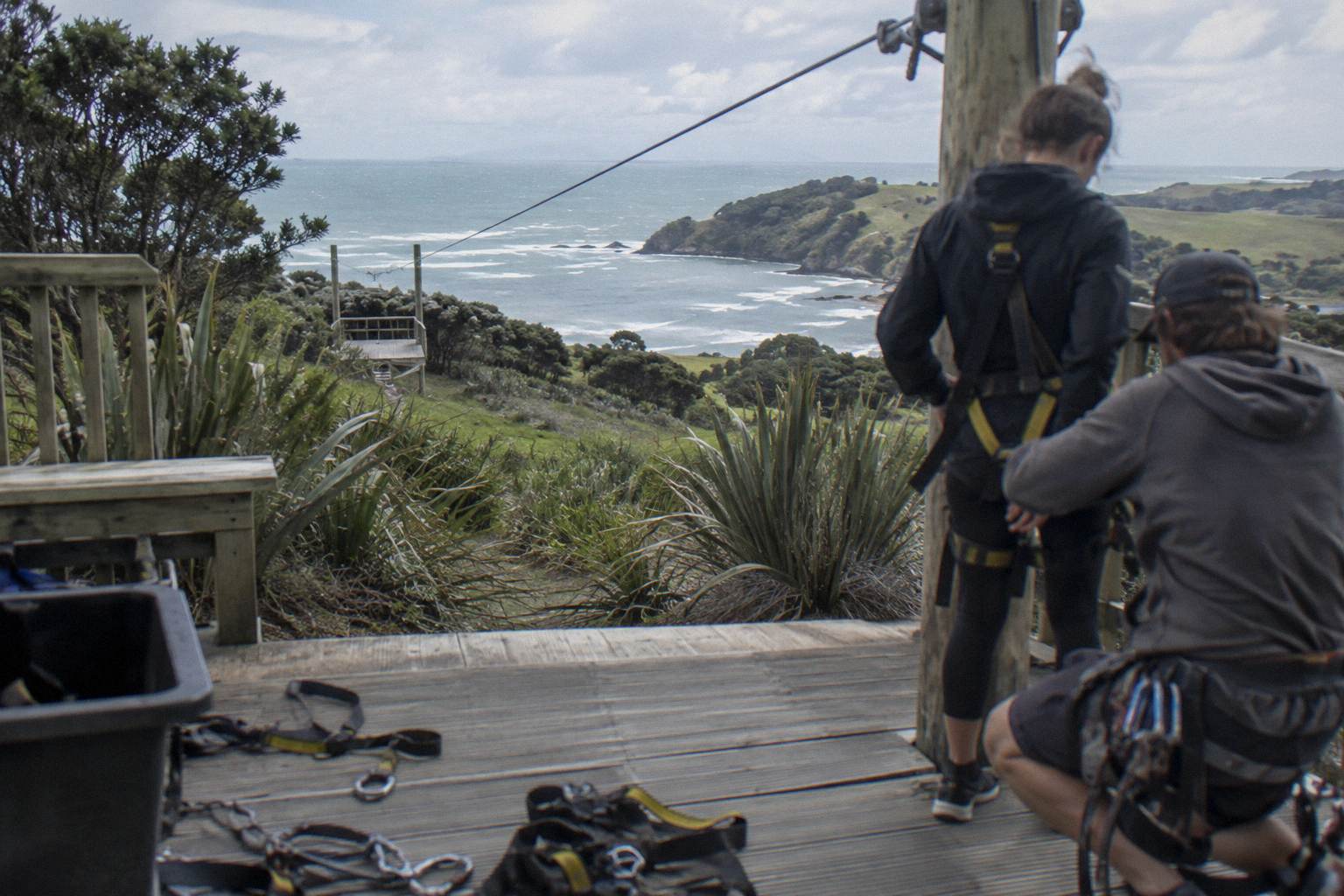
One point worth repeating: the weigh-in is not optional and it is not negotiable, but it is also not a spectacle. The number goes to the guides, the guides match you to the equipment, and the day moves on. For most riders it occupies about ten seconds of a three-hour experience. Groups of up to 12 people go out with two guides, so the check-in line moves briskly and the weighing of a dozen riders adds only a few minutes to the whole arrival process.
It also helps to know what comes after the scales, because that is the part people actually remember. Once the harness is on and the briefing done, riders head to the first line, the Vineyard Cruise, followed by City View and the 220 m Kurinui, each one a dual cable so two people can fly side by side. Then comes the guided native forest walk of roughly 1.4 km back down through the bush, uneven underfoot with a few steady uphill stretches, before the shuttle returns you toward Matiatia or, if you have asked nicely, drops you at one of the island's vineyards or restaurants instead. The scales are long forgotten by the time you are standing on the second platform.
| Check-in step | What happens | What you need to do |
|---|---|---|
| Risk disclosure form | You sign, or a guardian signs for under-18s | Read it, ask questions if anything is unclear |
| Discreet weighing | Staff read your weight at the desk, not aloud | Step on the scales when asked |
| Harness and helmet fit | Staff size and check all gear | Wear closed shoes and clothing that suits the weather |
| Safety briefing | Hand positions, braking posture, cable rules | Listen, and strap your phone to clothing or harness |
What Happens If You Are Over Or Under The Weight Limit
If the scales read under 30 kg or over 125 kg, EcoZip cannot let that person fly, and the booking is not automatically refunded. The operator's terms treat an out-of-range weight like a no-show unless you have arranged a change in advance, which is why contacting the operator before booking is the right move if you sit near either edge of the range.
This is the part of the policy that catches people out. Over or under weight is not automatically refunded, so a rider who arrives outside the range loses the money as well as the flight. The operator's terms are explicit on this point, and the reasoning is that the slot, the guides and the shuttle were all held for that booking. It feels harsh, but it is also why the operator publishes the range clearly and answers weight questions by phone and email before you pay. A quick call in the week before travel costs nothing; discovering the answer at the desk with a family in tow costs the fare.
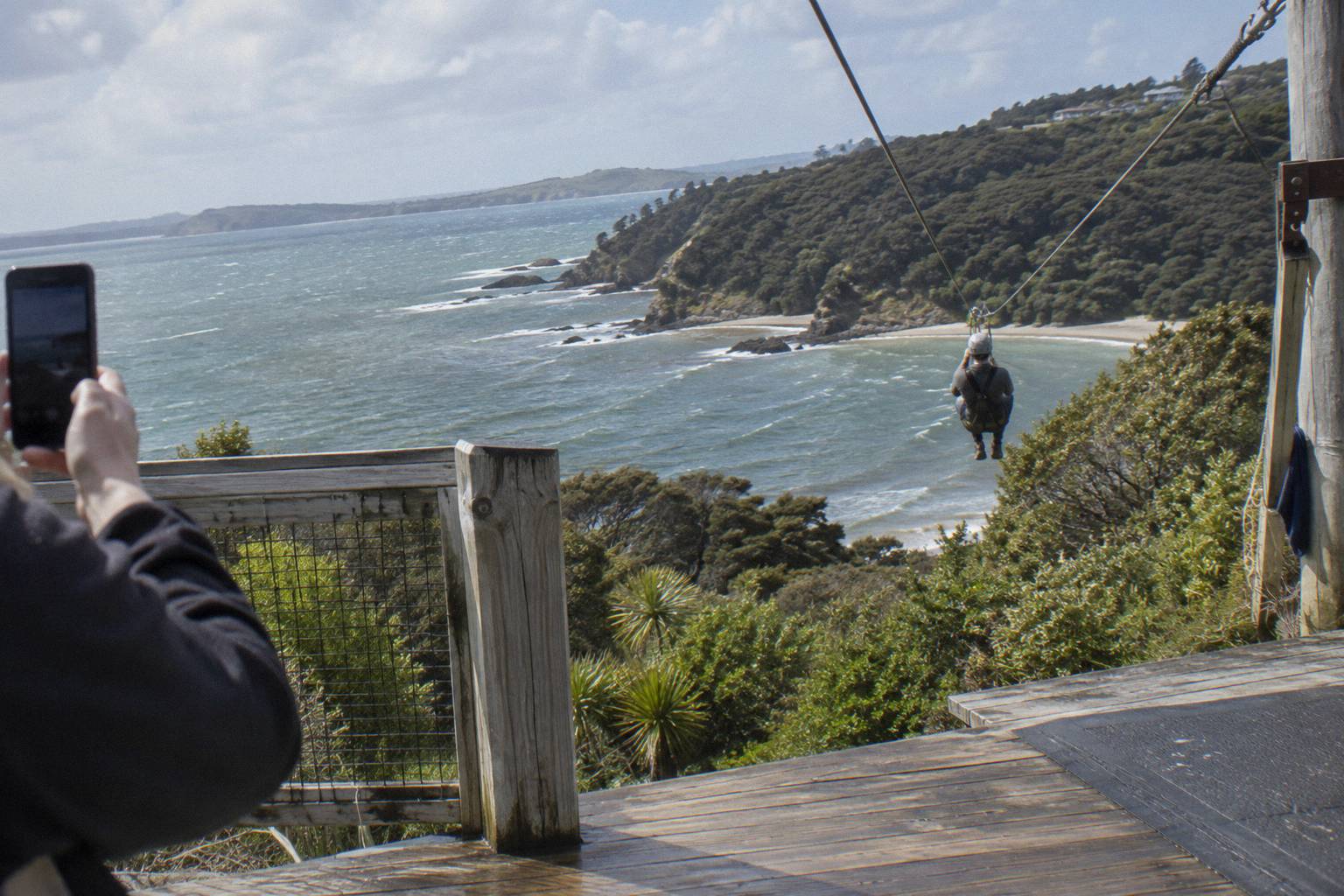
The practical numbers are a 30 kg minimum, which mostly affects very young children rather than adults, and a 125 kg maximum, roughly 275 lb. Generic commercial zipline limits elsewhere commonly run to about the same ceiling, and several New Zealand operators sit at 120 or 125 kg, so Waiheke's range is typical rather than unusual. For the broader picture on the maximum side, including how plus-size riders can plan around it, see our detailed page on the Waiheke zipline weight limit and harness sizes.
| Situation | Likely outcome | Best move |
|---|---|---|
| Well inside 30-125 kg | Fly as normal | No action needed |
| Close to the 125 kg maximum | Usually fine, but worth flagging | Mention it at booking so staff can note it |
| Over 125 kg | Cannot fly, no automatic refund | Contact the operator before booking to discuss options |
| Child under 30 kg | Cannot fly | Wait, or book when they cross the minimum |
The 125 kg maximum on Waiheke lines is a hard engineering limit, not a guideline the guides can waive. The braking system is rated for a specific arrival energy, and the harnesses are certified to a load range. No amount of confidence, fitness or prior zipline experience changes what the trolley and brake are built to absorb, which is why the limit is applied to everyone equally, every time. A competitive cyclist and a first-timer of the same mass present the identical engineering problem, and the crew treats them identically.
For families, the minimum is the number to watch. There is no age limit on the EcoZip course, and children 15 and under pay the child rate, but a light child who has not yet reached 30 kg cannot fly no matter how keen they are. If you are planning a family trip, a bathroom scale at home settles the question a fortnight before the ferry booking, which is far better than settling it at the desk.
What To Do If You Are Near The Limit
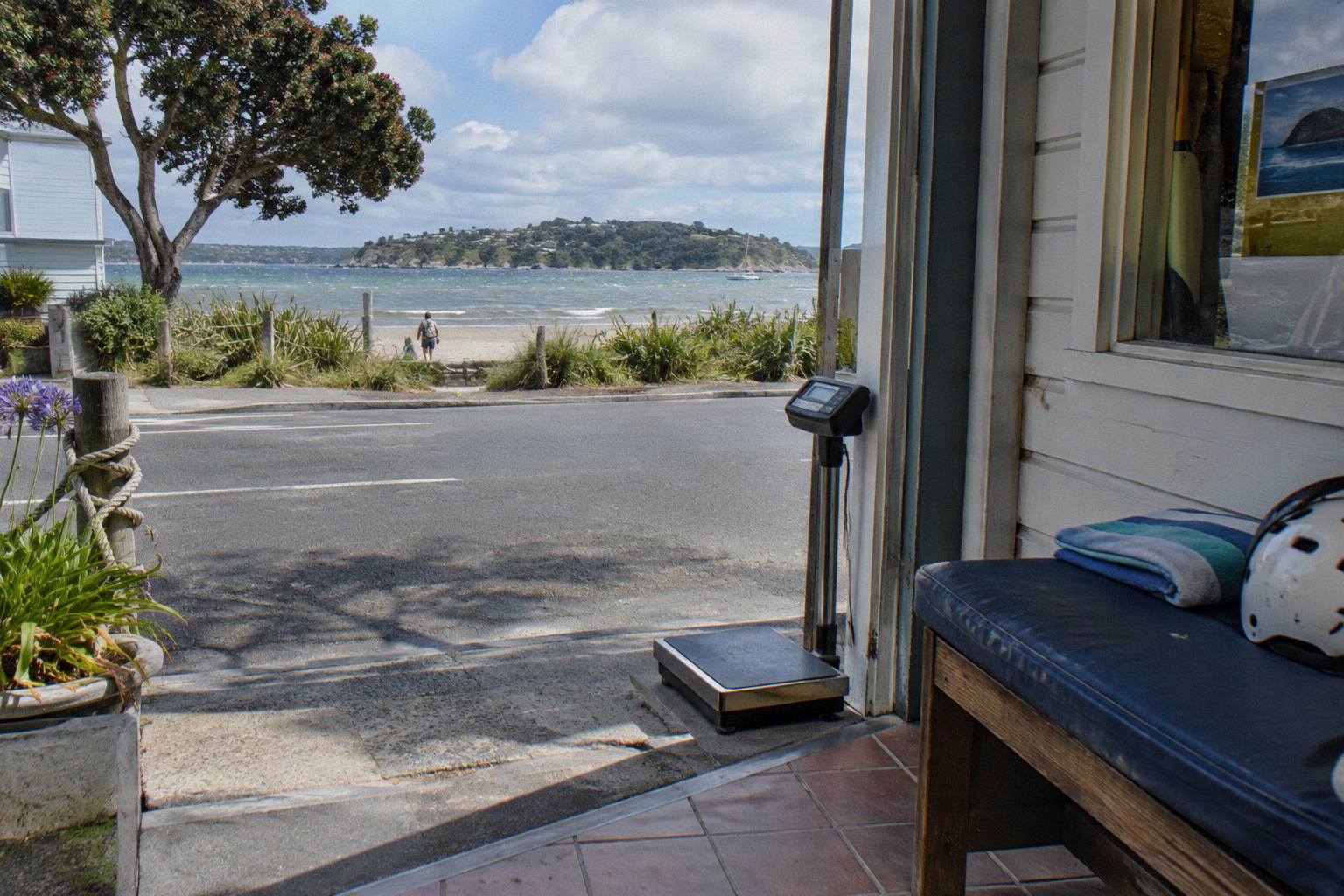
Contact the operator before you book, say roughly where your weight sits, and ask directly whether the day will work. A rider comfortably inside the range has nothing to discuss, but anyone hovering near 125 kg, or booking for a child near 30 kg, should have that conversation first rather than discovering the answer at the check-in desk with money already spent.
Start with the phone number on the operator's FAQ page, which is the fastest route to a straight answer. Staff deal with weight questions constantly and there is no awkwardness on their side of the conversation. Ask about harness fit as well as the scales, because fit matters as much as mass: a rider inside the weight range can still occasionally fall outside available harness sizing, and it is better to learn that a week out than on the platform.
If the answer is that Waiheke's lines will not work for you, the island still has plenty that does. The hop-on hop-off Explorer bus, rated 4.6 from 3,661 reviews, runs a full-day loop from Matiatia with 16 to 17 stops, and the island's cellar doors and beaches need no harness at all. Wine country here means around 30 wineries and roughly 20 cellar doors open to the public, many pouring Bordeaux-style reds, with tasting flights typically running around NZ$20 to NZ$55 and many doors open from late morning to late afternoon. For a fuller comparison of the flying and non-flying options, our Waiheke e-bike or zipline day guide lays out the trade-offs.
It also helps to weigh yourself honestly in the days before travel, in the clothes you will actually wear on the course, after a normal day of eating. Nobody needs gram precision, but the difference between comfortably inside the range and just over it matters here in a way it does not anywhere else on your holiday, and a bathroom scale at home costs nothing. Do it in the morning, write the number down, and if it is anywhere near a limit, make the call.
Do Other New Zealand Ziplines Weigh Riders Too?
The numbers vary a little by course design, but the principle never does. Rotorua Canopy Tours, Coromandel Zipline Tours and Paradise Ziplines all publish hard maximums in the 120 to 125 kg band, and Zipline Christchurch adds a height requirement of over 122 cm alongside its weight range, with children under 13 accompanied by an adult. Every one of these operators sits under the same WorkSafe adventure activity audit regime, and the weigh-in is the visible piece of that compliance on the ground. Ziptrek Ecotours, New Zealand's first zipline eco-adventure, applies its 125 kg maximum across all its Queenstown tours, and the same operator pattern appears whether the course hangs off a gondola in Queenstown or sits in ancient forest above Rotorua.
Waiheke's second zipline, the Man O' War Forest Flight at the eastern end of the island, runs three tandem lines totalling over 900 m connected by 660 m of boardwalk through kauri forest, reached after a scenic drive to a 210 m viewpoint, and it finishes steps from a beachfront tasting room. Its listing gives a 30 to 125 kg weight range; check age terms with the operator. The two courses feel different in the air as well: EcoZip flies riders on dual side-by-side cables, while Man O' War uses tandem lines where a pair shares a flight, with the boardwalk stitching the course together between runs.
The consistency across operators is actually reassuring for nervous flyers. It means the scales are not a judgment about any individual guest; they are one line item in a national safety framework that every commercial course in the country operates under. Guides at Rotorua have flown guests into their nineties, weighing them the same as everyone else, because the check is about matching equipment to a body, not grading the body. For the wider picture on the injury data and the safety record behind it, our piece on whether ziplining carries real risks covers what the studies actually found.
Whether you fly the three lines at Trig Hill with Waiheke Zipline Tours or one of the other courses around the country, the weigh-in will be the least dramatic ten seconds of the day. Step on the scale, get your harness, and go enjoy the view.
Common Questions About Getting Weighed Before Ziplining
Do You Get Weighed Before Ziplining?
Yes. At EcoZip Adventures on Waiheke, every participant is weighed discreetly at check-in before flying. The number is shown only to staff and is never announced to the group.
What Is The Weight Range On The Waiheke Zipline?
Riders must weigh at least 30 kg and no more than 125 kg. Everyone is weighed at check-in to confirm they are inside the range, and harness fit is checked separately.
Do You Get A Refund If You Are Over The Weight Limit?
No, an over- or under-range weight is not automatically refunded under the operator's terms. If you sit near either end of the range, contact the operator before booking to discuss your options.
Is The Weighing Public Or Embarrassing?
No. The scales sit at the check-in desk, the staff member reads the number privately, and the process takes a few seconds. It functions like any other equipment measurement.
Do Children Get Weighed Too?
Yes, everyone on the tour is weighed, which matters most for children close to the 30 kg minimum. There is no age limit, but under-18s need a parent or guardian to sign the risk disclosure form.
Do Other New Zealand Ziplines Weigh Riders?
Yes. Weighing is standard across audited commercial operators in New Zealand, with maximums typically set between 120 and 125 kg depending on the course.