Can You Hurt Your Back By Ziplining? Back And Neck Rules At EcoZip
What injury data and Waiheke operator rules say about back and neck risk on a zipline, and what to check before you book.
Ziplining feels weightless, but your back does real work during the few seconds it matters most. The harness holds you in a seated position, the cable can swing you at the arrival platform, and the braking system brings you from speed to a stop in a short distance. For most healthy spines that is a non-event. For a spine with a recent injury, a fused segment or chronic neck trouble, it is a fair question, and the honest answer is that yes, back injuries from ziplining happen, they are documented in emergency department data, and every serious operator, including EcoZip Adventures on Waiheke, lists back and neck conditions among the reasons you might need medical clearance first.
This article works through the actual injury numbers, the mechanics of a zipline landing, EcoZip's stated rules on the Waiheke course, and how other New Zealand operators phrase the same restrictions. It is reporting, not medical advice: if you have a diagnosed back or neck condition, the single most useful sentence in this whole page is "talk to your doctor before you book." Nothing here replaces that.
Can You Hurt Your Back By Ziplining?
Yes, you can. A sixteen-year study of United States emergency department records counted an estimated 16,850 zipline-related injuries between 1997 and 2012, fractures accounted for 46.7 percent of them, and falls accounted for 77.3 percent. Most flights end without incident, but the mechanism is real: people do get hurt, mostly through falls, and the back and neck are exposed areas.
The study, published in the American Journal of Emergency Medicine, reviewed National Electronic Injury Surveillance System records and remains the most commonly cited dataset on zipline injuries. Two numbers stand out for anyone thinking about their spine. First, falls dominated: more than three quarters of the injuries came from people falling from the platform, the line or the ladder and stairs around the course, rather than from collisions or equipment failure mid-flight. Second, upper extremities, meaning arms, shoulders and the upper body region, were the most commonly injured area at 44.1 percent of cases.
A separate dataset covering 2000 to 2024 counted an estimated 7,962 lower extremity injuries, 17.1 percent of all zipline injuries in that period. Read together, the numbers describe an activity where the injury risk clusters around impact and falls, not around the cruising portion of the ride. That distinction matters for your planning, because it tells you where caution actually pays: on the platforms, on the stairs, during the harness fit and at the landing, rather than in the middle of the cable.
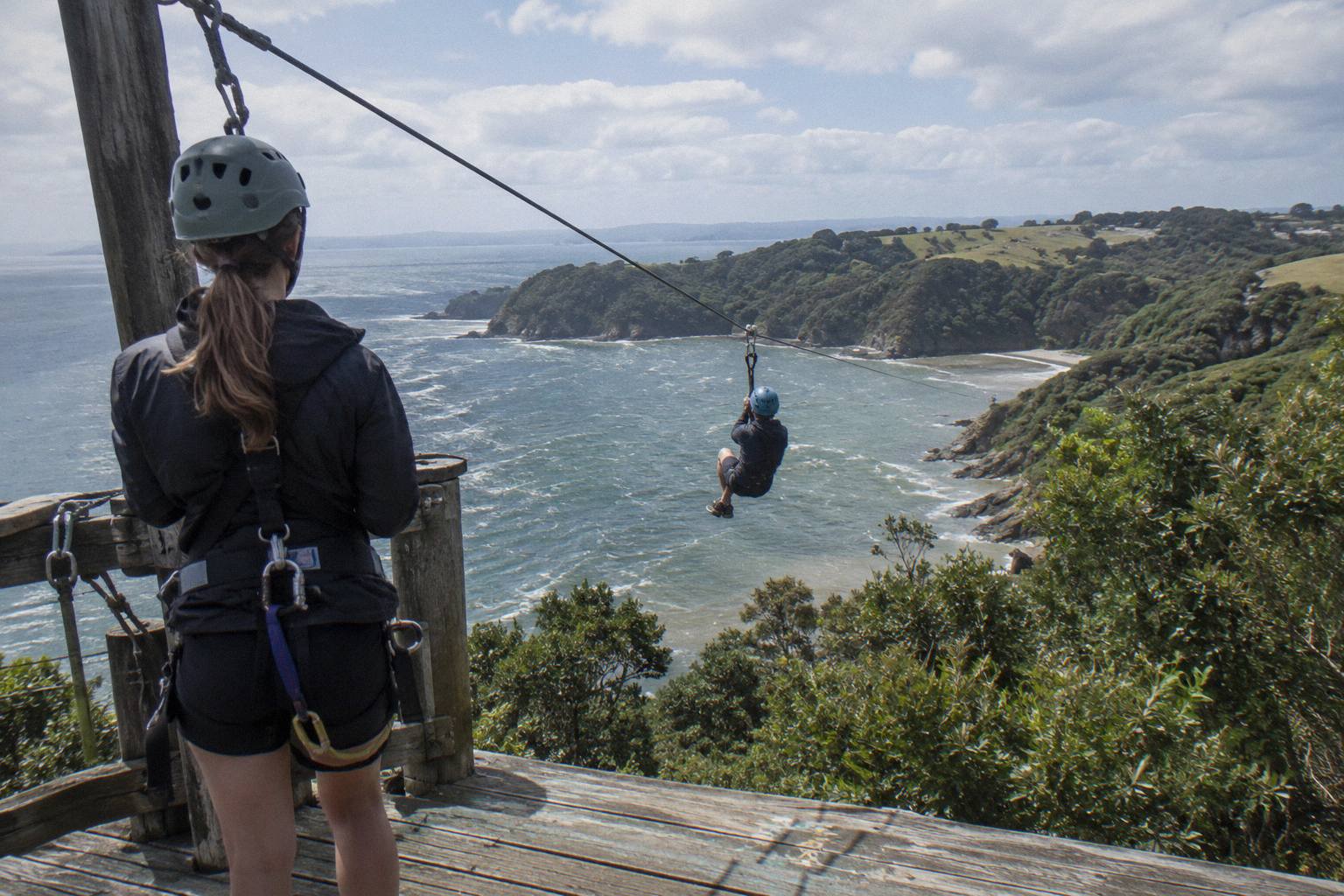
How you apply this to Waiheke is straightforward. The Waiheke Island Zipline and Forest Walk is a guided, dual-cable experience where two guides manage a group of up to 12 people, the braking is handled by the operator's system rather than by the rider, and the forest walk portion is taken at walking pace. The structure of the experience removes most of the self-managed risk the injury data describes. It does not remove the medical question, which is whether your particular back should be loaded at all.
Where The Spinal Load Actually Comes From
The back is loaded in three moments: the seated harness position during flight, the deceleration at arrival, and any slip on platforms, stairs and forest trails. The landing is the significant one, because the brake brings you from roughly 50 to 60 km/h to a stop over a short distance, and that deceleration passes through your torso. Falls on the surrounding terrain caused most injuries in the emergency department data.
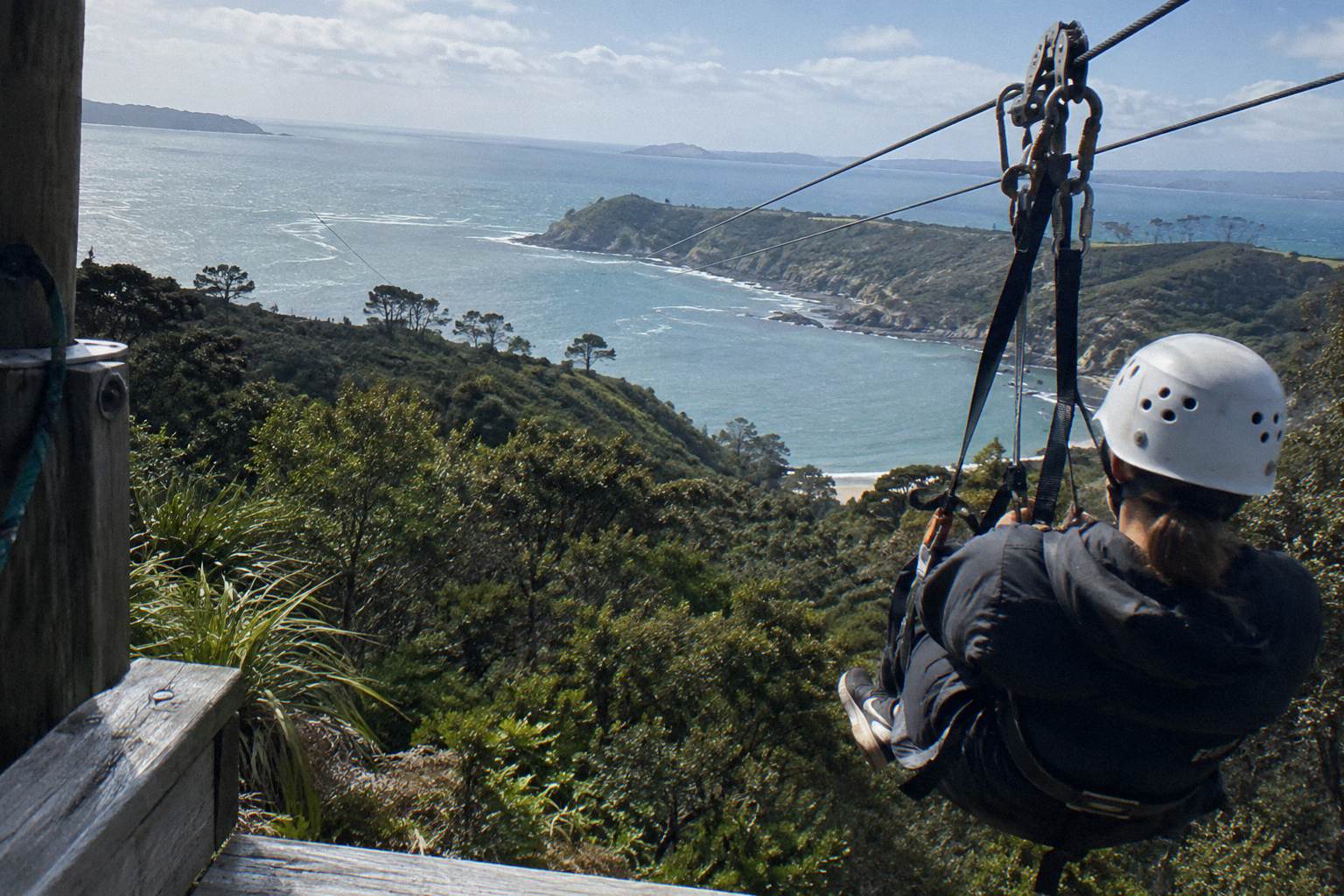
Think about the posture. A zipline harness holds you in a reclined seated position, legs forward, with your weight hanging from a pelvic and thigh attachment rather than from the spine. For a healthy back this position is comfortable for the 20 to 30 seconds a single flight lasts. The load on your lumbar spine is actually lower than standing in most cases, because the harness, not your muscles and discs, is carrying your weight. The problem cases are the ones where the spine cannot tolerate compression or jarring at all, and that is a medical threshold, not a courage threshold.
Deceleration is different. Every commercial zipline uses a braking system, and on modern courses it engages progressively. On dual-cable designs with a backup brake, the primary brake plus an independent emergency arrest device are both rated for the weight and arrival speed ranges of the riders, and both have to be tested by qualified people under the relevant standards. The ASTM F2959 standard practice for aerial adventure courses covers design, operation, maintenance and auditing of ziplines for commercial use, and New Zealand adds its own layer: operators must pass a safety audit under the Health and Safety at Work (Adventure Activities) Regulations 2016 and register with WorkSafe NZ.
What the standards cannot do is decide whether your spine tolerates a stop from speed. That is why operators ask the question instead. Here is how the pieces compare in practice:
| Load moment | What happens | Risk level for a healthy back | Consideration for an injured back |
|---|---|---|---|
| Launch from platform | Short step or sit into the line, guided | Low | Twisting on launch can jar the lumbar spine |
| Flight, seated in harness | Weight carried by harness, minimal spinal load | Low | Sustained hip flexion can be uncomfortable for some conditions |
| Arrival and braking | Deceleration from up to roughly 50-60 km/h over a short distance | Moderate | The main event: compression and jarring pass through the torso |
| Platforms, stairs and trails | Walking, steps, uneven ground | Low to moderate | Falls here caused 77.3 percent of injuries in the US dataset |
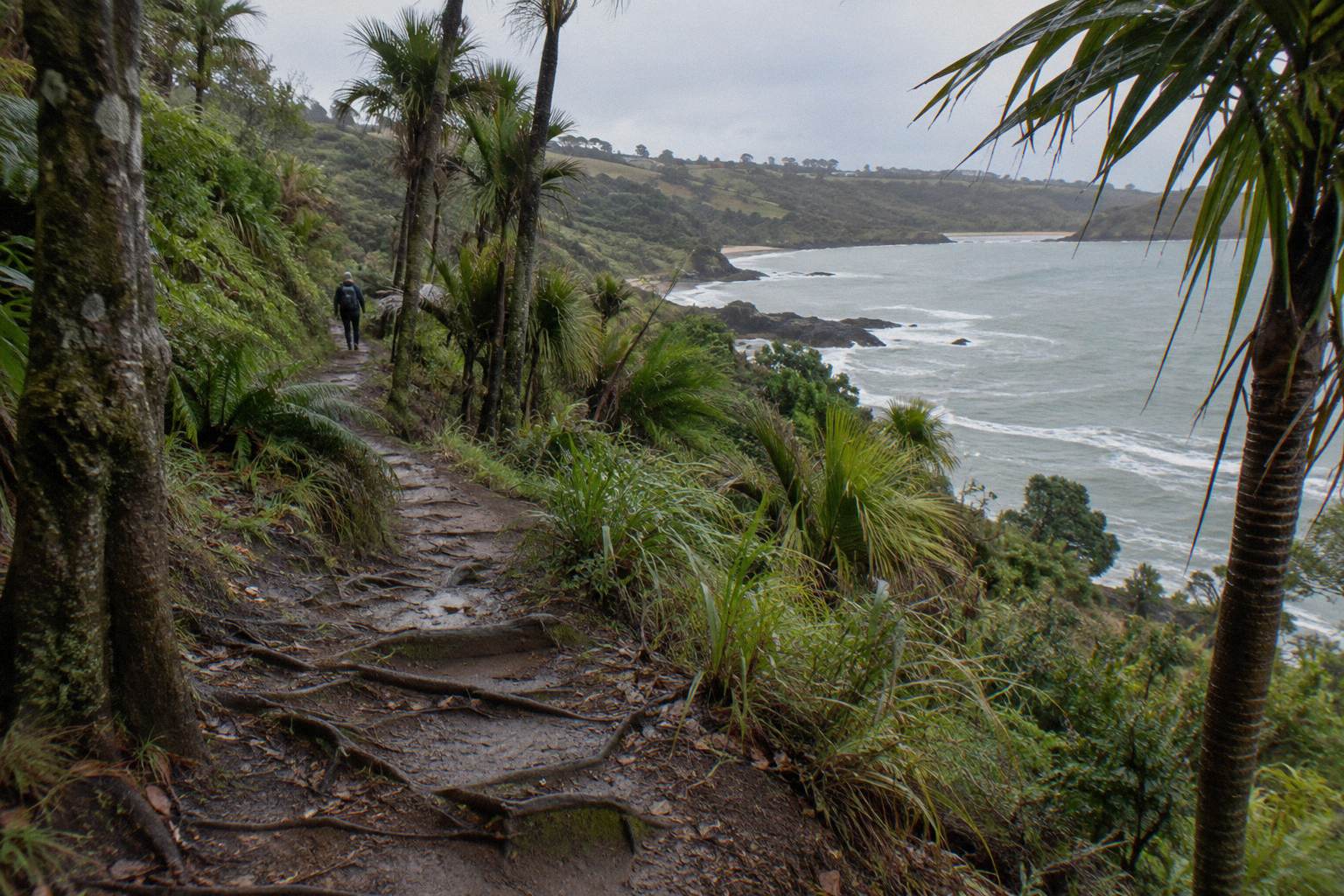
The final row is the one people skip. EcoZip's Waiheke experience includes a guided native forest walk of about 1.4 to 1.5 km, uneven in places, with switchbacks and a few steady uphill stretches that can be muddy after rain. The commentary is optional, but the walk is not, and reasonable fitness is needed. If your back cannot manage an uneven walking trail, that portion of the day matters as much as the flights.
EcoZip's Back And Neck Rules On Waiheke
EcoZip Adventures, the operator of the dual-cable zipline on Waiheke, lists back and neck injury among the medical conditions that may impair your safety on its course, alongside high blood pressure, cardiac conditions and pregnancy, and it can refuse anyone it judges affected by alcohol or drugs. The operator's own terms, not this article, are the authority. If any listed condition applies to you, the required step is medical advice before booking.
The full list of conditions EcoZip flags is worth reading directly on the operator's Waiheke FAQ page, because it is phrased as a prompt to self-assess rather than a blanket ban. That phrasing is standard across New Zealand adventure tourism: the operator cannot diagnose you, so it states the conditions that interact with the activity and puts the decision, correctly, in the hands of you and your doctor. Showing up and hoping the guide waves you through is not a plan, and it puts the guide in an impossible position at check-in.
EcoZip's physical gates are clear on the same pages. Riders must weigh at least 30 kg and no more than 125 kg, everyone is weighed discreetly at check-in, and being outside the range is not automatically refunded, so check before you travel. There is no age limit, and under-18s need a parent or guardian to agree to the booking terms and sign the risk disclosure form. Weight matters for spinal load too, not just for the equipment rating: the brakes are sized for the range, and the harness fit, which spreads load across your pelvis rather than concentrating it on your lower back, is checked as part of the process.
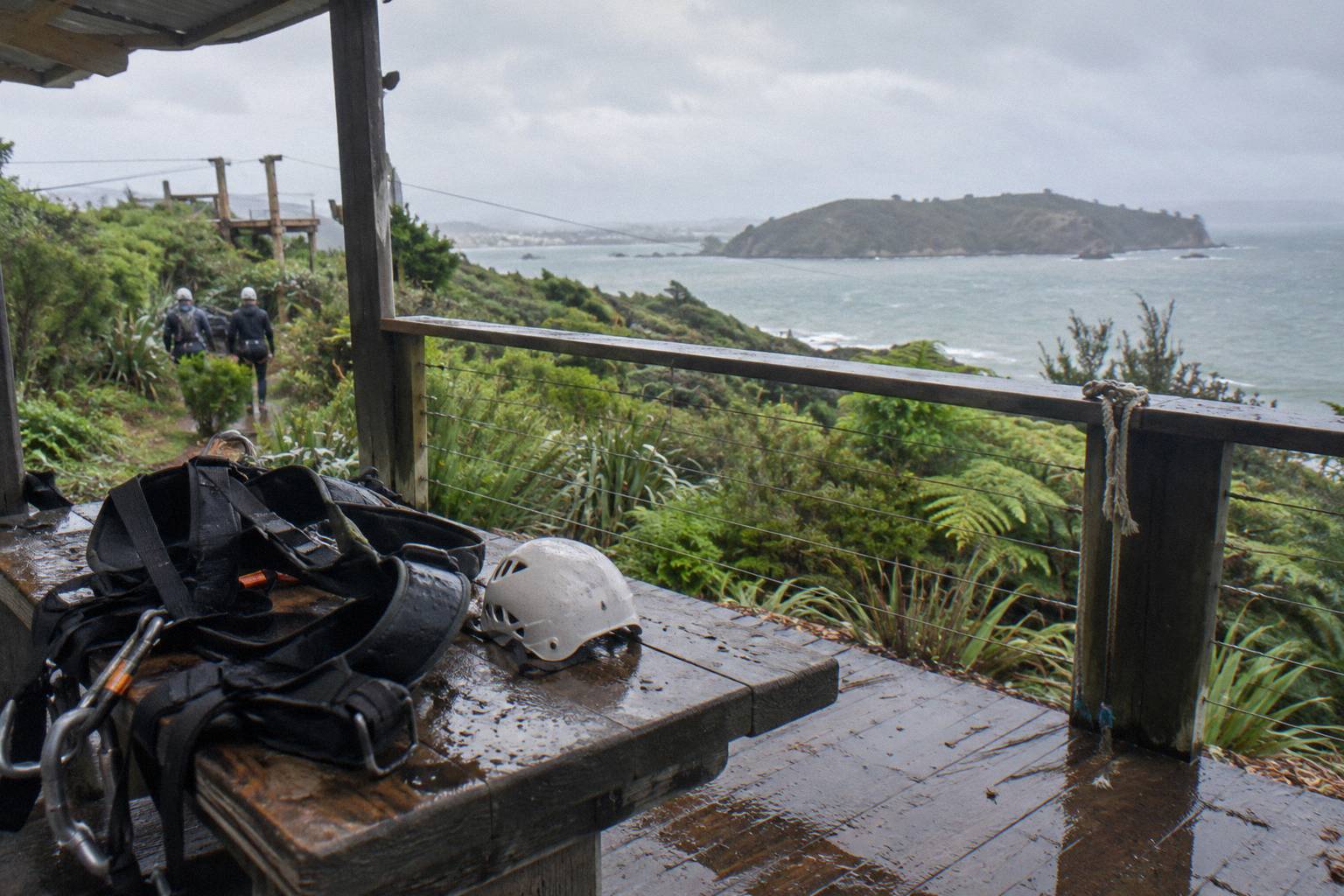
Safety on the course itself is externally audited. EcoZip is AdventureMark accredited, with registration held since 2012, uses ZipStop braking with backup systems, and inspects hardware on daily, weekly and monthly cycles. AdventureMark is a JAS-ANZ accredited, WorkSafe-approved certification body under New Zealand's adventure activities certification scheme, which is the audit regime the 2016 regulations created. The point for this article is that the mechanical risk is managed by people whose job is managing it; the medical risk of your own spine is the one only you and a doctor can assess.
If you have already read this far and concluded the flight is fine but the ground worries you, there is a legitimate workaround on Waiheke: the Man O' War Forest Flight zipline runs three tandem lines over 900 m total, connected by a 660 m elevated boardwalk through regenerating kauri forest, which replaces a chunk of uneven forest walking with a boarded surface. Weight, age and cancellation terms for that product are on the listing rather than published here, so read them before assuming it suits you.
How New Zealand operators phrase the same medical question, side by side, tells you how normal your concern is:
| Operator | Back and neck policy | Pregnancy policy | Upper age approach |
|---|---|---|---|
| EcoZip Adventures, Waiheke | Back or neck injury listed among conditions that may impair safety; medical advice before booking | Listed among flag conditions | No age limit; under-18s need a guardian |
| Zipline Christchurch | Prohibits participants with previous neck or back injuries | Pregnant participants not permitted | Not stated as a limit; height and weight gates instead |
| Rotorua Canopy Tours | Consult guidance for back, neck or spinal problems | Not suitable after 15 weeks of pregnancy | No upper limit; guests up to 93 years old |
| Ziptrek Ecotours, Queenstown | Safety page asks riders to self-assess medical conditions | Pregnant guests cannot participate | Guests over 90 have zipped; capability over age |
None of these operators asks you to be brave. They ask you to be accurate about your own body, which is the cheapest safety equipment on the course.
What To Do If You Have An Old Back Or Neck Injury
Get a specific answer, not a general one: ask your doctor about three things in particular, deceleration forces through the torso, sustained seated harness position, and uneven walking terrain. Then match the answer to the actual product, because a three-line guided flight with a forest walk is a different proposition from a self-braked course. Book through a listing with free cancellation up to 24 hours before, so a conservative medical answer does not cost you the ticket.
Start with the appointment, and go in with specifics. "Can I go on a zipline" is a hard question for a clinician to answer well. "Can my spine tolerate a progressive brake stop from about 50 to 60 km/h, roughly 20 to 30 minutes total in a seated harness, and a 1.4 km walk on uneven ground" is a question a doctor can actually reason about. Bring the operator's own condition list from the FAQ page with you, because EcoZip has already named the relevant categories: back and neck injury, high blood pressure, cardiac conditions, pregnancy. If your diagnosis appears on that list, the operator has effectively asked you to bring a medical opinion, and arriving without one risks a refusal on the day.
Then match the product. On Waiheke the guided experiences are similar in spine-relevant structure: the Waiheke Island Zipline and Native Forest Adventure Trip runs the same three dual 200 m flights plus a guided forest walk in a three-hour format, with an added phone bungee for cameras, and the same 30 to 125 kg weight range and guardian rule for under-18s. The guided model matters here. Two guides manage the group, the braking is automatic, and the riding position is dictated by the harness rather than chosen by you, which removes the improvisation that gets self-braked riders hurt on older courses elsewhere. Our full EcoZip three-hour trip explained guide walks through the sequence from Matiatia pick-up to drop-off, including the 20-minute commentated shuttle ride to Trig Hill.
Booking terms are the last piece of protection. Direct EcoZip bookings carry a stricter cancellation policy than the platform listings, which state free cancellation up to 24 hours before: direct cancellations inside 48 hours are non-refundable, rescheduling inside 48 hours costs NZ$49 per person, and more than 48 hours out carries a NZ$25 per person charge with the balance refunded. The platform cancellation text on any product card comes from the listing, and the Waiheke zipline deals and voucher guide covers where the terms genuinely differ. If your plan hinges on a doctor's appointment, book the refundable way.
To make the comparison concrete, here is how the Waiheke zipline products differ on the three things a back-focused reader should care about:
| Waiheke product | Flights and braking | Ground portion | Spine-relevant notes |
|---|---|---|---|
| Waiheke Island Zipline and Forest Walk | 3 dual ziplines of about 200 m, operator-braked | Guided native forest walk, about 1.4-1.5 km, uneven with uphills | Weight 30-125 kg, weighed at check-in; guardian for under-18s |
| Waiheke Island Zipline and Native Forest Adventure Trip | 3 dual 200 m flights, operator-braked, same course | Guided forest walk, same trail | Same weight and age rules; adds phone bungee for cameras |
| Man O' War Forest Flight Zipline | 3 tandem lines, over 900 m total, 2 hours | 660 m elevated boardwalk through kauri forest | Weight and age rules on the listing; ends at beachfront tasting room |
The boardwalk row is the interesting one for a sore back: an elevated, even surface removes the roots, switchbacks and mud that make the EcoZip forest walk the harder half of that day for some riders. The trade is that the Man O' War product sits at the eastern end of the island and is built around a vineyard visit rather than a highlights tour, so the shape of your day changes, not just the walking surface.
Can Ziplining Help Or Hurt A Healthy Back?
For a back with no current injury, a guided dual-cable zipline is a low-load activity: the harness carries your weight, the flight is short, and the braking is progressive. The realistic annoyances are muscle stiffness from the seated position and jarring if you arrive at the platform with poor posture, not injury. The emergency department data reflects falls and unmanaged courses far more than guided commercial flights, and New Zealand's audit regime exists precisely to close that gap.
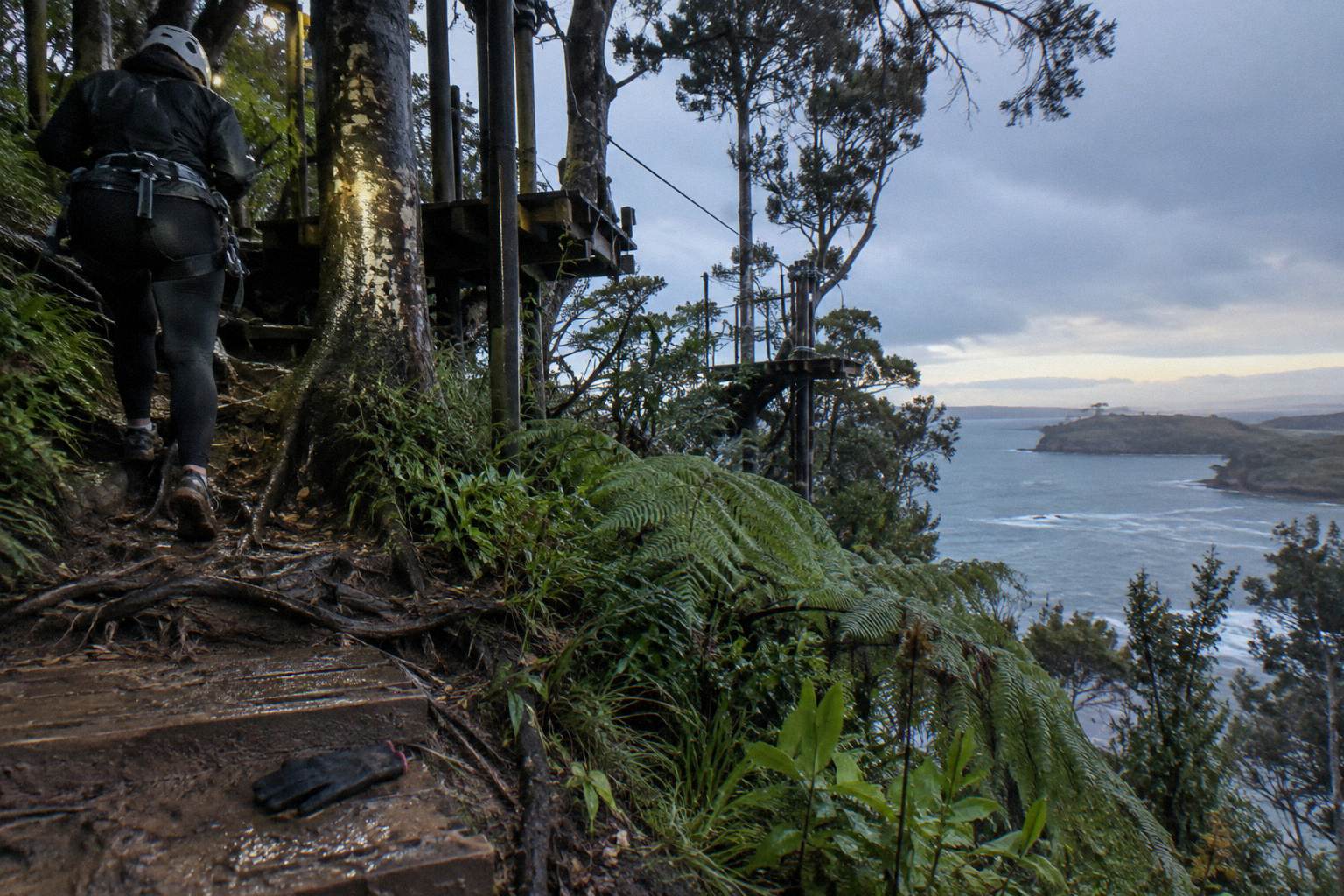
A few practical points keep it that way. Follow the briefing exactly: the standard instructions include keeping hands off the cable, using the designated hand positions, and adopting the specified leg and body position for arrival, and each of those exists to control exactly the impact that would otherwise reach your spine. Horses for courses on the harness: say something at fitting if the pelvic straps sit wrong, because a badly fitted harness concentrates load in the wrong places. On the walk, watch the ground; the forest trail is uneven, and a slip on a root is the most likely way to hurt yourself all day.
Two common worries deserve direct answers. First, that the stop "snaps" your back: it does not, on a modern braked course. The braking is designed and tested for the extremes of the rider weight range, with a primary brake and an independent emergency arrest device. Second, that being heavy makes back injury likely: weight matters, but as a gate rather than a predictor, and within the 30 to 125 kg range the equipment is rated for you. If you are close to a limit, the Waiheke zipline weight limit guide covers the harness-fitting detail.
Beyond that, the genuinely useful preparation is ordinary: decent closed shoes with laces or buckles, since jandals are not allowed, weather-appropriate clothing, and a warm layer in cold weather, per EcoZip's own gear guidance. If you want the full kit rundown, read what to wear ziplining on Waiheke before you pack.
The honest summary for a healthy rider: your back's worst enemy on this island is the trail underfoot, followed by ignoring the briefing, followed a long way behind by the zipline itself. If you want a second opinion on the safety picture overall, our is the Waiheke zipline safe guide sets out the accreditation, the braking systems and the audit regime in one place, and the reporting here at Waiheke Zipline Tours keeps the practical questions, weights, ages, weather and cancellation terms, in one connected set of pages.
Common Questions About Ziplining And Your Back
Can You Hurt Your Back By Ziplining?
Yes, it is possible. US emergency department data recorded an estimated 16,850 zipline injuries between 1997 and 2012, with fractures at 46.7 percent and falls causing 77.3 percent of cases. On a guided, braked commercial course the risk is far lower, but EcoZip lists back and neck injury among conditions that may impair safety, so get medical advice before booking if one applies to you.
Is Ziplining Bad For Your Spine If You Have No Injury?
No guided commercial flight is a meaningful spinal load for a healthy back. The harness carries your weight in a seated position, flights last seconds, and braking is progressive. The more realistic irritations are stiffness from the seated posture and jolts from poor arrival posture, both managed by following the guide's briefing.
What Conditions Does EcoZip List As A Reason Not To Fly?
The operator's terms list back or neck injury, high blood pressure, cardiac conditions and pregnancy among conditions that may impair safety, and it may refuse anyone affected by alcohol or drugs. If any apply, the required step is a doctor's opinion before booking, not a decision at the platform.
Does The Landing Jar Your Back?
You decelerate from roughly 50 to 60 km/h over a short distance, and that force passes through your torso. The braking is progressive and rated for the rider weight range, with a backup emergency arrest device, so a healthy back experiences a firm stop rather than a snap. Riders with spinal conditions should ask a doctor about deceleration specifically.
Can I Zipline After Back Surgery?
That is a question for your surgeon or doctor, not an operator or a website. Recent surgery and chronic spinal conditions are common contraindications in operator medical guidance. Bring the specifics of the flight, the seated harness position, the braking deceleration and the 1.4 km uneven forest walk, to the appointment.
Does The Forest Walk Matter As Much As The Zipline?
For an injured back, yes. EcoZip's guided native forest walk is about 1.4 to 1.5 km, uneven, with switchbacks and steady uphill stretches that can be muddy, and it is a required part of the experience. Falls on stairs, platforms and trails, not mid-flight incidents, caused 77.3 percent of injuries in the US emergency department dataset.